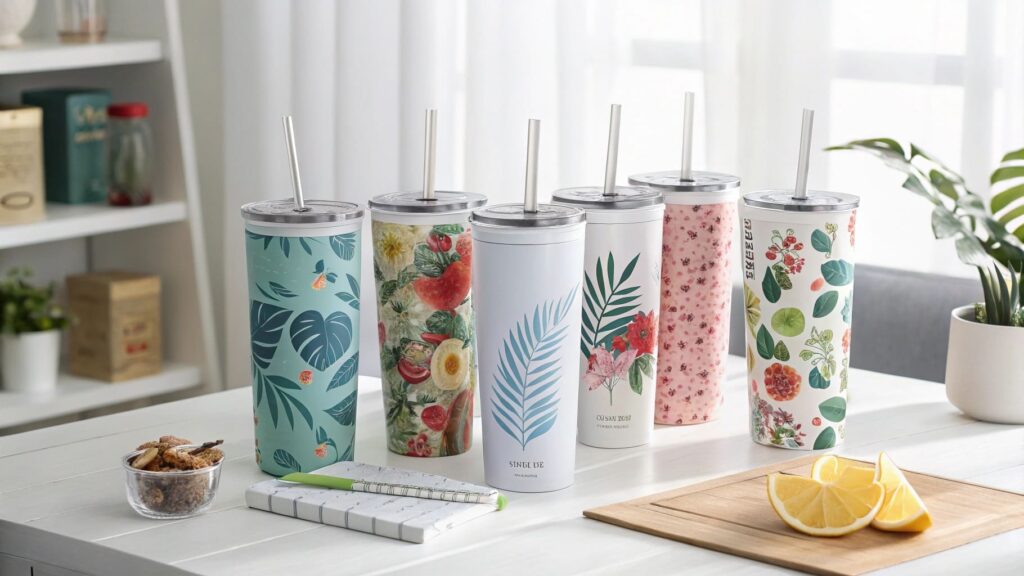
Why Are Sublimation Coffee Mugs with Lids the Perfect Modern Drinkware?
You need your morning coffee, but by the time you settle at your desk, it’s lukewarm. You're also tired of spills while walking from the kitchen to your office.
A standard open-top mug is inconvenient for a busy lifestyle. It doesn't hold heat, and it's a spill waiting to happen, creating a mess and ruining a good start to your day.
Sublimation coffee mugs with lids solve these problems. They keep your drink hot, prevent spills, and can be customized with beautiful, permanent designs, making them the ultimate upgrade.
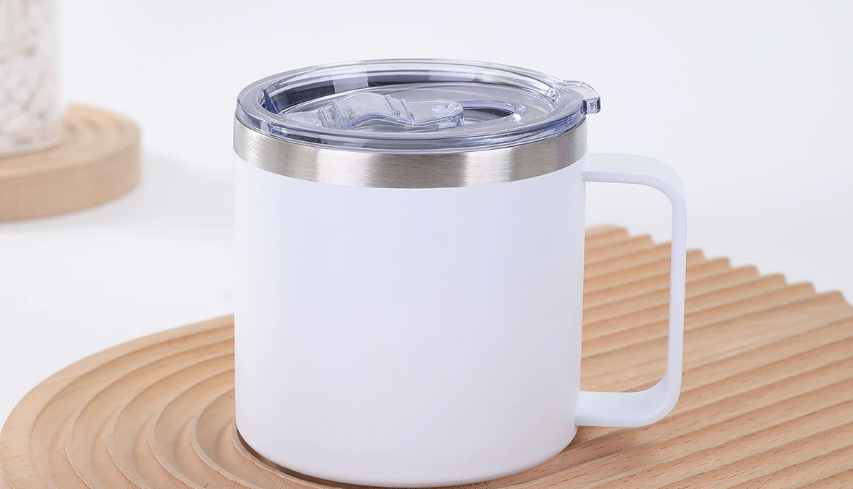
The first time I added a lidded mug to my product line, the response was amazing. People instantly understood the practical value. It combines the comfort of a traditional coffee mug with the travel-friendly features of a tumbler. For me, it's the perfect canvas. I can use sublimation to create stunning, durable designs, and my clients get a product that fits seamlessly into their busy, modern lives. It’s a win-win, offering personalization, function, and style all in one cup.
Can I sublimate on Dollar Tree mugs?
Walking through Dollar Tree, you spot a stack of cheap, plain white mugs. You think, "This is a great deal! Can I use these for my sublimation business?"
The temptation to save money is strong. But trying to sublimate a regular mug will result in a complete waste of time, ink, and your creative energy.
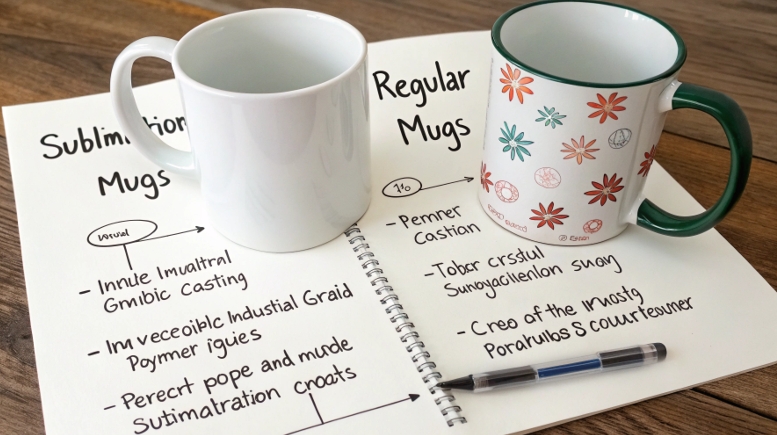
No, you cannot sublimate on Dollar Tree mugs. They are missing the essential polymer coating that sublimation ink needs to bond to the surface of the mug.
Dive Deeper: The Unseen Requirement for Quality
This is the number one mistake I see beginners make, and it’s a painful one. You invest in a printer, inks, and a heat press, only to see your designs wash right off. I want to save you from that headache. A professional designer like Emma knows that the quality of the final product starts with the quality of the raw material.
Here’s the science behind the "no":
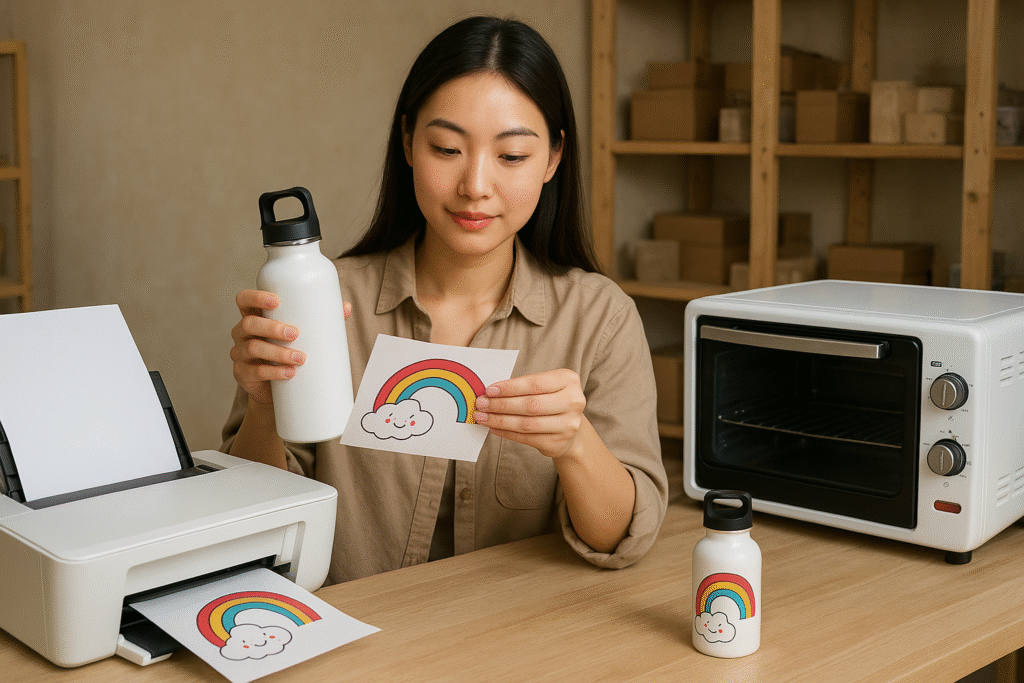
- The Chemistry: Sublimation ink is a special dye that only bonds with polyester molecules. A proper sublimation mug is coated with a clear, polyester-based liquid and then cured at a high temperature. This creates an invisible, receptive layer.
- The Dollar Store Mug: A regular ceramic mug from a discount store has a simple glaze finish. It's made of silica and other minerals—no polyester. There is simply nothing for the ink to attach to.
What happens if you try it anyway?
You’ll heat the mug and the ink will turn to gas. Some of that gas might lightly stain the surface glaze, creating a faint, blurry, and completely unsaturated image. It will look like a mistake and will wash away with soap and water. You must use mugs sold specifically as "sublimation blanks" to get professional, permanent results.
Can you use regular coffee mugs for sublimation?
You have a favorite plain mug at home or see a unique shape at a store. You get an idea for a great design and wonder if you can just use that mug.
It's frustrating to be limited to specific "blanks." You want the creative freedom to use any mug you find, but you don't know if it will work.
No, you cannot use a regular coffee mug for sublimation. The process requires a special polymer coating that standard ceramic, glass, or metal mugs do not have.
Dive Deeper: You Can't Sublimate on Just Anything
Think of it like trying to dye a leather jacket with fabric dye designed for cotton. The materials are fundamentally incompatible. It’s the same with sublimation. The ink and the surface have to be engineered to work together.
The entire business of sublimation products, which I've built my career on, relies on this specific chemistry. It's why there is a whole industry dedicated to manufacturing "sublimation blanks.”
Let's break down the material requirements:
| Material | Compatibility with Sublimation | Why It Fails (Without Coating) |
|---|---|---|
| Standard Ceramic | No | Lacks polymer molecules for the ink to bond with. |
| Glass | No | Non-porous surface has nothing for the ink to grab onto. |
| Stainless Steel | No | Metal surface has no polyester polymers. |
| 100% Cotton | No | Natural fibers burn at sublimation temperatures; ink washes out. |
| Polyester Fabric | Yes | The ink bonds directly with the polyester fibers. |
| Coated Blanks | Yes | A polymer coating is applied to ceramic, metal, etc., to make it receptive. |
So, while you can't use a regular mug, you can buy a sublimation-ready mug that looks and feels exactly the same, but has that crucial, invisible coating that welcomes the ink.
What kind of coffee mugs can you sublimate on?
You're ready to buy the right mugs for sublimation. Now you need to know exactly what to look for to ensure you're getting a product that will work perfectly.
Buying the wrong "coated" mugs can be a costly mistake. Some mugs are treated for other printing methods, and you need to be sure you're getting one specifically for sublimation.
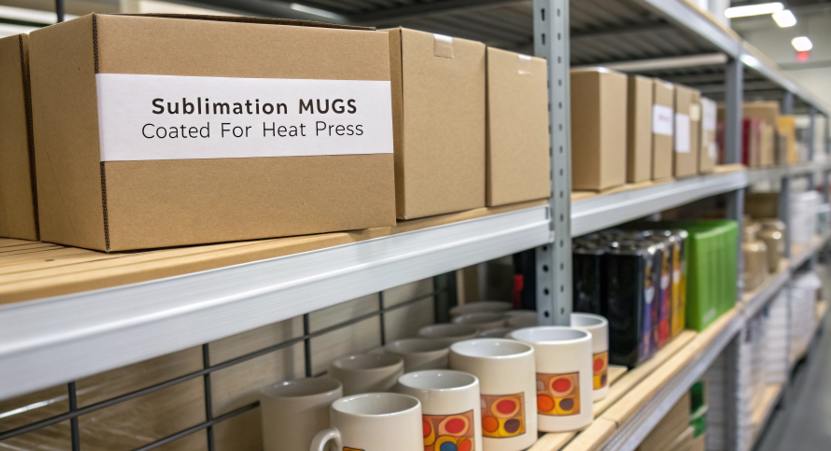
You can only sublimate on mugs that are explicitly sold as "sublimation mugs" or "sublimation blanks." These mugs have been treated with a special polyester coating designed to absorb the sublimation dye permanently.
Dive Deeper: How to Identify the Right Mugs
When I started my business, sourcing reliable mugs was my biggest challenge. The quality of the coating makes all the difference. For designers like Emma, having a trusted supplier for high-quality blanks is essential for consistently good results.
Here’s what you need to look for when shopping for sublimation-ready mugs:
-
Look for the "Sublimation" Keyword: This is the most important clue. Sellers will always label their products clearly. Look for terms like "sublimation blank," "for heat press," "poly-coated," or "for dye-sublimation." If it doesn't say this, assume it won't work.
-
Check the Grade of the Mug: Not all sublimation mugs are created equal. They are often sold with grades like AAA, AA, or A.
- AAA Grade: This is the highest quality. The coating is thick, even, and free of defects. It will give you the most vibrant and consistent colors. This is what I use for all my premium products.
- A or AA Grade: These are good for practice or budget projects, but you might see tiny imperfections in the coating (like small bumps or pits) that can show up in your final print.
-
Consider the Material and Features:
- Ceramic: The most common and cost-effective option. Perfect for classic coffee mugs.
- Stainless Steel: Great for travel mugs and tumblers with lids. They are durable and offer excellent insulation.
- Glass: Some glass mugs (like frosted ones) have a sublimation coating for a unique, semi-translucent effect.
Always buy from a reputable supplier who specializes in sublimation products. They understand the technology and can guarantee that their blanks will work as advertised.
What is the difference between ceramic mugs and sublimation mugs?
To the naked eye, a regular ceramic mug and a sublimation mug can look identical. You're wondering what the hidden difference is and why it matters so much.
Not knowing the difference can lead you to believe you can use any mug. This misunderstanding is the root cause of most failed sublimation projects for beginners.
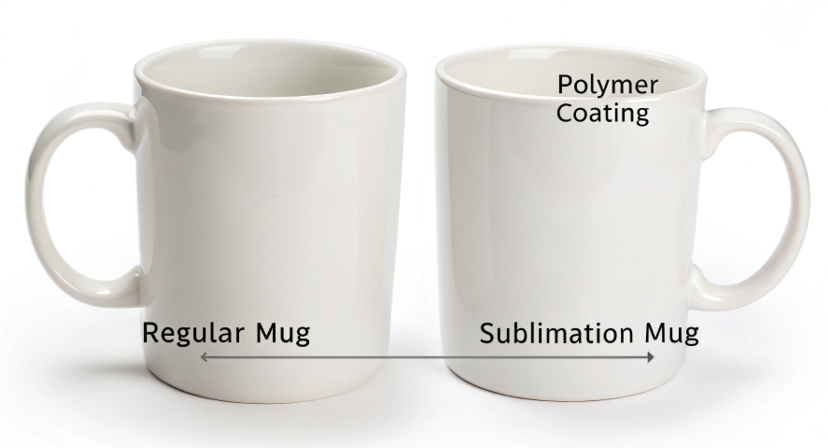
The key difference is the invisible polymer coating. A sublimation mug has this special coating applied to its surface, while a regular ceramic mug only has a standard glaze.
Dive Deeper: The Unseen But Crucial Layer
The difference isn't something you can see or feel, but it's everything to the process. Think of it like this: a regular mug is a wall painted with gloss paint. A sublimation mug is a wall painted with a special magnetic primer. You can't see the primer, but it's the only thing that will let magnets stick.
Let's do a direct comparison:
| Feature | Regular Ceramic Mug | Sublimation Mug |
|---|---|---|
| Base Material | Ceramic (Clay) | Ceramic (Clay) |
| Surface Finish | Standard Glaze | Polymer Coating on top of the glaze |
| Appearance | Identical to a sublimation mug | Identical to a regular mug |
| Purpose of Surface | To be waterproof and food-safe. | To be waterproof, food-safe, and receive sublimation ink. |
| Cost | Very low (e.g., $1 at a discount store). | Higher (due to the extra coating process). |
| Printing Result | Ink will not bond; it will be faint and wash off. | Ink bonds permanently, resulting in vibrant, dishwasher-safe images. |
This coating is what you are paying for when you buy a sublimation blank. It's a crucial manufacturing step that turns a simple piece of ceramic into a canvas for permanent, high-quality art. This is why I source my mugs carefully, often relying on established overseas manufacturers who have perfected the coating process to ensure every mug I sell is flawless.
Conclusion
Sublimation mugs with lids offer the best of both worlds: practical daily use and limitless personalization. By using the correct polymer-coated blanks, you can create professional, permanent, and highly desirable products.

Hi there! I'm Lucy, the guardian angel of two good children. During the day, I am a professional in the heat transfer printing industry, from factory workshops to running my own business. Here I share what I have learned - let's grow together!