Do You Have to Seal Sublimation Tumblers?
You've just pressed a perfect, vibrant tumbler. Now the fear sets in. Will it scratch, fade, or wash away? You wonder if you missed a final, crucial step to seal it.
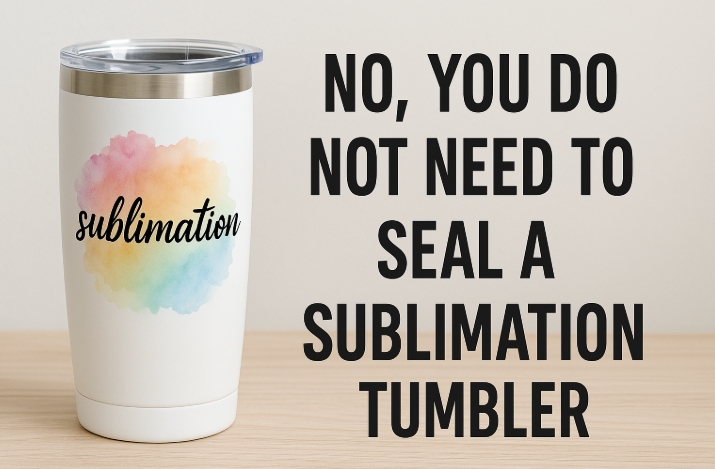
No, you never need to seal a sublimation tumbler. The sublimation process itself fuses the ink directly into the product's coating, creating a permanent, scratch-resistant design that doesn't need any extra protection.
This is one of the biggest reliefs for people new to sublimation. I remember a client who was an expert at making tumblers with vinyl and epoxy. She was so used to her multi-step sealing process that she couldn't believe sublimation was different. She insisted on putting epoxy over her first batch, only to find it was a lot of extra work for no real benefit. The magic of sublimation is its permanence. Once you understand why it's permanent, you'll feel confident selling your tumblers without ever thinking about a sealant again.
Is sublimation permanent on tumblers?
You are spending money on supplies and time on your craft. You need to be sure the design will last. You do not want customers coming back with faded or peeled tumblers.
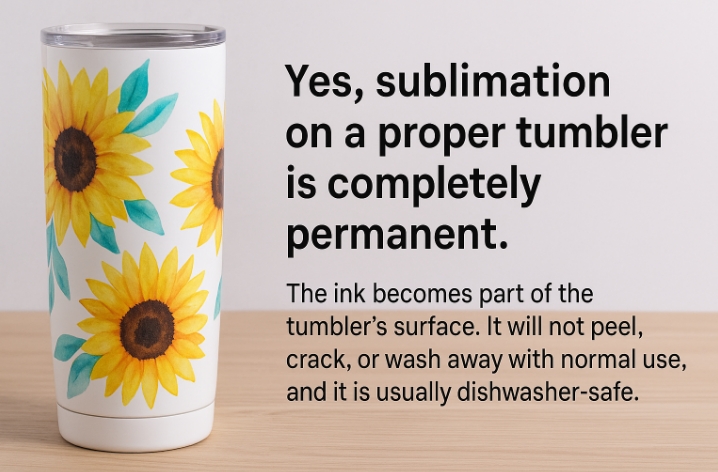
Yes, sublimation on a proper tumbler is completely permanent. The ink becomes part of the tumbler's surface. It will not peel, crack, or wash away with normal use, and it is usually dishwasher-safe.
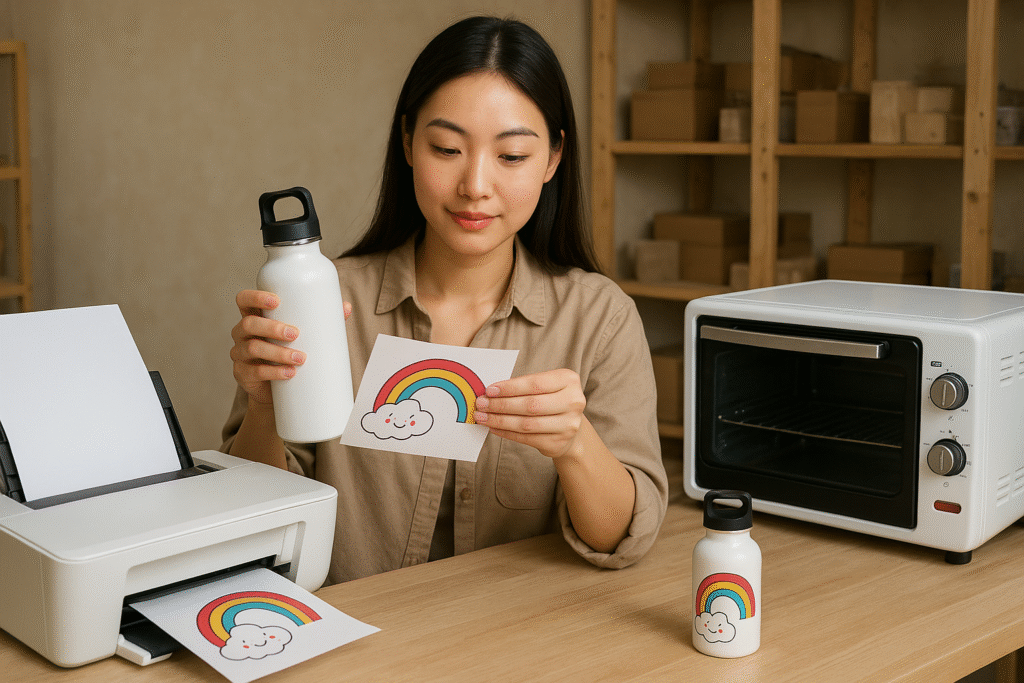
The permanence comes from the science of the process. My tech specialist, Alex, loves to explain this part. The key is in the name: dye-sublimation. Under the heat and pressure of your press, the solid ink on the paper turns directly into a gas, skipping the liquid stage completely. This ink gas is scientifically designed to bond with polyester molecules. The tumbler’s special coating is made of these molecules. The heat causes the pores of this coating to open up. The ink gas flows into these open pores. Then, as the tumbler cools, the pores close, permanently trapping the ink within the surface. It is not a layer of paint sitting on top. It is infused into the coating. This is why the design feels perfectly smooth and can withstand washing without fading, achieving a high colorfastness grade of 4-5.
Do you need a sublimation coating?
You see a good deal on regular stainless steel or ceramic mugs. You wonder if you can just sublimate on them directly. It would save you money if you could skip buying special "sublimation" blanks.
Yes, a sublimation coating is absolutely mandatory. Raw materials like steel, glass, or regular ceramic do not have the polyester polymers that sublimation ink needs to bond with. Without this coating, the image will not transfer.

The coating is the most important part of the entire process. Alex uses a simple analogy: "It's like trying to dye a cotton t-shirt versus a plastic bag. The dye soaks into the cotton fibers perfectly, but it just beads up and wipes off the plastic." In this case, the sublimation ink is the dye, and the polymer coating provides the "cotton fibers" for it to bond with. The raw stainless steel is the plastic bag. This coating is a clear, polyester-based liquid that is professionally applied at the factory and cured at high temperatures. This ensures a perfectly smooth and even surface ready for your design. While you can buy DIY coating sprays, I strongly advise against them for products like tumblers. It is very difficult to get an even coat, and factory coatings are formulated to be durable and food-safe. Always buy blanks that are specifically sold as "sublimation-ready."
Do you epoxy over sublimation tumblers?
You like the thick, glass-like finish of epoxy art. You want to combine it with your detailed sublimation designs. But you are worried the chemicals in the epoxy will ruin the sublimated image.
You do not need to epoxy over sublimation tumblers for protection, but you can for a decorative effect. The epoxy will not harm the sublimation design, but applying it correctly is a separate skill.
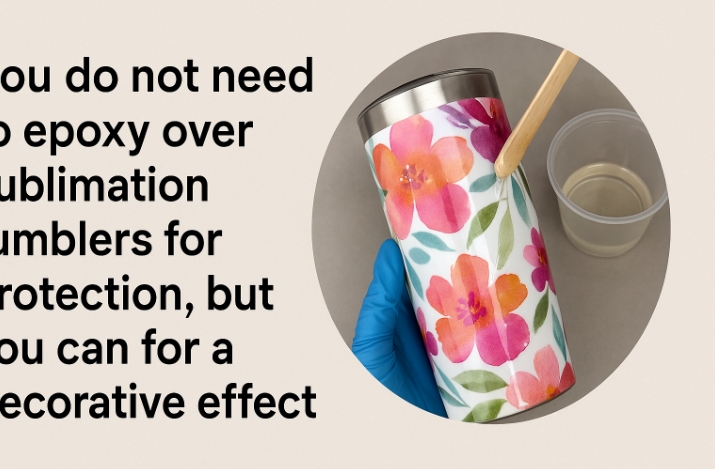
This is purely a creative choice. The sublimation itself is already permanent and sealed. People add epoxy for two main reasons: to get that ultra-thick, glossy finish, or to add elements like glitter on top of the sublimated image. If you choose to do this, the process is critical. You must let the tumbler cool completely after pressing. Then, clean it with isopropyl alcohol to remove any oils or fingerprints that could cause the epoxy to repel. The epoxy itself will not damage the sublimation, because the design is safe inside the coating. However, a bad epoxy job with bumps, bubbles, or "fisheyes" will ruin the look of the whole tumbler. Also, as Alex points out, you must use a high-quality, UV-resistant epoxy. A cheap one can yellow over time in the sun, which will distort the beautiful colors of your sublimation print underneath. It's a great technique, but it's an advanced one.
Can you sublimate on a stainless steel tumbler?
You want to make custom stainless steel tumblers, a very popular item. You bought some tumblers, but your design just smudges and wipes away. You're trying to figure out what went wrong.
Yes, you can sublimate on stainless steel tumblers, but only if they are specially prepared with a polymer sublimation coating. You cannot sublimate on raw, uncoated stainless steel because the metal cannot absorb the ink.
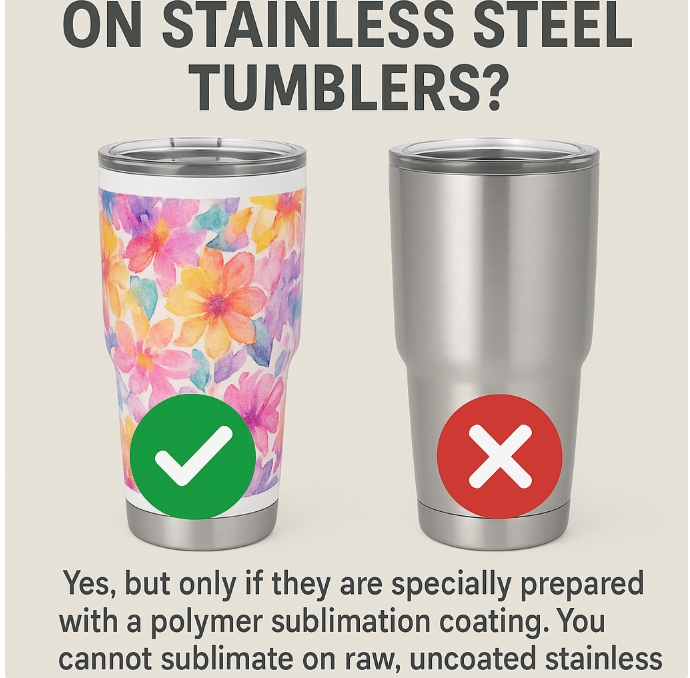
This is the first and most important rule of sublimating on hard goods. The stainless steel provides the tumbler's structure, durability, and insulation properties. But it plays no role in the actual decoration process. The magic happens entirely on that thin, often invisible, polymer coating. When I first started my trading company, this was the most common problem my clients faced. They would buy beautiful tumblers from a restaurant supply store, assuming the white finish was the sublimation surface. They would waste time and money on failed prints. The lesson is to always source your materials from a reputable sublimation supplier. Read the product description carefully. It must clearly state "for sublimation," "sublimation blank," or "sublimation ready." This guarantees the tumbler has the essential coating you need for a permanent and vibrant transfer.
Conclusion
In short, never seal a sublimation tumbler for protection. The process is already permanent. Just be sure you are always using a tumbler that has the required sublimation coating.

Hi there! I'm Lucy, the guardian angel of two good children. During the day, I am a professional in the heat transfer printing industry, from factory workshops to running my own business. Here I share what I have learned - let's grow together!