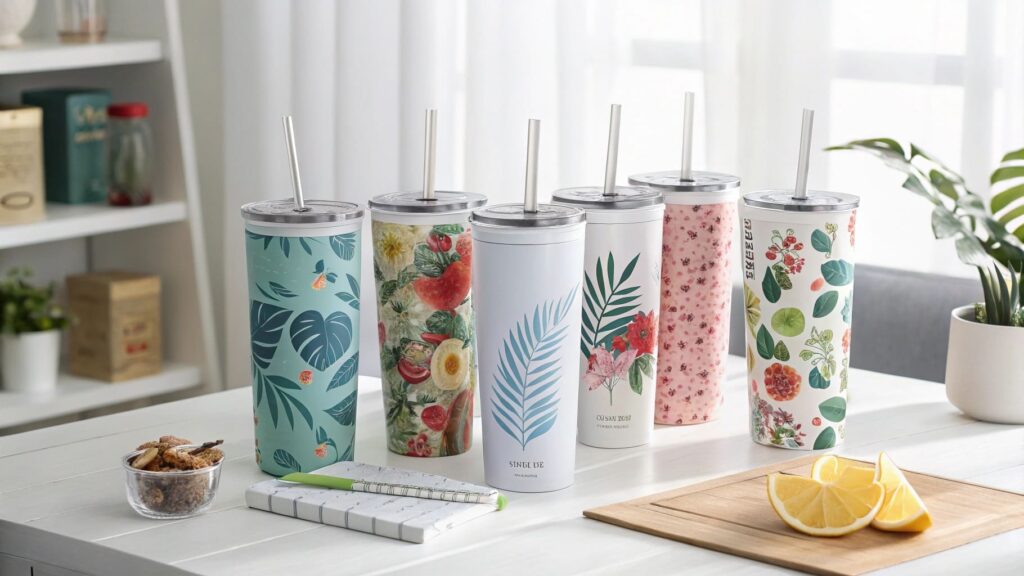
How Can Buying 20oz Sublimation Skinny Tumblers Wholesale Grow Your Business?
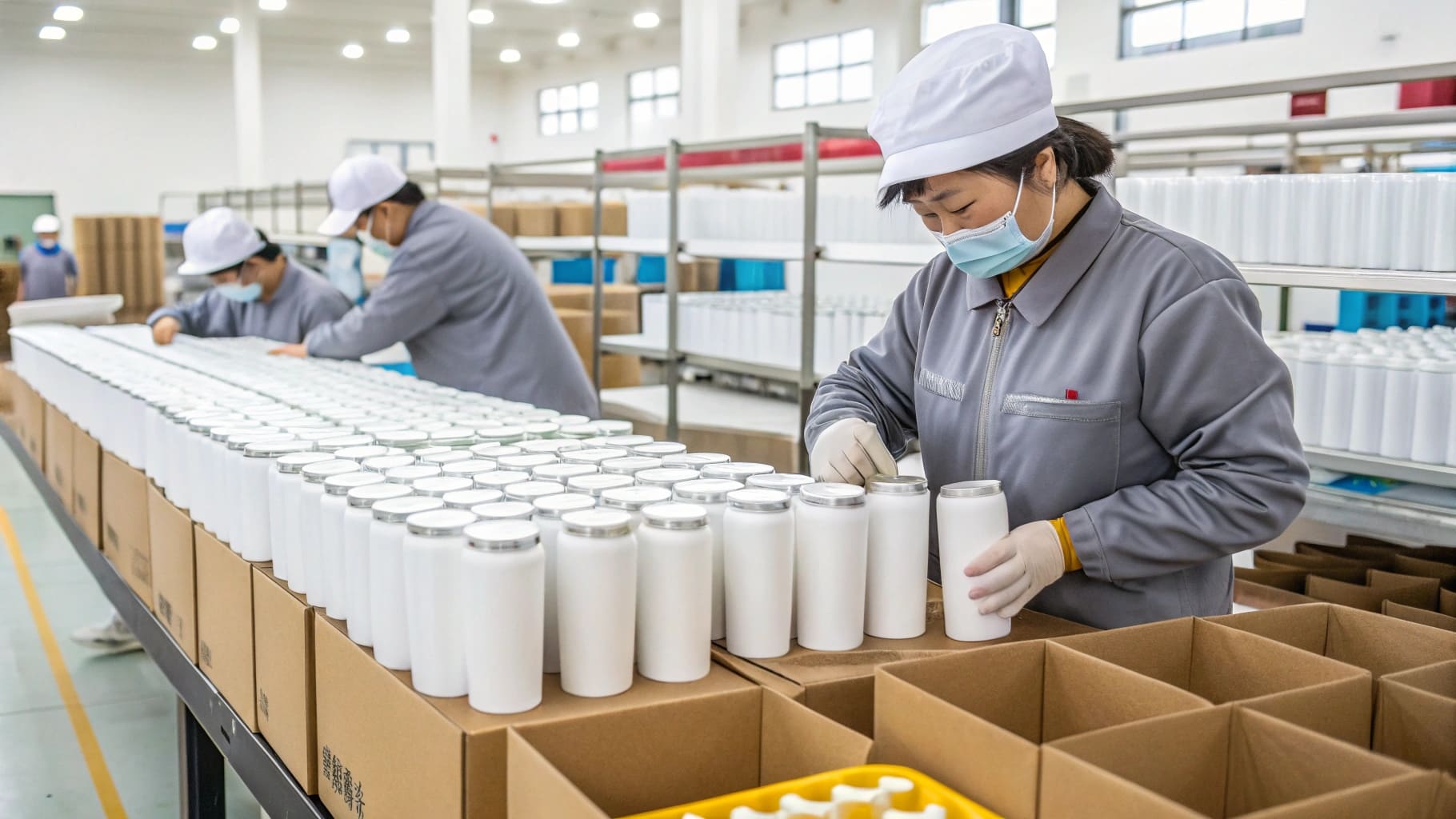
You want to scale your custom tumbler business, but buying blanks individually eats up all your profits. You see other sellers offering better prices and wonder how you can possibly compete.
Buying 20oz skinny tumblers wholesale is the number one strategy for profitability. It dramatically lowers your cost per unit, allowing you to increase profit margins, compete on price, and always have inventory ready for large orders.

I have watched so many passionate creators hit this exact wall. They start out making beautiful, high-quality tumblers, but they struggle to make any real money. The idea of buying a whole case of tumblers at once can feel like a scary financial leap. But from my experience helping hundreds of businesses grow, I can tell you it is the single most important step you will take. It’s the move that transforms a fun hobby into a real, profitable business. Let me show you how to do it right.
How do you correctly size a design for a 20oz skinny tumbler?
You spent an hour creating the perfect design. But when you wrap it around the tumbler, it overlaps in a messy way, or there's a horrible white gap along the seam.
To size your design, first measure your tumbler's height and circumference with a flexible measuring tape. A typical 20oz skinny tumbler is about 9.3 inches wide by 8.2 inches tall. Always add a slight bleed.
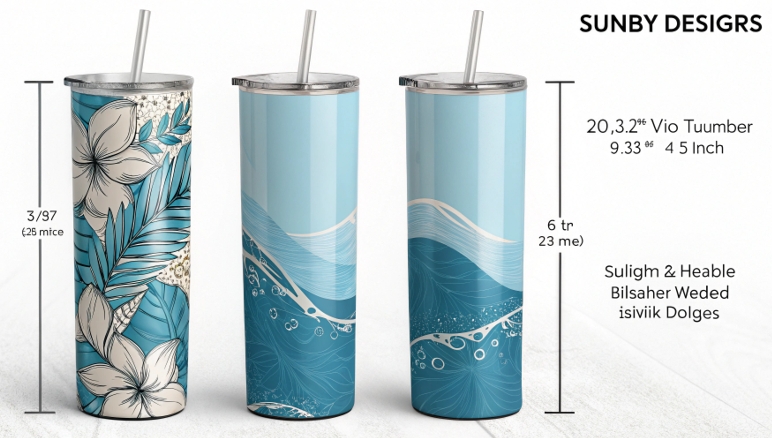
My product specialist, Alex, lives by the rule: "measure twice, print once." It’s easy to download a free template online, but this is often a mistake. There are small manufacturing differences between different brands of "20oz skinny" tumblers. A millimeter of difference can ruin your print. The only truly reliable method is to measure one tumbler from the specific wholesale case you are using. Wrap a soft tape measure around the middle to get the circumference (this is your design's width). Then use a ruler to measure the height of the flat, printable area. Once you have these numbers, add a small "bleed" of about 0.1 inches to both the width and height. This extra margin ensures that even if your wrap isn't perfectly straight, you won't have any white gaps showing at the edges.
| Measurement Step | Tool to Use | Why You Do It | Expert Advice |
|---|---|---|---|
| Measure Height | Ruler or Calipers | To get the exact printable height. | Measure only the straight part of the tumbler wall, not the curved bottom or top lip. |
| Measure Circumference | Soft Tape Measure | To get the exact width needed for a full wrap. | Pull the tape measure snug, but don't stretch it. This number is your design width. |
| Add a Bleed | Your Design Software | To create a small overlap that prevents white gaps. | Add 0.1" to your final height and width measurements on your design canvas. |
Can you really make good money selling sublimation tumblers?
You love the creative process, but after costs, you're barely breaking even. You're starting to wonder if this business can ever be more than just an expensive hobby.
Yes, you can absolutely make great money selling tumblers, but only if you buy your blanks wholesale. Lowering your main cost allows for 50-70% profit margins, making your business instantly more viable and scalable.
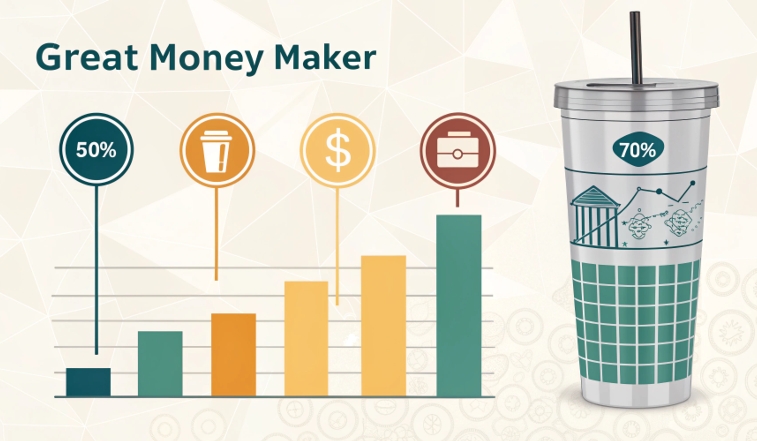
Profitability is a simple math equation, and buying wholesale is the most important part of it. I once helped a client who was buying her blanks from a local craft store for nearly $12 each. She had to sell her finished tumblers for $30 just to make a tiny profit, and sales were slow. I guided her through her first wholesale purchase of a 25-pack case. Her cost per tumbler dropped to below $4. Suddenly, her profit on a $25 tumbler jumped from $2 to over $15. This changed everything. She could offer team discounts, run sales, and confidently seek out larger corporate orders. You must know your Cost of Goods Sold (COGS). This includes the blank, your ink, paper, heat tape, and shipping box. When the blank is your biggest single cost, slashing it through wholesale purchasing creates the biggest possible impact on your profit.
| Cost Component | Retail Sourcing (per unit) | Wholesale Sourcing (per unit) |
|---|---|---|
| Blank 20oz Tumbler | $12.00 | $3.75 |
| Ink & Paper | $0.80 | $0.80 |
| Box, Tape, Etc. | $0.70 | $0.70 |
| Total COGS | $13.50 | $5.25 |
| Sale Price | $28.00 | $25.00 |
| Gross Profit | $14.50 | $19.75 |
What is the exact image size for a 20 oz skinny tumbler?
You found a design template online, but when you print it, the image looks stretched and blurry. You can't figure out the right settings to get a professional, crisp print.
A standard image size for a 20oz skinny tumbler is 9.3 inches wide by 8.2 inches tall, designed at 300 DPI. This includes a small bleed, but always measure your specific tumbler first.

Getting the size right involves two equally important parts: the physical dimensions and the digital resolution. The dimensions (e.g., 9.3" x 8.2") match the tumbler size. But the resolution, measured in DPI (Dots Per Inch), determines the print quality. You must set your design canvas to 300 DPI. Many people accidentally use images from the internet, which are often set to 72 DPI for fast web loading. If you try to stretch a 72 DPI image to fit a tumbler, it will look blocky and unprofessional. Alex, my heat transfer specialist, drills this into our clients: "Start your project on the right canvas." Before you add a single picture or line of text, open your design software and set the canvas size to your measured dimensions and the resolution to 300 DPI. This simple first step guarantees that everything you create will print out sharp and clear.
What are the best settings for skinny tumbler sublimation?
You followed the time and temp from a video, but your tumblers look faded or have brown, burnt patches. You're wasting expensive blanks because of inconsistent results.
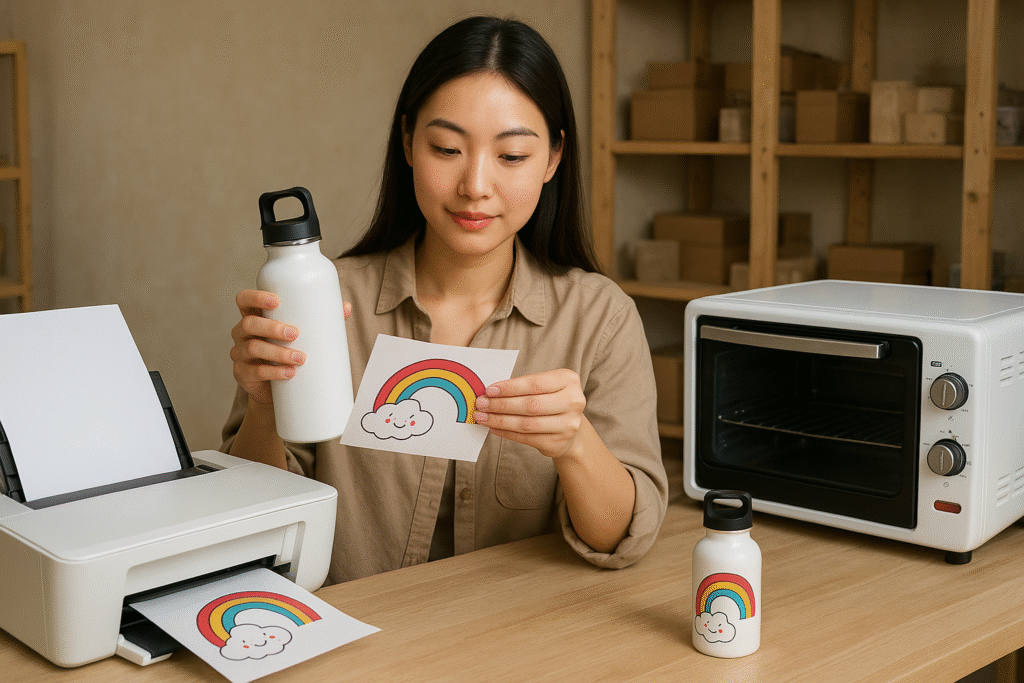
A great starting point for a 20oz skinny tumbler is 375°F (190°C) for 6 minutes in a convection oven. For a tumbler press, try 365°F (185°C) for 60-70 seconds, rotating once.
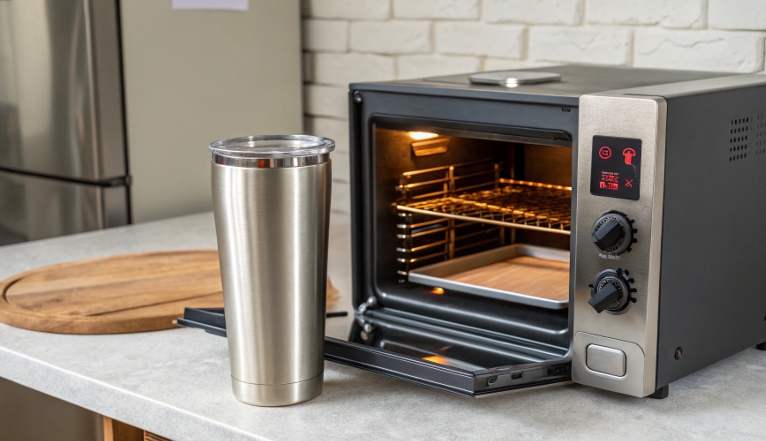
These settings are a starting point, not a magic formula. The perfect settings depend on your specific oven, press, and brand of tumbler. The best thing you can do is calibrate your own process. I always encourage new clients to use one tumbler from their first wholesale case for testing. Create a test strip with solid blocks of color—especially black, red, and blue. Press it using the recommended settings. Then, analyze the result. If the black looks brown and faded, your temperature is too high or your time is too long. If all the colors look pale, you likely need to add 30 seconds of time or increase the heat by 5-10 degrees. Keep a small notebook next to your press. Write down the brand of tumbler, the settings you used, and the result. Once you find that perfect combination, you can produce hundreds of flawless tumblers with zero waste.
Conclusion
Buying 20oz skinny tumblers wholesale is the gateway to a profitable business. It slashes your costs, boosts your margins, and gives you the confidence to fulfill any order, big or small.

Hi there! I'm Lucy, the guardian angel of two good children. During the day, I am a professional in the heat transfer printing industry, from factory workshops to running my own business. Here I share what I have learned - let's grow together!