How Can You Master Sublimation on Mugs, Tumblers, and Bottles?
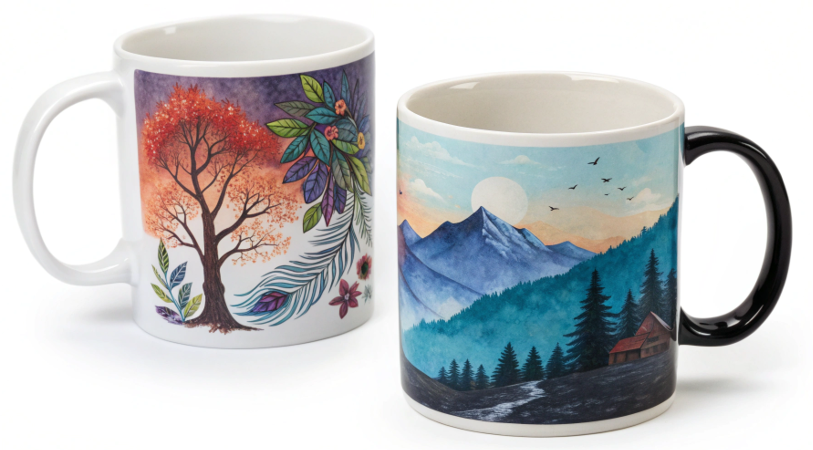
Your drinkware projects are inconsistent. Mugs work, but tumblers are faded, and bottles are blotchy. You're wasting expensive blanks and feel stuck, unable to grow your product line.
The key is understanding that each item requires unique settings. Mugs need heavy pressure, tumblers need a hot peel, and all of them must have a special polymer coating. Mastering these small differences is essential for creating consistently professional and sellable drinkware.

When I first expanded my sublimation business, I thought all drinkware was the same. My mugs were coming out great, so I proudly took an order for 200 tumblers. My first batch was a complete disaster. The images were blurry and had strange ghost-like shadows. I realized then that sublimation is not a "one-size-fits-all" process. Each surface—ceramic, stainless steel, glass—has its own set of rules. Learning these rules was how I grew my company and how I help my clients succeed now. Let's cover the most common questions to save you the time and money I lost.
Can I sublimate mugs from Dollar Tree?
You see those ultra-cheap mugs at the dollar store. You dream of the amazing profits you could make. But you're hesitant, worried it's too good to be true, and you're right to be.
No, you cannot sublimate on mugs from Dollar Tree. They are regular ceramic mugs and lack the essential polymer coating required for the sublimation ink to bond. Attempting to use them will always result in a failed print.
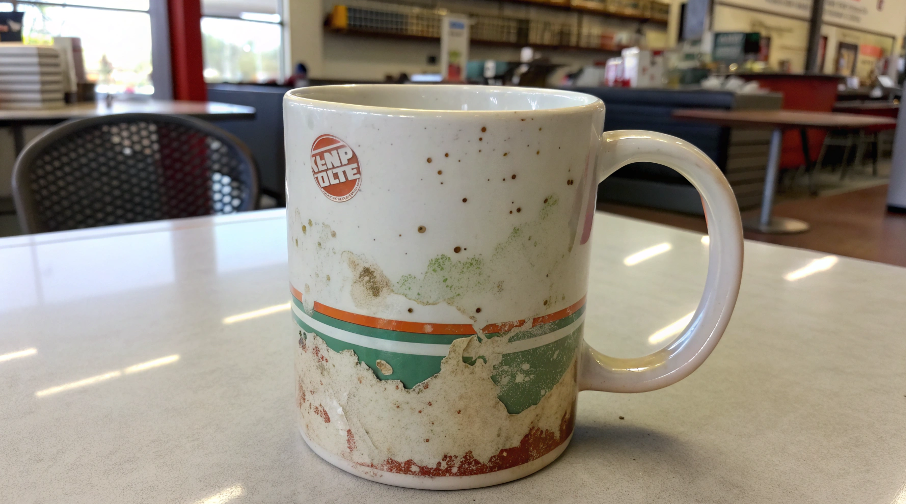
This is one of the most expensive "shortcuts" a beginner can take. The science is simple: sublimation ink is a special dye that only bonds with polyester. Sublimation mugs are just ceramic mugs that have been machine-coated with a layer of this polyester polymer. My technical expert, Alex, explains it well. "Trying to sublimate on an uncoated mug is like trying to dye a leather jacket with fabric dye. The materials are incompatible." The ink has nothing to hold onto, so it just sits on the surface as a faded, blurry stain that wipes right off. You don't save money by trying this. You actually waste more money on failed products. Think about the real cost of one failed dollar store mug.
| Item Wasted | Approximate Cost |
|---|---|
| The Mug Itself | $1.00 - $1.25 |
| Sublimation Paper | $0.30 - $0.50 |
| Sublimation Ink | $0.20 - $0.40 |
| Your Time & Electricity | Priceless |
| Total Loss per Attempt | ~$2.00 + Your Time |
Do you peel sublimation tumblers hot or cold?
You just pressed a beautiful tumbler, but now comes the moment of truth. Do you peel the paper off right away or let it cool? The wrong choice can ruin your hard work.
Always peel the sublimation paper from a stainless steel tumbler or bottle while it is still very hot. Waiting for it to cool can cause the image to look blurry or have a faint shadow, a problem known as "ghosting."
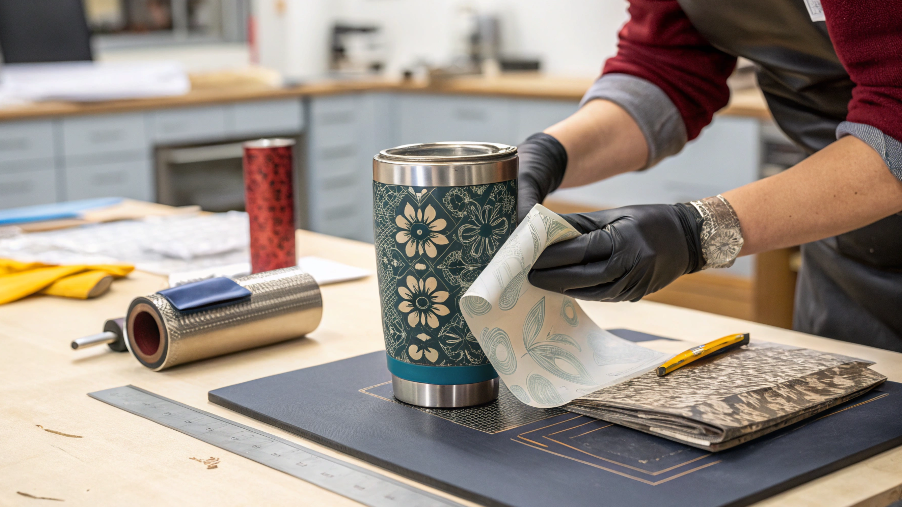
This is where tumblers are completely different from some other sublimation items. The reason for a hot peel is physics. As the metal tumbler cools, it shrinks slightly. The paper on its surface can shift by a tiny amount. Even though you've taken it out of the press, the tumbler is still hot enough for the ink to be in a gaseous state. If the paper moves, that gas will resettle onto the tumbler in the wrong spot, creating a blurry shadow. I learned this the hard way and ruined several tumblers before figuring it out. The solution is simple: get the paper off immediately. As soon as you open your press, place the tumbler on a heat-safe mat, and using heat-resistant gloves, peel the paper off in one clean, quick motion. This stops the sublimation process cleanly and gives you the sharpest possible image every time.
| Substrate Type | Recommended Peel | Why? |
|---|---|---|
| Metal Tumblers/Bottles | HOT | Prevents ghosting as the metal cools and contracts. |
| Ceramic Mugs | WARM/HOT | Less prone to ghosting but a hot peel is still best practice for sharpness. |
| Polyester Fabric | WARM | Gives a clean release without stretching the hot fabric. |
| Some Flat Items | COLD | Specified by manufacturer to prevent texture issues. Always check instructions. |
Can you turn a regular mug into a sublimation mug?
You've seen the DIY coating sprays for sale online. You imagine buying cheap mugs and coating them yourself. It seems like a brilliant way to cut costs and control your supply.
While DIY sprays exist to create a sublimation coating, they are not recommended for professional products. It is extremely difficult to achieve an even, durable, and food-safe finish, frequently leading to blotchy prints and poor quality.
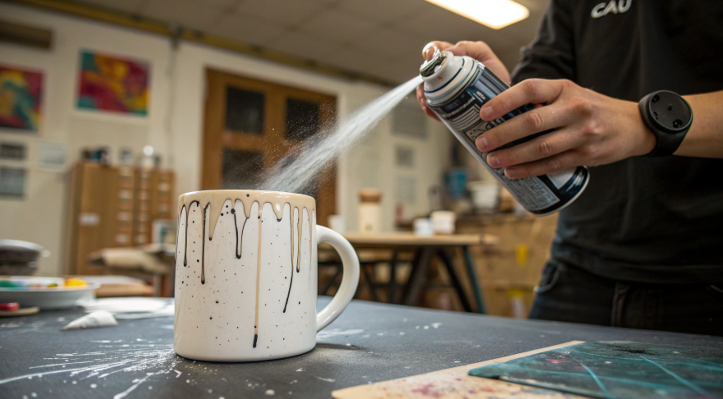
I've tested these sprays so my clients don't have to. The idea is tempting, but the results are not worth it for a business. A factory applies the polymer coating with specialized machines in a clean environment to get a perfectly even, microscopic layer. Doing this with a spray can in your workshop is nearly impossible. You will get drips, bubbles, and "orange peel" texture. These tiny imperfections will show up as major flaws in your final print—faded spots, blurry areas, and blotches. More importantly, as Alex warns, there are safety concerns. "Factory coatings are cured at very high temperatures to become inert and food-safe," he says. "You can't guarantee that a DIY spray, cured in a home oven, has the same safety or durability." A product that peels or yellows after a few washes can ruin your brand's reputation. Stick to professional blanks for anything you plan to sell.
How long does sublimation last on mugs?
A customer asks, "Will this wash off?" You hesitate. You know it's permanent, but you don't know how to explain it confidently or what "permanent" really means for your products.
A properly sublimated image on a mug will last for the entire life of the mug itself. The ink is infused into the coating, not printed on top, so it will not peel, crack, or fade with normal use and washing.
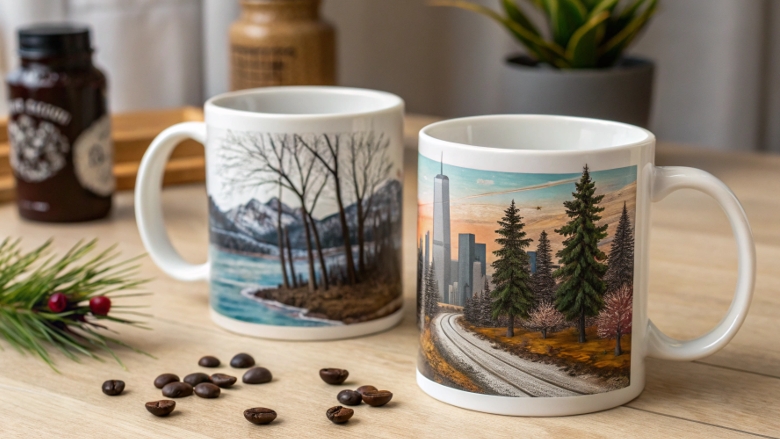
This is your most powerful selling point. You should be extremely confident about this. The science of sublimation makes it one of the most durable printing methods available. Unlike a vinyl sticker that is glued to the surface, sublimation ink becomes a part of the mug's coating. You can't feel the image because it's not on the surface; it's in the surface. This means it can't be scratched off. Most sublimation mugs are top-rack dishwasher safe. Over hundreds of washes, you are more likely to see the ceramic mug's glaze wear down than you are to see the sublimated image fade. I tell my clients to lean into this. You are offering a premium, permanent product. It's not a sticker that will peel after a few months. That permanence and quality are what customers are paying for and what justifies your price.
Conclusion
Master drinkware by using proper blanks, learning the right peel technique for each item, and trusting the process. This knowledge is your foundation for professional, lasting products.

Hi there! I'm Lucy, the guardian angel of two good children. During the day, I am a professional in the heat transfer printing industry, from factory workshops to running my own business. Here I share what I have learned - let's grow together!