How Can You Prevent Ghosting and Fading in Sublimation Mugs?
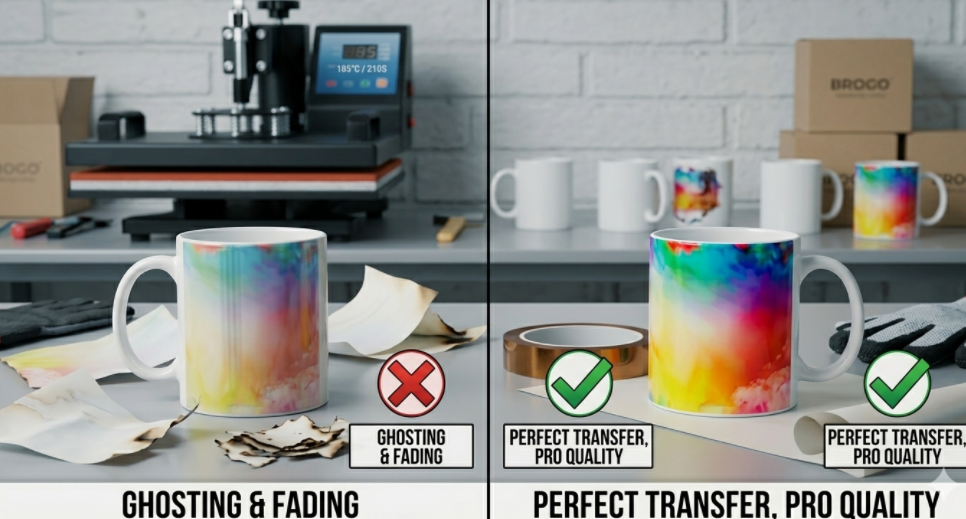
You press a beautiful mug, but it comes out with blurry edges or faded colors. Each failed print is a "profit killer," wasting expensive blanks, ink, and your valuable time.
This constant frustration makes you question your skills and your equipment. You feel stuck, unable to produce the professional, vibrant products your customers expect and your business needs to survive.
To prevent ghosting and fading, you must perfect your technique and use high-quality materials. Ghosting is fixed by securing the paper and balancing pressure, while fading is avoided by mastering heat settings and using mugs with a superior polymer coating.
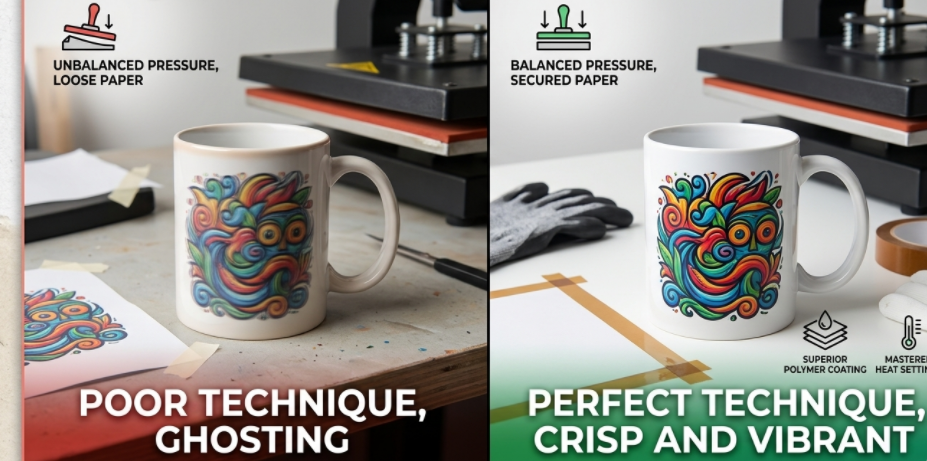
In my years on the factory floor, I’ve seen that ghosting and fading are the two biggest headaches for any sublimation business. In today’s global economy, with rising shipping costs and high labor expenses, a business can’t afford to waste a single blank. The key is to understand why these problems happen and how to stop them before they start. When you master these details, you move from being an amateur to a professional. Let's dig into the specifics.
What Are the Right Temperature and Time Settings for Different Materials?
You use the same settings for a ceramic mug as a stainless steel tumbler. The mug comes out perfect, but the tumbler is scorched and faded. It feels like a guessing game.
This trial and error is incredibly wasteful. You're ruining products and losing money because you don't understand how each material reacts to the heat press.
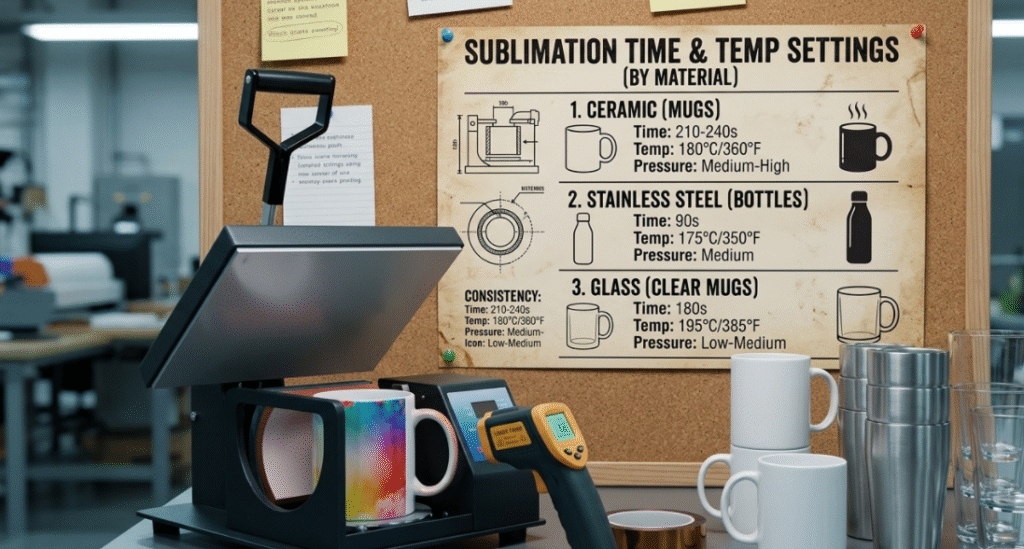
Different materials require unique time and temperature settings. Ceramic, stainless steel, and glass absorb and transfer heat differently, so a "one-size-fits-all" approach will always lead to inconsistent, poor-quality results. You must use a specific recipe for each type of blank.
Dive Deeper: The Unique "Personality" of Each Material
As for fading, it’s a chemistry game. You absolutely cannot cut corners on your tools—you need dedicated sublimation ink and paper. But more importantly, you need to understand your material. Every product has its own "personality." If the temperature is too high or the time is too long, you aren't just transferring ink; you're burning it. Fading is often the result of "over-cooking" the design. For a designer like Emma who needs predictable outcomes, knowing these personalities is crucial.
- Ceramic: Think of ceramic like a pizza stone. It absorbs heat slowly and evenly, and it holds that heat for a long time. It needs a longer press time to allow the heat to fully penetrate the blank and activate the ink transfer into its coating.
- Stainless Steel: This material is a conductor. It heats up very quickly, so it requires a shorter press time. If you press it for too long, you will burn the ink and the coating, resulting in a brownish or faded look.
- Glass: Glass is sensitive. It heats up quickly like metal but can crack from sudden temperature changes. It usually needs less time and a slightly lower temperature to prevent damage.
Here are some starting points. Always test with your own equipment.
| Material | Temperature Range | Time Range | Key Consideration |
|---|---|---|---|
| Ceramic Mugs | 180-200°C / 356-392°F | 180-210 seconds | Needs longer time to heat through. |
| Stainless Steel Tumblers | 185-195°C / 365-385°F | 60-75 seconds | Heats very fast; easy to over-cook. |
| Glass Mugs/Cans | 180-190°C / 356-375°F | 120-150 seconds | Handle with care to avoid thermal shock. |
Why Does the Coating Quality Matter So Much?
You've perfected your time and temperature settings. The mug looks fantastic right out of the press. But your customer says the design faded after just a few washes.
This is a business owner's worst nightmare. It leads to refunds, bad reviews, and destroys your brand's reputation for quality. You feel betrayed by your materials.
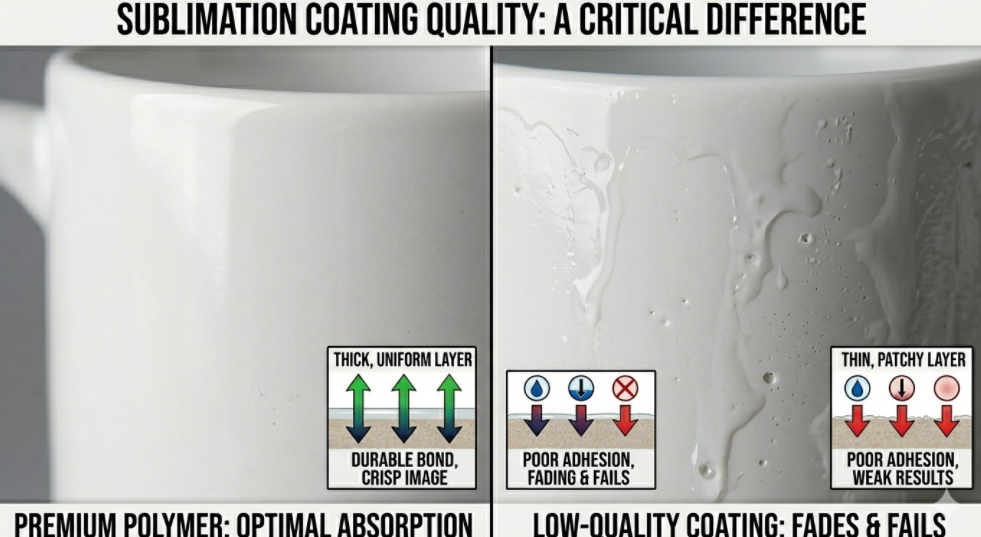
The coating is everything. It's the special polymer layer that absorbs and permanently locks in the sublimation ink. A low-quality, thin, or uneven coating cannot create a durable bond, causing the design to fade and fail.
Dive Deeper: The Coating Is Your Promise of Permanence
The international supply chain is more competitive than ever. The only way to stay ahead is to ensure consistency. When you buy from a factory that understands the importance of coating, you aren't just buying a mug; you're buying peace of mind. A cheap blank might save you 20 cents, but it can cost you a customer for life. The coating must be seen as the most critical feature of the blank. It is the invisible technology that guarantees your artwork remains vibrant.
Think of it this way:
- A Premium Coating: This is like a high-quality, professional non-stick pan. It's thick, perfectly even, and formulated to perform under high heat. It bonds chemically with the ink, locking it in place. This results in a vibrant, sharp, and truly dishwasher-safe product that builds customer trust. These blanks often come with a "wash cycle" rating, proving their durability.
- A Poor-Quality Coating: This is like a cheap pan that has been lightly sprayed with a non-stick coating. It's thin, uneven, and has microscopic pinholes. Under heat, it can't absorb the ink properly. After a few washes, the weak coating degrades and the ink washes away with it, leaving a faded, splotchy mess. You can often spot these by looking for small bumps, dull spots, or an inconsistent finish before you even press them.
At our factory, we know that our coatings are the foundation of your business. Our job is to make sure your custom gifts remain as permanent as the memories they represent.
What Are My Personal Tips for Perfect, Ghost-Free Transfers?
You’re using heat tape and you think your pressure is right, but you still get that frustrating, blurry ghosting effect on the edges of your designs.
You feel like you're missing a small but critical secret. This one recurring problem is holding you back from achieving consistently professional and sellable results on every single press.
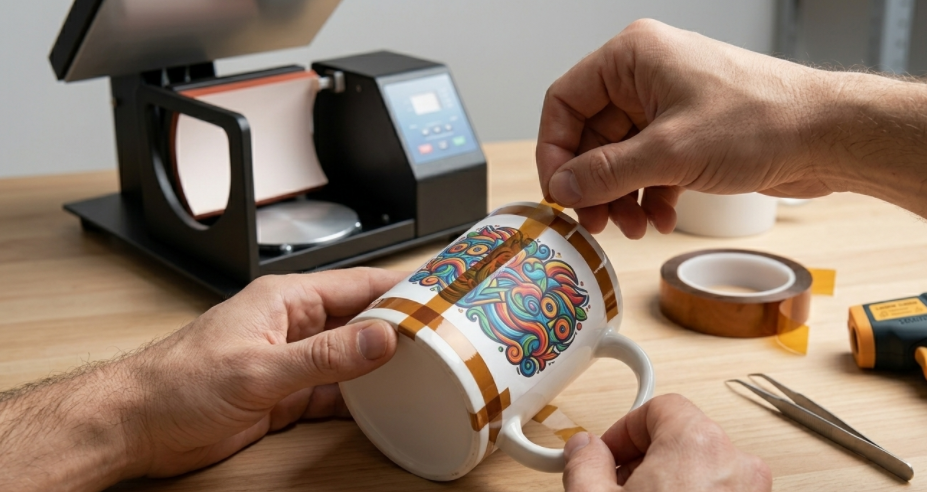
My rule of thumb is simple: secure the paper perfectly and find the pressure "sweet spot." Use enough tape to prevent any movement. Then, adjust your press so the pressure is firm but not excessive, as too much pressure can cause a "jump" on release.
Dive Deeper: Mastering the "Sweet Spot" of Taping and Pressure
Ghosting usually happens when the paper shifts, even by a hair. But here’s what many people miss: Too much pressure is just as bad as too little. Over-pressing causes the paper to "jump" or misalign the moment you open the heat press. The global market is shifting toward extreme personalization and small-batch orders. You can't afford a 20% failure rate when doing a custom run of just 10 mugs. Here are my personal tips to get it right every time.
1. Aggressive Taping: Don't be shy with high-quality heat tape.
- First, pull the transfer paper as tight as you can around the mug.
- Tape down the entire seam from top to bottom. This prevents gas from escaping out the side.
- Add tape along the top and bottom edges of the paper.
- Add a final piece of tape around the handle area to act as an anchor. The paper should be a perfectly sealed second skin on the mug.
2. Finding the Pressure "Sweet Spot":
The goal is firm, even pressure. Too little pressure causes blurry spots. But too much pressure is a hidden cause of ghosting. When the press is clamped down too tightly, it creates a slight vacuum. The moment you open the press, the sudden release of pressure can cause the paper to lift and shift a millimeter, re-depositing a faint layer of ink gas. Your pressure should be just tight enough that you need two hands to comfortably close the press, but not so tight that you have to strain forcefully.
3. The Post-Press Handling:
When the time is up, open the press and remove the mug carefully. Place it on a heat-resistant surface. Peel the paper off immediately and cleanly in one smooth motion. Don't let it sit, as any remaining ink gas can continue to transfer while it cools.
Conclusion
To prevent ghosting and fading, master your settings, demand high-quality coated blanks, and perfect your application technique. This consistency is the key to profitability and building a trustworthy brand.
https://dinsublimation.com/product/

Hi there! I'm Lucy, the guardian angel of two good children. During the day, I am a professional in the heat transfer printing industry, from factory workshops to running my own business. Here I share what I have learned - let's grow together!