How Do You Choose a Reliable Sublimation Gift Manufacturer in China?

You want to source sublimation gifts directly from China to reduce costs, but the market is flooded with options. You have no idea who to trust.
Choosing the wrong supplier can be disastrous. You risk receiving low-quality products, facing unexpected delays, dealing with communication breakdowns, and even losing your entire investment to a scam.
To find a reliable manufacturer, you need a systematic vetting process. Focus on suppliers with strong communication, industry certifications, transparent production processes, and a willingness to provide detailed samples for quality testing.

I learned this the hard way at the beginning of my career. I was so excited to find a supplier with incredibly low prices. I placed a large order for tumblers without doing my homework. What arrived was a nightmare. The sublimation coating was uneven, the stainless steel was low-grade, and a third of them had dents. I lost thousands of dollars and learned a painful lesson: the cheapest price is often the most expensive mistake. From that day on, I developed a strict vetting process. It's not about finding the lowest price; it's about finding the best partner.
How can you find genuine manufacturers in China, not just traders?
You're searching on platforms like Alibaba, but every listing looks the same. You can't tell if you're talking to a real factory or just a middleman who is marking up the price.
Dealing with a trading company instead of a factory adds unnecessary costs, creates communication delays, and gives you zero control over quality and production. You're paying more for less control.
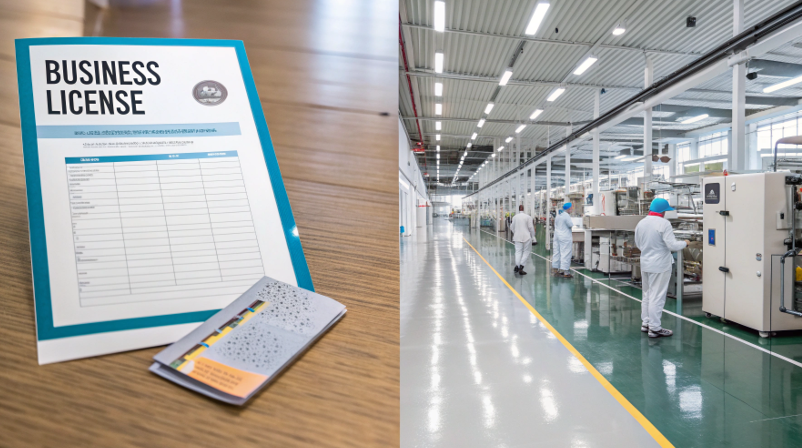
To find a genuine manufacturer, look for tell-tale signs like a Business License that lists "manufacturing" as a scope, industry-specific certifications (like ISO 9001), and a willingness to provide factory video tours or detailed production photos.
Dive Deeper: The Factory Detective's Toolkit
Finding and building a relationship with a direct factory was a turning point for my business. It cut my costs and dramatically improved my product quality. For a designer like Emma, who is meticulous about quality, working directly with a factory is non-negotiable. It allows you to have conversations about coating thickness, color profiles, and packaging—details a trading company simply wouldn't understand.
Here is a practical checklist you can use to distinguish factories from traders:
-
Analyze Their Alibaba/Made-in-China Profile:
- "Gold Supplier" Status: This is a paid membership, so it shows some level of commitment, but it doesn't guarantee they are a factory.
- Years on Platform: Look for suppliers who have been on the platform for 3+ years. Scammers usually don't last that long.
- Company Name: Does the name include words like "Manufacturing," "Industrial," or "Technology"? Trading companies often have names with "Trading," "International," or "Import/Export."
-
Request and Scrutinize Documents:
- Business License: Ask for a copy. Use Google Translate to see their registered "Business Scope." If it only says "sales" or "export," they are likely a trader. You want to see "manufacturing," "production," etc.
- Certifications: Ask for quality management system certifications like ISO 9001 or social accountability audits like BSCI. Real factories invest in these; traders rarely do.
-
Engage and Ask Specific Questions:
- "Can you send me a video of my product being made?" A factory can do this easily. A trader will make excuses.
- "What is your daily output for 20oz tumblers?" A factory will know this number instantly. A trader will have to ask the factory.
- "Can you customize the inner wall with a copper lining?" This is a technical question a salesperson at a trading company might not be able to answer.
Going through these steps takes a little more time upfront, but it can save you from massive headaches and financial loss down the road.
What is the best material for receiving sublimation heat transfers?
You're ready to start sublimating, but you're confused about what materials you can actually print on. You don't want to waste expensive ink and paper on the wrong items.
Using the wrong material is a recipe for failure. The print will be faded, blurry, or won't transfer at all. It's a frustrating and costly mistake for any beginner.
The absolute best material for sublimation is 100% polyester for fabrics, or any hard-surface item (like ceramic, metal, or glass) that has been treated with a special polymer coating.

Dive Deeper: The Science of Sublimation Materials
Understanding this was the "aha!" moment for me. Sublimation isn't just ink sitting on a surface; it's a chemical reaction. The ink turns into a gas and permanently bonds with polyester polymers. No polyester, no bond. It's that simple. For a designer like Emma, who cares deeply about color accuracy and durability, choosing the right material is the first and most important step to a quality product.
Let's break down the material science:
| Material Type | Ideal Composition | Why It Works | Common Mistakes to Avoid |
|---|---|---|---|
| Fabrics | 100% White or Light-Colored Polyester | Provides the most vibrant, sharp, and permanent transfer. The ink bonds directly with the fibers. | Printing on cotton (ink will wash out), dark fabrics (ink is transparent and won't show up), or poly-blends with less than 65% polyester (results in a faded, "vintage" look). |
| Hard Goods (Mugs, Tumblers, Slates, etc.) | Ceramic, Stainless Steel, Aluminum, or Glass with a Polymer Coating | The industrial coating acts as the polyester layer. The ink bonds with this coating, creating a durable, scratch-resistant, glossy finish. | Buying non-sublimation blanks from a craft or dollar store. These items lack the coating, and the transfer will fail completely. Always buy from a reputable sublimation supplier. |
| Specialty Items (Treated Wood, Canvas) | MDF Wood or Canvas with a Polyester Treatment | These items are specifically manufactured for sublimation. The surface has been primed with a polymer layer to accept the ink. | Trying to sublimate on regular wood or artist canvas. Without the special coating, the ink will bleed into the natural fibers and look blurry and dull. |
The takeaway is clear: don't try to force sublimation onto the wrong materials. Your results will always be disappointing. Stick to items that are either 100% polyester or have been purpose-built with a sublimation coating. This focus on the right "canvas" for your art is fundamental to success.
What actually sells the most with sublimation?
You want to start selling sublimation products, but with so many options, you don't know where to focus your efforts to make the most sales.
Investing your time and money into a niche with low demand is a quick way to get discouraged. You need to target products that customers are actively searching for and buying.
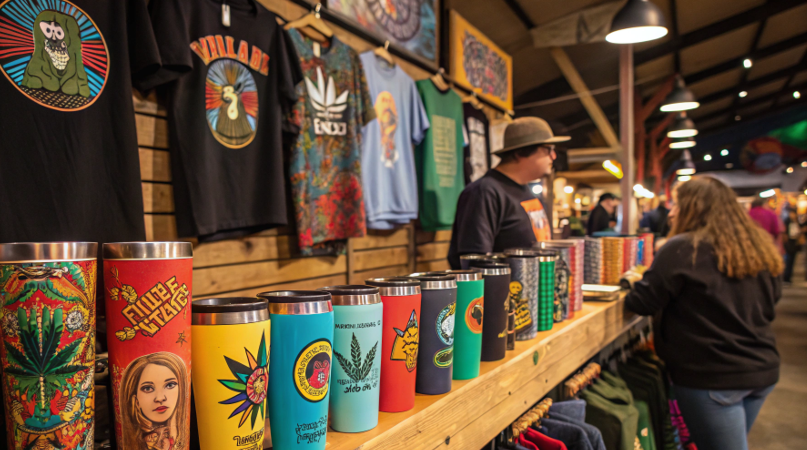
By far, the top-selling sublimation categories are drinkware (mugs and tumblers) and apparel (t-shirts and hoodies). These items have mass appeal and are used daily, making them perfect for personalization.
Dive Deeper: Riding the Wave of Popular Demand
When I started my business, I experimented with dozens of products. But when I looked at my sales data after a year, the story was crystal clear: mugs, tumblers, and t-shirts were my cash cows. They paid the bills and funded my expansion into other niches. A designer like Emma can leverage this knowledge to build a profitable business from day one. By focusing on these proven sellers, you tap into a massive existing market.
Here’s why these categories dominate and how you can stand out:
-
Drinkware (Mugs & Tumblers): The Daily Ritual
- Why it Sells: Almost everyone drinks coffee, tea, or water daily. A custom mug or tumbler isn't just a cup; it's a part of someone's morning routine or a companion at the gym. It's a highly visible item that offers practical value.
- How to Stand Out: The market is crowded, so unique design is everything. Don't just slap a photo on it. Create artistic designs, use funny and relatable quotes, cater to specific professions (nurses, teachers), or hobbies (fishing, reading). High-quality mockups are essential to show off your designs online.
-
Apparel (T-Shirts & Hoodies): The Personal Billboard
- Why it Sells: People love to express their identity. A t-shirt is a canvas for showing off what you love, what you believe in, or what makes you laugh. It's an emotional purchase.
- How to Stand Out: Again, design is king. Stay on top of trends in pop culture and graphic design. Offer designs that are clever and visually appealing. Quality matters too; use soft, 100% polyester shirts that feel good to wear, not stiff and cheap ones. Sublimation allows for incredible all-over prints that can't be achieved with other methods, which is a major selling point.
While other items like keychains, coasters, and photo slates are great add-ons, your core business can be built solidly on the foundation of drinkware and apparel.
How can you know for sure if a Chinese supplier is legit?
You've found a potential supplier in China who seems promising, but you have a nagging fear that they might be a scam or will deliver poor-quality goods.
This fear can cause "analysis paralysis," preventing you from making a decision and moving your business forward. One wrong step could cost you thousands.
To verify a supplier's legitimacy, you must triangulate information. Combine their digital footprint (Alibaba profile, website) with official documents (Business License, certifications) and, most importantly, a physical sample order to test their product quality and service firsthand.
Dive Deeper: The 3-Step Legitimacy Test
I never, ever place a bulk order without going through this exact process. It's a non-negotiable part of my sourcing strategy. It's the difference between gambling and making a calculated business decision. For someone like Emma, who is building a brand based on quality, this process protects both her money and her reputation.
Here is my 3-step test for any new supplier:
-
The Digital Investigation:
- Website & Social Media: Do they have a professional website outside of Alibaba? Does it show real pictures of their factory and team? A lack of an independent online presence is a red flag.
- Communication: How do they communicate? Are their answers fast, clear, and professional? Do they use a company email address (e.g., Lucy@supplier.com) or a free one like Gmail or Hotmail? A free email is a major red flag.
- Video Call: Ask for a brief video call and a tour of their showroom or a part of the factory. If they refuse or make constant excuses, be very suspicious.
-
The Paper Trail Audit:
- Request Documents: Ask for their Business License and any quality certifications they claim to have (like ISO 9001, BSCI, or specific product testing reports like FDA for drinkware).
- Verify Payment Details: The bank account for your payment should be a corporate account, and the company name on the account must match the name on their Business License exactly. Never pay a large sum to a personal bank account.
-
The Physical Proof (The Most Important Step):
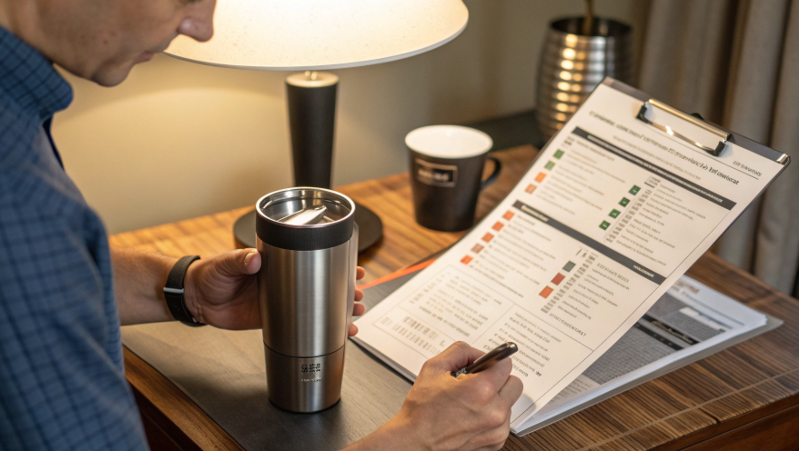
- Order Samples: This is the ultimate test. Order a few samples of the exact product you intend to buy in bulk. Don't just get one random sample.
- Test Ruthlessly: When the samples arrive, test them. Put the tumbler through the dishwasher. Try to scratch the coating. Does the quality match what they promised? Is the packaging secure? This small investment in samples can save you from a catastrophic bulk order.
If a supplier passes all three of these tests, you can proceed with a small trial order with a high degree of confidence.
Conclusion
Choosing a reliable Chinese manufacturer requires diligent research. Verify they are a real factory, understand the right materials, and always test samples before placing a large order to protect your investment.

Hi there! I'm Lucy, the guardian angel of two good children. During the day, I am a professional in the heat transfer printing industry, from factory workshops to running my own business. Here I share what I have learned - let's grow together!