How Do You Really Know If a Mug Is for Sublimation?

You're standing in a store, holding a perfect, plain white mug. It's cheap, and you think you've found a goldmine, but a nagging doubt holds you back.
The only way to know for sure is to buy mugs explicitly sold as "sublimation blanks." The special polymer coating required for sublimation is completely invisible, so you cannot identify it by sight, touch, or any other simple trick.
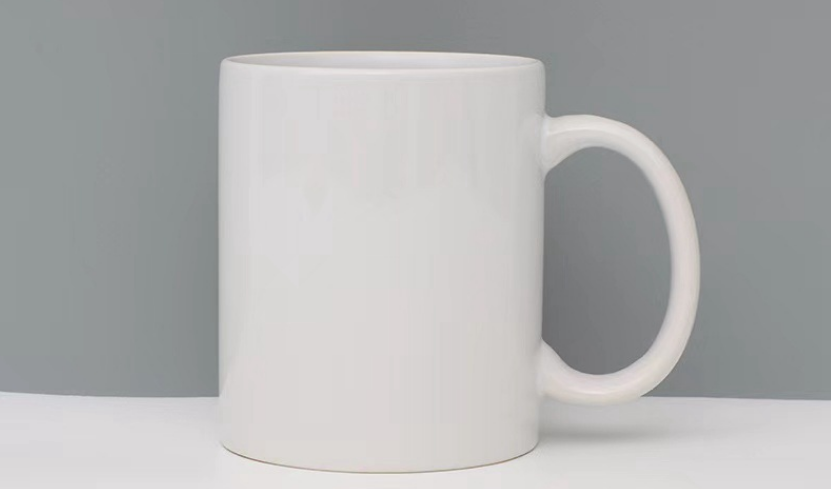
This is not just advice; it's a lesson I learned from costly failure. When I first started my business, I thought I could outsmart the system. I bought a case of beautiful ceramic mugs from a restaurant supply store, convinced I had found a secret source. Every single one was a complete waste of ink, paper, and time. The image was a faded, blurry mess. That day I learned the most important rule in this business: the coating is everything. It's the invisible key that unlocks the whole process.
How can you tell if a mug is sublimation?
The mugs at the craft store look identical to your expensive sublimation blanks. You're tempted to try them, hoping to find a physical clue that tells you if they will work.
You can't. There are no reliable visual or physical tests to tell if a mug has a sublimation coating. The only guaranteed methods are buying from a trusted sublimation supplier or sacrificing one mug for a test print.
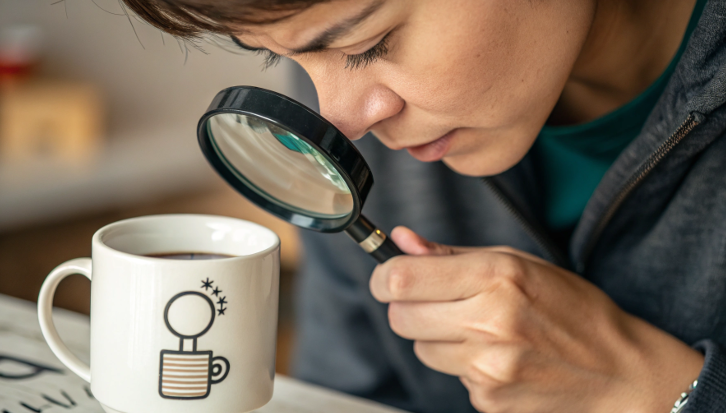
People online will tell you about all sorts of "hacks." They'll say to scratch it with your fingernail, check the glossiness, or tap it to hear a certain sound. I'm telling you, none of these work. I've tried them all. The polymer coating is applied at a microscopic level and is perfectly clear. It doesn't change the look or feel of the mug in any detectable way. My technical specialist, Alex, confirms this. He says, "The polymer layer is microns thick. You'd need lab equipment to see it." The only real test is performance. If you have a batch of unknown mugs, take one and press a small, dark image onto it. If it comes out crisp, vibrant, and permanent, you're in luck. If it’s a blurry smudge, you have your answer. To avoid this gamble, always source your blanks from reputable companies that explicitly label their products for sublimation.
| Mythical Test | Why It Fails | The Real Method |
|---|---|---|
| The Fingernail Scratch | The coating is as hard as the ceramic glaze. | Buy from a sublimation-specific supplier. |
| The Glossiness Check | Both coated and uncoated mugs come in high-gloss finishes. | Test press one mug from any new batch. |
| The Sound/Tap Test | The coating is too thin to change the sound of the ceramic. | Trust the product label and your supplier. |
What makes a mug a sublimation mug?
You know a special mug is needed, but you don't understand why. This gap in your knowledge makes you feel less confident when problems arise or when you're explaining your products.
A mug becomes a sublimation mug when a layer of polyester polymer coating is applied to its surface. This coating is the essential ingredient that chemically bonds with the sublimation ink to create a permanent image.
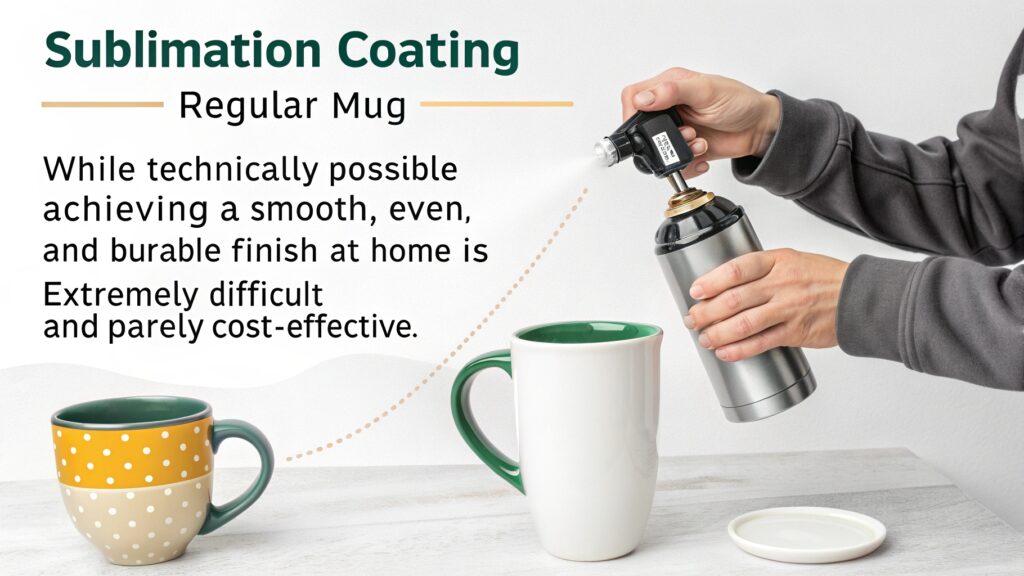
Let me break down the science in a really simple way. Think of a regular ceramic mug as a dusty brick wall. If you try to spray paint it, the paint will just sit on the surface and flake off easily. Now, think of the sublimation coating as a special paint primer. This primer is made of polyester. Your sublimation ink is specially designed to love polyester. When your heat press applies heat and pressure, two things happen at once. First, the solid ink on your paper turns into a gas. Second, the polymer "primer" on the mug opens up millions of tiny invisible pores. The ink gas floats into these open pores. When you remove the mug from the heat, the pores slam shut, permanently trapping the ink gas as it turns back into a solid. The image isn't on the mug; it's in the coating. This is why it's so durable and won't peel or fade. No coating, no pores, no image.
Can I sublimate on Dollar Tree coffee mugs?
You're walking through a dollar store and see a shelf of white mugs for a dollar each. Your mind instantly calculates the incredible profit margin, and it feels too good to pass up.
No, you absolutely cannot sublimate on coffee mugs from Dollar Tree or any similar discount store. They are standard ceramic mugs and do not have the essential polymer coating required for the process to work.
This is the number one question I get from people starting out, and the answer is always a firm and absolute "no." I understand the temptation. We all want to lower our costs. But trying to use these mugs isn't a cost-saving measure; it's a guaranteed loss. Let's list what you waste every time you try: the dollar you spent on the mug, your expensive sublimation paper, your expensive sublimation ink, the electricity for your heat press, and most importantly, your valuable time. The result will always be the same: a faint, brownish, blurry image that can be partially or completely wiped away. Buying a proper sublimation blank for a few dollars isn't an expense; it's an investment in a professional, sellable product. Buying a dollar store mug for this purpose is paying to create garbage. There are no shortcuts that bypass this fundamental rule of sublimation chemistry.
Can you turn a regular mug into a sublimation mug?
You've seen DIY polymer coating sprays sold online. It seems like the perfect workaround: buy cheap mugs and just coat them yourself to save a ton of money.
While DIY sprays exist to create a sublimation coating, they are not recommended for creating professional, sellable products. It is extremely difficult to achieve a smooth, even, and durable coat, often leading to blotchy and unreliable results.
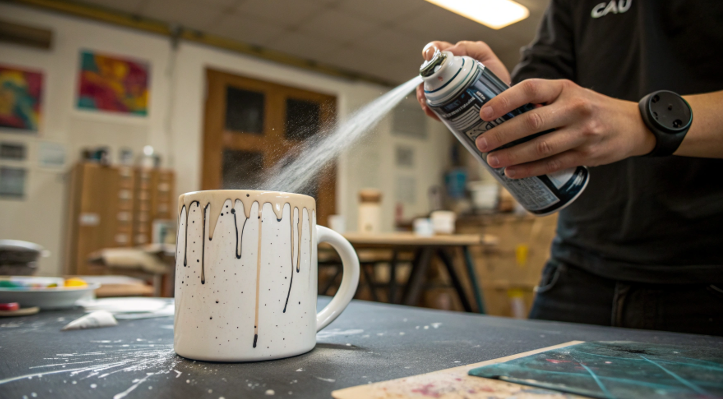
I've tested these out of curiosity, and I would never use them for my business or recommend them to a client. The promise is great, but the reality is messy and inconsistent. Here’s the problem: getting a perfectly flawless, even coat with a spray can is nearly impossible. You'll get drips, air bubbles, and areas that are thicker than others. These imperfections show up as blotchy or faded spots in your final print. Furthermore, the durability and food-safety of these DIY coatings can be questionable. They may yellow over time or fail after a few washes in the dishwasher. For a hobbyist making a one-off gift, it might be a fun experiment. But for a business, your reputation is built on quality and consistency. A factory-coated sublimation mug has a perfectly engineered surface that guarantees a professional result every time. The small amount of money you might save is not worth the risk to your brand's quality.
| Feature | Factory-Coated Sublimation Mug | DIY-Coated Regular Mug |
|---|---|---|
| Coating Quality | Perfectly even, microscopic layer | Prone to drips, streaks, bubbles |
| Print Result | Consistent, vibrant, edge-to-edge | Blotchy, faded spots, inconsistent |
| Durability | High, dishwasher safe (top rack) | Questionable, may yellow or peel |
| Food Safety | Certified safe by manufacturer | Not guaranteed, potential concerns |
| Professionalism | High - reliable for sale | Low - suitable for experiment only |
Conclusion
The secret to identifying a sublimation mug is simple: don't guess. Always purchase blanks from a trusted supplier who guarantees they have the necessary polymer coating for professional results.

Hi there! I'm Lucy, the guardian angel of two good children. During the day, I am a professional in the heat transfer printing industry, from factory workshops to running my own business. Here I share what I have learned - let's grow together!