How does sublimation printing print products?
Struggling to get vibrant, permanent designs on your products? Sublimation printing could be the high-quality, durable solution you have been looking for to solve this problem.
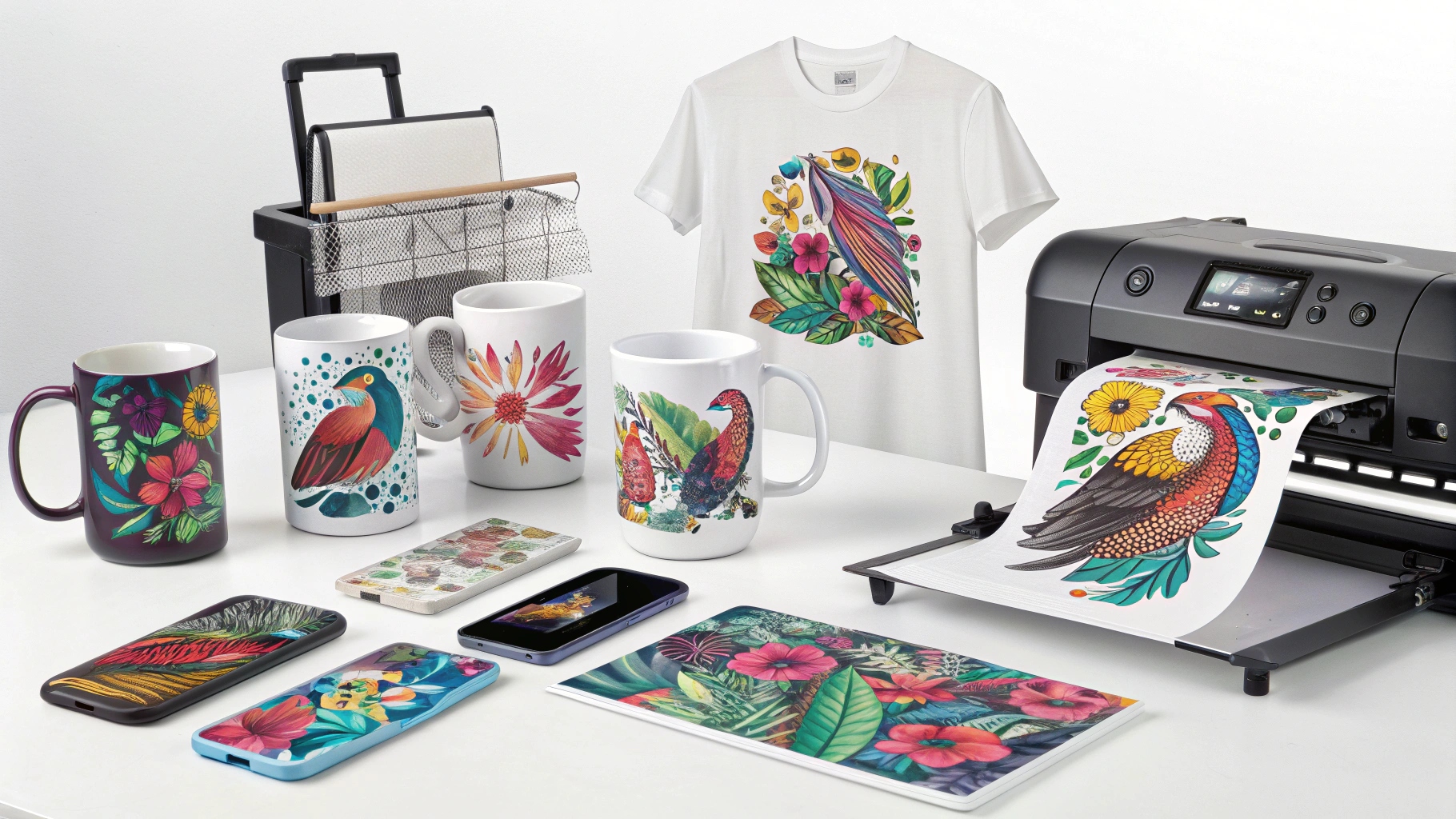
Sublimation printing uses special ink that turns into a gas under heat and pressure. This gas then bonds permanently with polyester fibers or polymer-coated surfaces. This process creates vibrant, full-color designs that won\'t crack, peel, or fade over time, becoming one with the material.
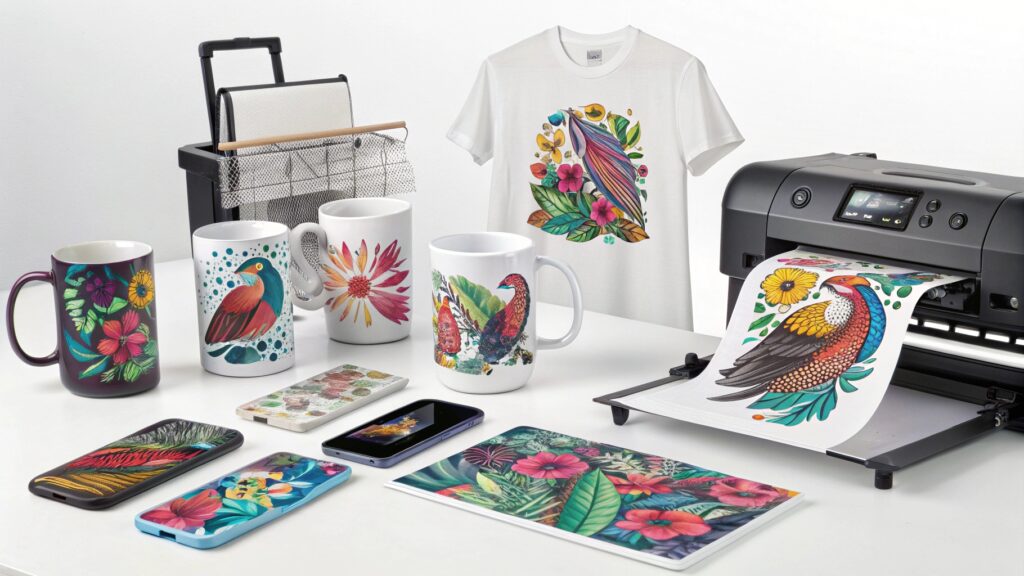
That\'s the quick answer. But to truly master this craft, you need to understand the details. I remember my first days in the factory, watching a dull image on paper transform into a brilliant, permanent design on a t-shirt. It felt like magic. That magic comes from a specific scientific process, and once you understand it, you can create amazing products consistently. Let\'s break down how it all comes together, so you can avoid common mistakes and get professional results from day one.
How does sublimation printing work?
Confused by how an image on paper becomes part of a mug or shirt? The process seems complex, but it is much simpler than you think once it\'s broken down.
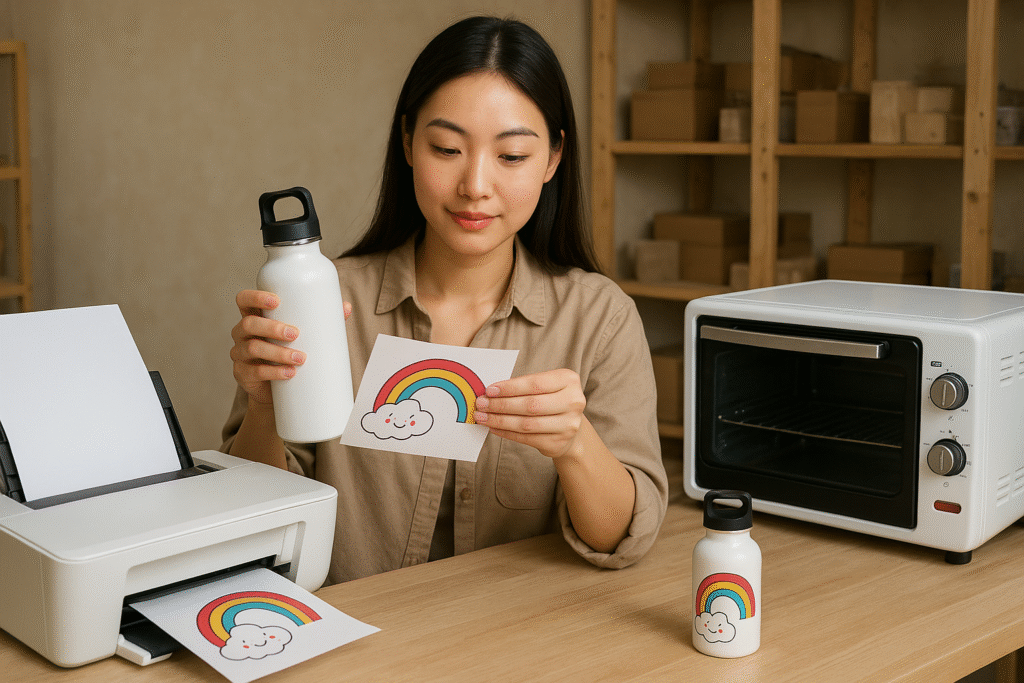
The process involves printing a design onto special paper with sublimation ink. You then use a heat press to transfer the ink. The heat turns the ink into a gas, which infuses into the product\'s polymer coating, becoming a permanent part of the material.
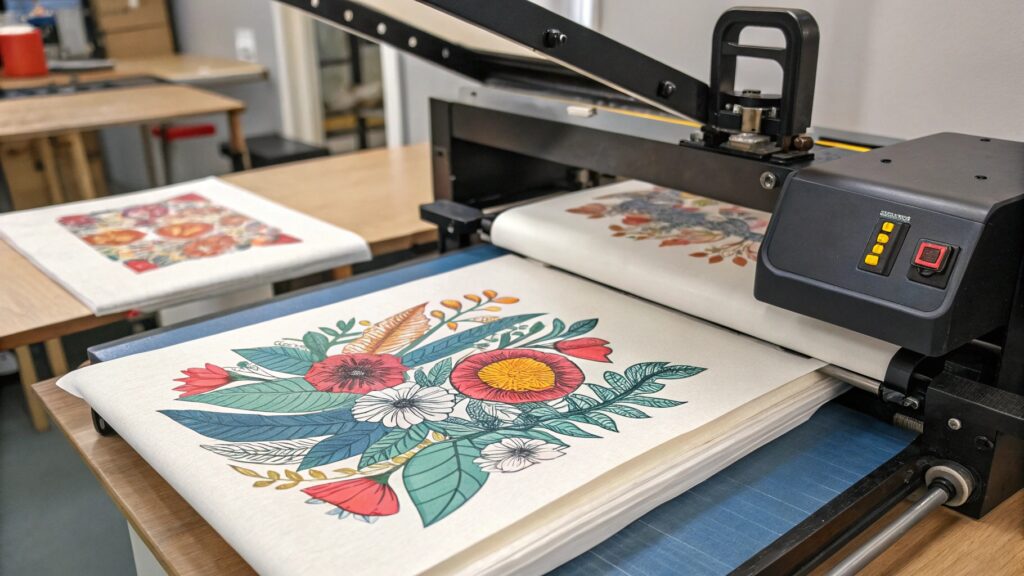
The entire journey from a digital file to a finished product is a fascinating blend of technology and chemistry. I\'ve seen thousands of products made this way, and it always comes down to getting a few key steps right. A specialist I work with, Alex, always says, "Precision in the process is what separates a hobbyist from a professional."
The Core Steps of Sublimation
The process is consistent whether you\'re making a single custom mug or a hundred team jerseys. It always follows these four stages. Getting each one right is critical for a high-quality final product.
| --- | ||||||
|---|---|---|---|---|---|---|
| 1. Design | Create or choose your digital image. | You must mirror the image in your software before printing. I can\'t count how many shirts I ruined at the start by forgetting this! | ||||
| 2. Print | Print the mirrored image onto sublimation paper. | You must use a dedicated sublimation printer and special sublimation ink. Regular ink won\'t work. | ||||
| 3. Press | Tape the paper to your blank product and press it in a heat press. | The press applies precise temperature (usually around 180-200°C) and pressure for a set time (e.g., 60-120 seconds). | ||||
| 4. Cool | Carefully remove the product and let it cool. | Once cool, the design is permanent. The paper can be peeled off to reveal the vibrant, infused image. |
The real "magic" happens during the pressing stage. The solid ink on the paper doesn\'t melt into a liquid. Instead, it turns directly into a gas—that\'s the "sublimation" part. This gas has a special property: it\'s attracted to polyester polymers. The fibers of the polyester fabric or the polymer coating on a mug open up under the heat, and the ink gas flows right in. As it cools, the fibers close, trapping the ink permanently inside. It\'s not sitting on the surface; it has become part of the surface itself.
What are the drawbacks of sublimation printing?
Think sublimation is perfect for every project? It\'s a fantastic technology, but knowing its limitations will save you time, money, and a lot of frustration down the road.
Sublimation\'s main drawbacks are that it only works on polyester fabrics (or blends with high poly content) and polymer-coated hard surfaces. It also doesn\'t work on dark or black materials because the ink is transparent and won\'t show up.

When I started my trading company, these limitations were the source of most customer questions. Understanding them is key to managing expectations and guiding clients to the right decoration method. It’s not a failure of the technology, but rather a characteristic of how it works. Let\'s look at these limitations more closely.
Material and Color Constraints
The science that makes sublimation so durable is also the source of its main constraints. The ink gas needs polymer molecules to bond with permanently.
- Material Limitation: Natural fibers like 100% cotton don\'t have the right polymer structure. If you try to sublimate on cotton, the image will look faded and wash out almost immediately because the ink has nothing to "grab onto." For apparel, this means you need 100% polyester for the most vibrant results. Blends can work, but the vibrancy decreases with the polyester content. For example, a 50/50 poly-cotton blend will produce a faded, "vintage" look, which can be a cool effect if it\'s what you\'re aiming for. For hard goods like mugs, coasters, or phone cases, they must have a special polymer coating designed for sublimation.
- Color Limitation: Sublimation inks are transparent dyes, not opaque paints. This means they add color rather than covering what\'s underneath. Think of it like using a highlighter pen. A yellow highlighter looks great on white paper, but it\'s invisible on black paper. The same is true for sublimation. You must use white or very light-colored substrates. Printing on a black shirt is impossible, and printing on a colored shirt will alter the design\'s colors (e.g., printing blue ink on a yellow shirt will result in a green design). This is why the vast majority of sublimation blanks are white.
What is the difference between sublimation and transfer printing?
Confused between sublimation and heat transfer vinyl (HTV)? Choosing the wrong one can lead to cracked designs and unhappy customers. Let\'s clear this up right now.
Sublimation ink becomes a gas and infuses into the material, creating a permanent, smooth design you can\'t feel. Other heat transfers, like HTV, press a layer of material on top of the fabric, which you can feel and may crack over time.
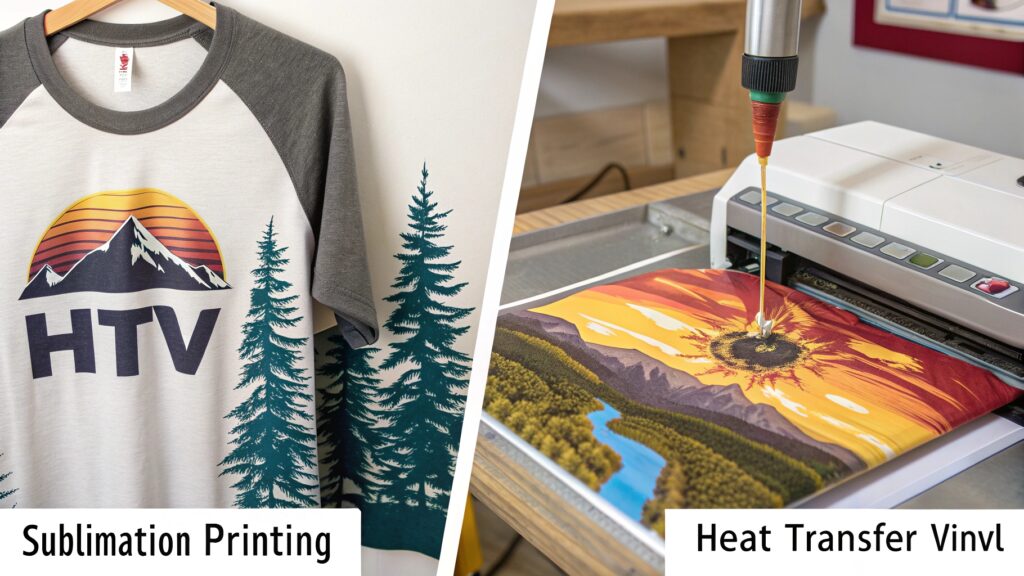
I’ve helped many clients make this choice. One of my first big clients made custom athletic jerseys. They started with HTV but quickly found that the designs would crack and peel from the constant stretching and washing. When they switched to sublimation, their customer complaints dropped to zero. The infused designs stretched with the fabric and never faded, which was perfect for sportswear. But for other clients who wanted to print on dark cotton hoodies, HTV was the only way to go.
A Head-to-Head Comparison
Choosing the right method depends entirely on your product, your design, and your customer\'s needs. There is no single "best" method, only the "right" method for the job. Alex, my technical expert, always advises, "Match the method to the material and the use case."
Here is a simple breakdown to help you decide.
| --- | ||||||
|---|---|---|---|---|---|---|
| Feel / "Hand" | Zero feel. The ink is inside the fabric. | A tangible layer on top of the fabric. | ||||
| Durability | Permanent. Will not crack, peel, or fade. Lasts as long as the garment. | Good, but can crack or peel over time with many washes. | ||||
| Material | Only works on white/light polyester or polymer-coated items. | Works on cotton, polyester, blends, and more. | ||||
| Color Compatibility | Cannot be printed on dark or black items. | Opaque materials work on any color fabric, including black. | ||||
| Detail Level | Excellent for photos and complex, full-color gradients. | Good for solid colors and simple shapes. Photos require special paper. | ||||
| Weeding | No weeding is required. | Vinyl (HTV) requires weeding away excess material, which can be time-consuming. |
In short, if you want permanent, photo-quality designs on polyester sportswear, mugs, or mousepads, sublimation is unbeatable. If you need to print a simple logo on a black cotton t-shirt, HTV is your best bet.
What do I need to start sublimation printing?
Want to start your own sublimation business but feel overwhelmed by the equipment list? Let\'s break down the essential gear so you know exactly what you need.
To start, you need a dedicated sublimation printer, special sublimation ink, sublimation transfer paper, a quality heat press, and compatible blank products. Heat-resistant tape is also essential for holding your design in place.
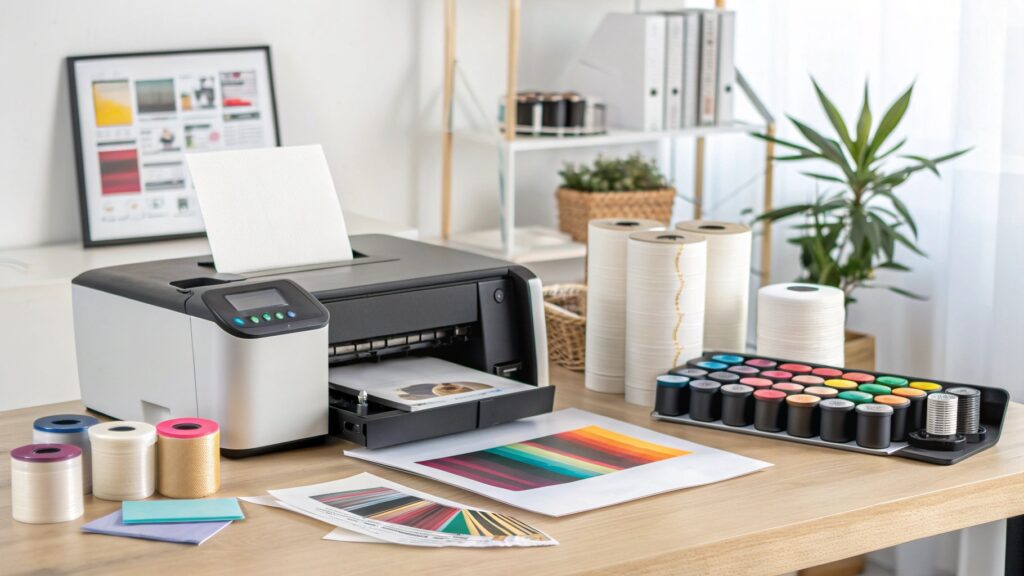
When I was building my business, I advised new clients on their first equipment purchases. The most common mistake I saw was people cutting corners on the heat press. A client once called me, frustrated that all his designs were blurry on one side. The issue wasn\'t the printer or the ink; it was a cheap heat press with an inconsistent temperature across its plate. Investing in good core equipment from the start saves so much time and wasted material.
Your Essential Sublimation Shopping List
Here’s the core equipment you absolutely need to get started.
- Sublimation Printer: You cannot use a standard office printer. You need a printer that is either built for sublimation (like a Sawgrass) or one that can be converted (like many Epson EcoTank models). The key is that it must only ever be used with sublimation ink.
- Sublimation Ink: This is a special dye-based ink that has the unique property of turning to gas under heat. It is not interchangeable with regular printer ink.
- Sublimation Paper: This paper is coated to hold the ink and then release it as a gas during the heating process. Using regular paper will result in a poor, faded transfer.
- Heat Press: This is arguably the most critical piece of equipment. It must provide consistent, even temperature and pressure. There are different types, like clamshells for t-shirts, mug presses, or tumbler presses for drinkware. Your results are only as good as your heat press.
- Sublimation Blanks: These are the products you will print on. They must be either 100% polyester (for fabrics) or have a special polymer coating (for hard goods like ceramics, metal, and wood). They are often labeled "for sublimation."
- Essential Accessories: You\'ll also need heat-resistant tape to secure your paper to the blank, and butcher paper or a Teflon sheet to protect your heat press from any stray ink.
Conclusion
Sublimation printing turns designs into permanent, vibrant products. With the right gear and knowledge, you can create amazing custom items for business or pure enjoyment.

Hi there! I'm Lucy, the guardian angel of two good children. During the day, I am a professional in the heat transfer printing industry, from factory workshops to running my own business. Here I share what I have learned - let's grow together!