How Does Sublimation Printing Work? Step-by-Step Explained?

You see amazing, vibrant custom products but feel puzzled by the process. This confusion makes it hard to master the technique, leading to wasted materials and missed opportunities for your business. Let me guide you through the exact science, step-by-step.
Sublimation printing is a process that uses heat and pressure to transfer dye onto a material. Solid ink on special paper turns into a gas, skipping the liquid phase. This gas then permanently infuses into the polyester fibers or polymer coating of the product.
I get this question all the time from designers and budding entrepreneurs. When I first started on the factory floor, I was amazed at how a simple piece of paper could create such a brilliant, permanent design on a tumbler. It’s not magic, it’s science, and it’s a science I have built my entire business on. Understanding this science is the key to mastering the craft and unlocking its full potential for your own projects. Let's dig into the details and look at the exact steps involved.
What are the steps for sublimation printing?
Starting a new sublimation project can feel overwhelming. You have a great design, but what is the exact workflow from your computer screen to a finished product? Missing a single step can lead to wasted materials and frustrating, faded results. I will lay out the clear, sequential steps I use every day to get perfect prints.
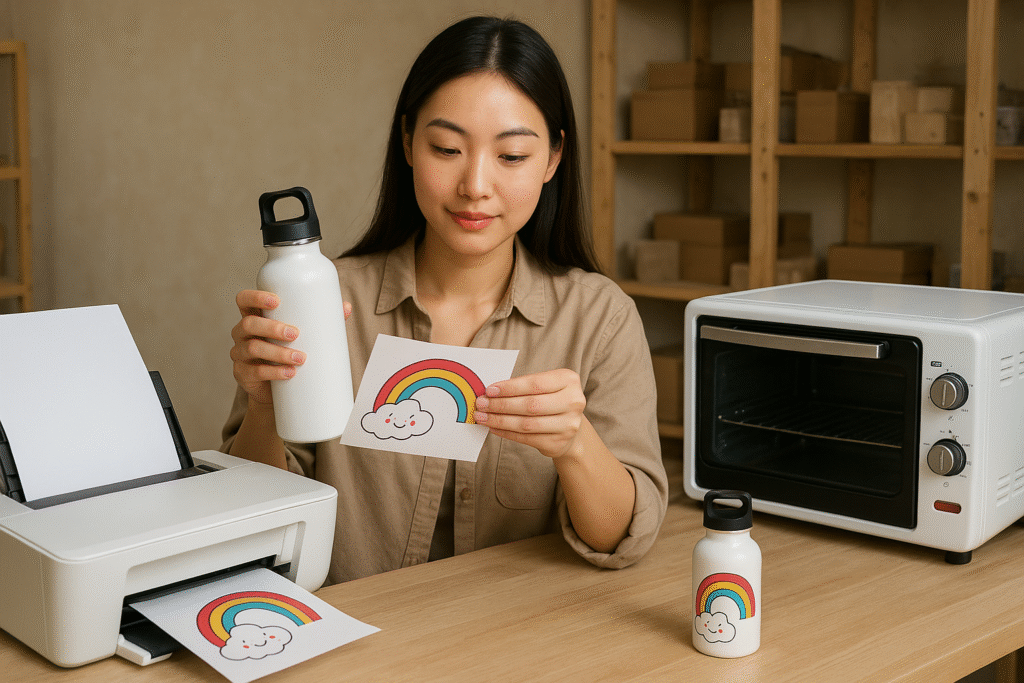
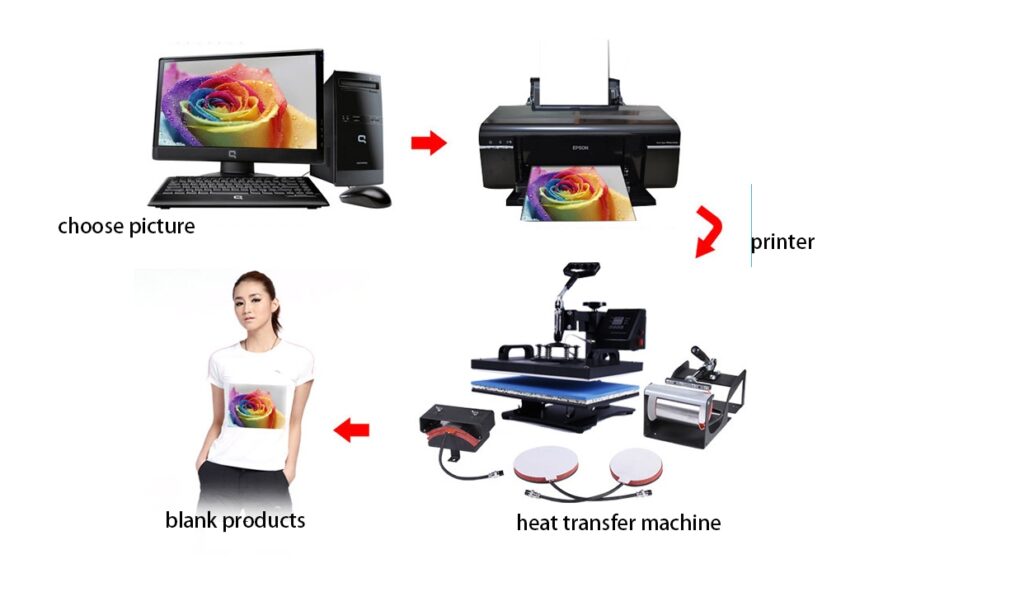
The main steps for sublimation are simple. First, you create your design on a computer. Second, you print it onto special sublimation paper using sublimation ink. Third, you prepare your blank product. Finally, you use a heat press to transfer the design from the paper onto your product.
Dive Deeper: The Core Workflow
Breaking down the process shows how each stage is critical for the final quality. From my experience helping designers like Emma, I know that overlooking the small details is where things go wrong. Mastering this workflow means you can produce consistent, high-quality products that will impress your clients every single time. Here is the exact sequence I follow for every single job, whether it's a one-off custom tumbler or a large batch order for a corporate client.
| Step Number | Action | Key Considerations |
|---|---|---|
| 1. Design Creation | Create or finalize your digital artwork. | Mirror your image. This is crucial, especially for text. Use high-resolution files (300 DPI is standard) to avoid pixelation. Design in an RGB color profile, as sublimation printers are optimized for it. |
| 2. Printing | Print the design onto sublimation paper. | Use a dedicated sublimation printer with high-quality sublimation inks. Make sure you print on the correct side of the paper—it usually has a brighter, smoother coating. Let the ink dry for a few moments to prevent smudging. |
| 3. Substrate Prep | Prepare your blank item for printing. | Your item must be a polyester or polymer-coated product. Use a lint roller to remove any dust or fibers. Even a tiny piece of lint can create a blue splotch in the final print. Pre-pressing the item for a few seconds can also remove moisture. |
| 4. Transfer | Press the design onto the substrate. | Secure the printed paper onto your item with heat-resistant tape. Place it in your heat press, using a protective sheet (like Teflon or parchment paper) to prevent ink bleed-through. Follow the manufacturer's guidelines for time, temperature, and pressure. |
| 5. Cooling | Cool the item and reveal the print. | Once the time is up, carefully remove the item from the press—it will be extremely hot. Let it cool down completely (or as recommended) before peeling off the paper to reveal your vibrant, permanent design. |
How does the process of sublimation work?
You see the ink go from paper to product, but what is actually happening? Without understanding the science, troubleshooting problems like ghosting or color shifts feels like guesswork. This lack of knowledge can hold you back from achieving truly professional results. Let's look at the chemistry that makes this powerful printing method possible.
Sublimation is a chemical process where a solid turns directly into a gas, bypassing the liquid stage. In printing, heat from a press activates special dye-based ink. The gaseous dye then permeates the open pores of the polyester substrate and solidifies within it, creating a permanent bond.
Dive Deeper: The Science Behind the Magic
To really excel and solve problems on the fly, you need to think like a scientist. I remember a big order of custom water bottles early in my career. The colors were coming out dull. Instead of panicking, I went back to the science. I realized my press temperature was too low, so the ink wasn’t turning into a gas properly. A small adjustment saved the entire order. This is why I always tell designers that understanding the "why" is more important than just knowing the "how." It's what separates an amateur from a professional. This process is a delicate balance of physics and chemistry working together.
-
The Ink: It's All About the Dye
Sublimation ink isn't like the regular ink in your office printer. It's a suspension of solid dye particles in a liquid carrier. When you print it onto sublimation paper, the carrier fluid dries, leaving the solid dye particles resting on the surface of the paper. This dye is special because it has the unique property of sublimating—turning from a solid to a gas—at high temperatures. -
The Heat Press: The Catalyst for Change
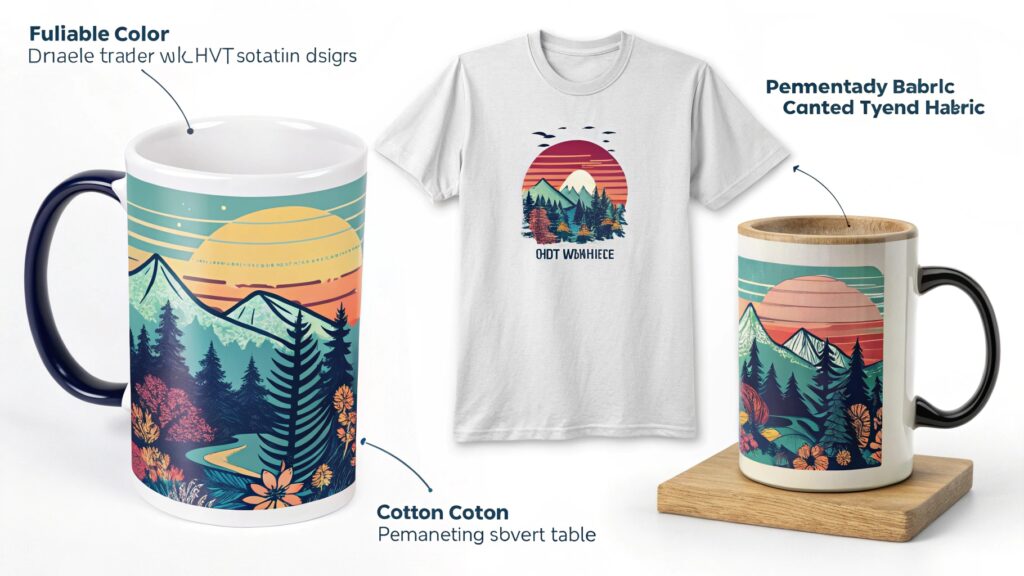
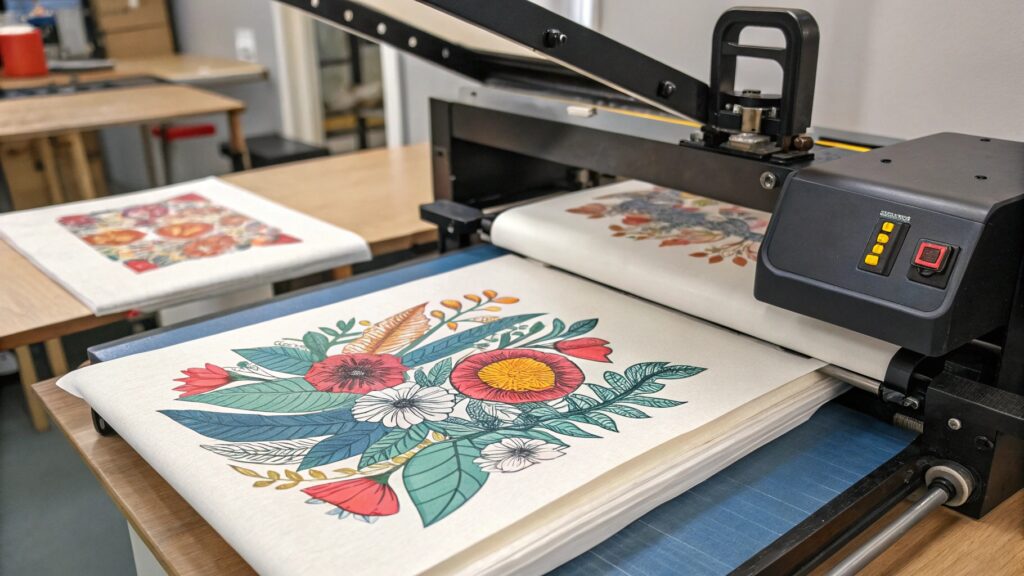
The heat press is where the reaction happens. When you apply heat (typically around 380-400°F or 190-200°C) and firm pressure, two things occur simultaneously. First, the solid dye particles on the paper heat up and instantly transform into a gas. Second, the heat causes the pores of the polyester polymer in your tumbler, t-shirt, or mug coating to open up. -
The Infusion: A Permanent Bond
This gaseous dye is now free to move. Because of the pressure, it is forced into the open pores of your product's surface. Once you release the heat and the item begins to cool, the pores of the polyester close, trapping the now-solid dye particles inside the material itself. The ink isn't sitting on top of the surface; it has become a permanent part of the product. This is why sublimation prints don't crack, peel, or fade.
How to explain sublimation printing?
You need to explain the value of sublimation to a client, but technical jargon just confuses them. They hear "printing" and think of something that might wash off or fade away quickly. If you can't communicate the benefits clearly, you could lose the sale to a cheaper, lower-quality alternative. I'll give you a simple, powerful way to explain it.
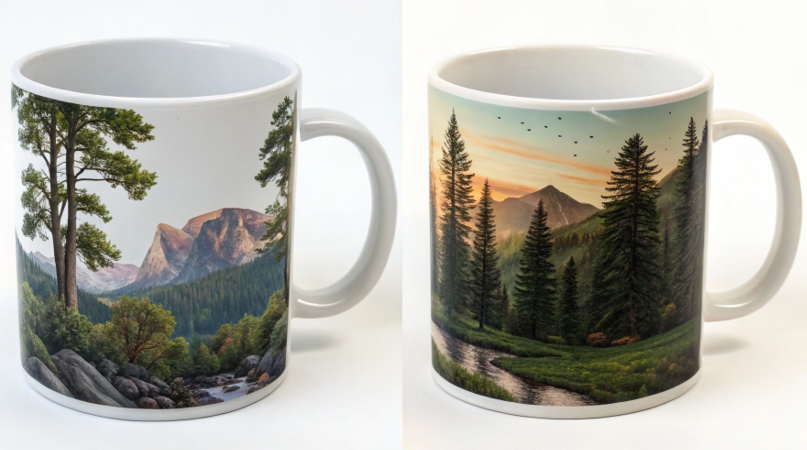
Explaining sublimation is easy. Tell them it’s a modern printing technique where ink becomes part of the fabric or coating itself, instead of sitting on top. Compare it to a tattoo for the product—the design is permanent, vibrant, and won’t crack, peel, or fade over time.
Dive Deeper: Communicating Value to Your Clients
When I started my custom tumbler business, I learned quickly that clients don't buy a "process." They buy a "result." They want to know why my $25 tumbler is better than a $15 one with a sticker on it. My job isn't just to make the product, but to educate the client so they feel confident in their purchase. I developed a simple framework to explain the value, focusing on what matters most to them: durability, quality, and creative freedom. I tell my team to always frame the conversation around these three pillars. This approach helps the client see sublimation not as a cost, but as an investment in a superior product.
-
Analogy 1: The Tattoo vs. The Sticker
This is my favorite analogy. I tell clients, "Think of other printing methods like a sticker. It's stuck on the surface and can eventually peel, crack, or fade with use and washing. Sublimation is like a tattoo. We infuse the ink directly into the material, so it becomes a permanent part of the product. You can't feel it, and it will last as long as the product itself." This immediately clicks for them. It communicates durability in a way they instantly understand. -
Analogy 2: Stained Wood vs. Painted Wood
For clients who appreciate craftsmanship, I use this one. I explain, "Painting wood covers the surface, hiding the grain. Staining wood, on the other hand, soaks into the fibers, enhancing the natural material. Sublimation is like staining. It infuses color into the very fibers of the fabric or the special coating on a mug, resulting in brilliant, seamless color without changing the feel of the material." This helps them appreciate the high-end feel and look of a sublimated item. -
Highlighting the Benefits
After the analogy, I connect it to tangible benefits. I make a simple comparison for them:
| Feature | Sublimation (Our Method) | Other Methods (e.g., Vinyl, Screen Print) |
|---|---|---|
| Feel | Perfectly smooth, zero texture. | Can feel rough, raised, or plasticky. |
| Durability | Permanent, won't crack or peel. Dishwasher safe. | Can crack, peel, or fade over time, especially with washing. |
| Color | Photo-quality, vibrant, full-color gradients. | Often limited to solid colors, less detail possible. |
| Design | Unlimited complexity. Perfect for photos. | Simpler designs are easier and cheaper. |
This simple breakdown empowers the client to make an informed decision and justifies the premium quality of your work.
What is the sublimation technique of printing?
You're trying to grow in the customization industry, but the competitive landscape is fierce. Sticking to old methods means you can't offer the personalization that modern customers demand. You risk being left behind by more agile, trend-responsive competitors who have adopted newer technologies. This is where sublimation can give you a critical edge.
The sublimation technique is a digital printing method perfect for on-demand customization. It allows for cost-effective production of full-color, high-resolution designs on polyester-based items. Unlike traditional methods requiring screens or plates, it's ideal for small batches, one-offs, and personalized products with no minimum order quantity.
Dive Deeper: Sublimation as a Strategic Business Tool
When I transitioned from working in a factory to starting my own business, I didn't just choose sublimation because I knew how to do it. I chose it because I saw where the market was going. I was watching social media and saw the explosion of demand for personalized products. Big companies couldn't fulfill an order for a single mug with someone's dog on it, but I could. Sublimation is more than just a printing technique; it's a business strategy. For a creative professional like Emma, understanding its strategic advantages is key to not just making beautiful products, but building a resilient and profitable business. It's the technology that lets small players compete with giants.
-
Meeting On-Demand and Personalized Consumption
The modern consumer, influenced by e-commerce and social media, wants products that express their identity. They want limited editions, personalized gifts, and items that reflect niche trends. Sublimation is built for this "see now, buy now" culture. You can create a design in the morning and have a finished product ready to ship by the afternoon. This agility allows you to capitalize on micro-trends instantly, without the risk of holding large inventories of products that might not sell. -
Enabling a Lean and Sustainable Model
Traditional manufacturing is wasteful. It requires producing thousands of items, many of which end up in landfills if a trend dies. Sublimation is a cornerstone of on-demand manufacturing. You only produce what you sell. This drastically reduces waste. Furthermore, the industry is moving towards more eco-friendly, water-based sublimation inks, which aligns with growing consumer demand for sustainable products. This isn't just good for the planet; it's a powerful marketing message for your brand. -
Building a Resilient, Localized Supply Chain
Recent global events have shown everyone how fragile long supply chains can be. Brands are now actively looking to bring manufacturing closer to home to reduce risk and lead times. This is a huge opportunity. Sublimation empowers small, local producers like us to offer high-quality, quick-turnaround manufacturing services. A brand can send a design to a network of local sublimation producers instead of relying on a single factory overseas. This makes the entire supply chain more flexible, resilient, and responsive to regional market demands. You become a crucial part of a modern, distributed manufacturing network.
Conclusion
Sublimation is a powerful method that turns solid dye into a gas, infusing permanent, vibrant designs into products. This technique offers unmatched durability and quality, meeting today's demand for personalization and sustainability.

Hi there! I'm Lucy, the guardian angel of two good children. During the day, I am a professional in the heat transfer printing industry, from factory workshops to running my own business. Here I share what I have learned - let's grow together!