How Long Do Sublimated Designs Last on Drinkware?
You're investing in custom drinkware, but you're worried your beautiful designs will fade after a few washes. You picture angry customers demanding refunds, tarnishing your brand's reputation before it even starts.
This fear holds you back from scaling your business. You hesitate to promise longevity, knowing that a single bad review about a peeling design could ruin your credibility and your profits.
When done correctly with high-quality materials, sublimated designs on drinkware are permanent for all practical purposes. The ink infuses into the item's special coating, meaning the design won't peel, crack, or wash away. It lasts as long as the drinkware itself.
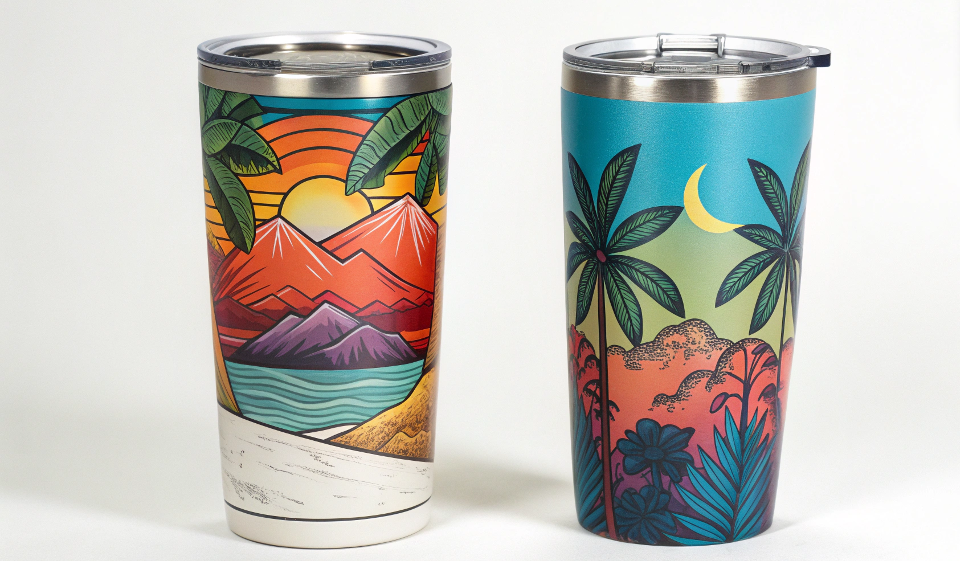
I have a coffee mug that I sublimated over five years ago. It has my first company logo on it. That mug has gone through the dishwasher hundreds of times, been used for countless cups of coffee, and it still looks almost as good as the day I pressed it. The design hasn't chipped, peeled, or faded away. This is the magic of proper sublimation. But I know that "permanent" can feel like a vague promise, especially when things can go wrong. Let's break down exactly what this durability means for different products and what factors can affect it.
How long does sublimation last on mugs?
You've seen mugs advertised as "dishwasher safe," but you're skeptical. You're afraid to make that promise, fearing a customer's design will fade, leading to complaints and returns.
This doubt makes you under-sell your products. You avoid making strong claims about durability, which can make your offerings seem less valuable than a competitor's, costing you sales.
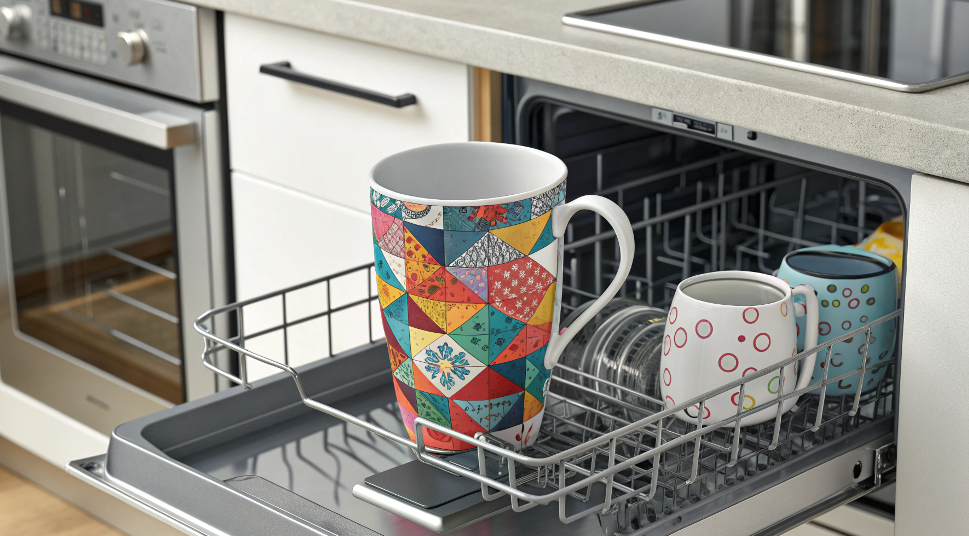
On a high-quality ceramic sublimation mug, the design will last for years, easily surviving thousands of dishwasher cycles. The image infuses into the mug's coating, making it just as durable as the surface itself. It will not fade from normal washing.
Dive Deeper: The Science Behind a Dishwasher-Proof Bond
The claim "dishwasher-safe" isn't just marketing—it's based on the fundamental chemistry of sublimation. When I was setting up my quality control standards, I wanted to understand this myself. It's not about the design sitting on top of the mug like a sticker; it's about it becoming part of the mug.
Think of it like a tattoo versus a temporary tattoo. A temporary tattoo sits on top of your skin and washes off. A real tattoo injects ink below the surface of the skin, making it permanent. Sublimation is the "real tattoo" for a mug. The heat from your press turns the solid ink into a gas, which then permeates the polymer coating on the mug. As it cools, the gas turns back into a solid, but now it's trapped inside that coating.
Detergents and hot water can't get to it. The only thing that can damage the design is something that physically damages the coating itself—like scrubbing it with steel wool or shattering the mug. For designers like Emma, communicating this permanence is a powerful selling point. It assures clients they're getting a premium, long-lasting product, not a cheap novelty item.
Is sublimation permanent on tumblers?
You see stainless steel tumblers everywhere and want to add them to your product line. You wonder if sublimation is truly permanent on metal or if it will eventually chip or scratch off.
This uncertainty prevents you from confidently investing in tumbler inventory. You're worried the product won't hold up to the rough-and-tumble life of a travel tumbler, leading to disappointed customers.
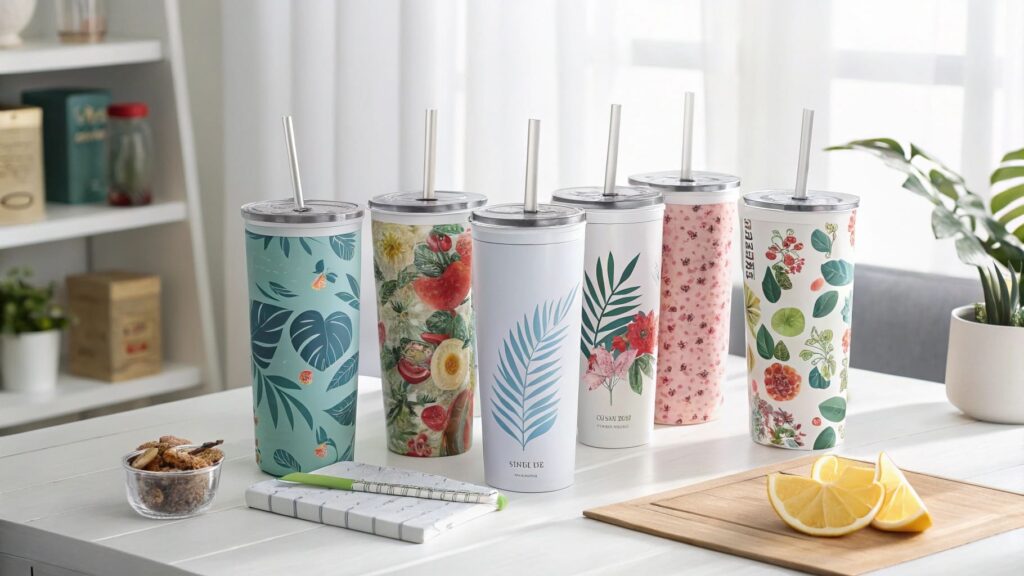
Yes, sublimation on a properly coated stainless steel tumbler is permanent. The design is infused into the polymer coating, not painted on top, making it exceptionally durable and resistant to scratching, peeling, or fading from daily use and hand washing.
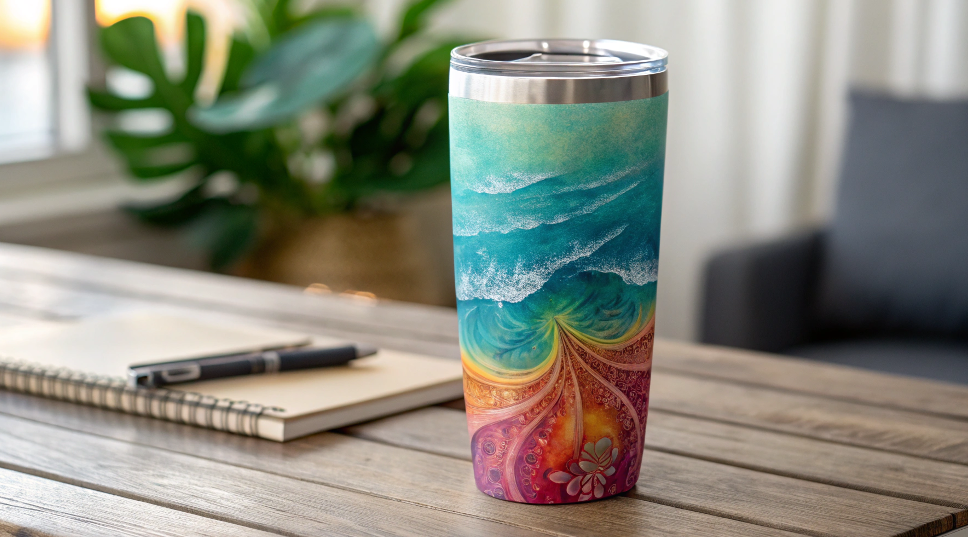
Dive Deeper: Built for a Life on the Go
Tumblers lead a harder life than a coffee mug that sits on a desk. They're tossed in bags, dropped in cup holders, and carried on hikes. The durability has to be top-notch. The key, once again, is the quality of the polymer coating applied to the stainless steel. Premium tumbler suppliers develop robust coatings specifically designed to withstand this kind of abuse.
When the sublimation process occurs, the ink doesn't just bond to this coating; it becomes an integral part of it. You can't feel the edge of the design because there isn't one. It's perfectly smooth. This means that for something to scratch your design, it would have to be sharp and forceful enough to gouge the underlying coating and the metal itself. Minor scuffs and bumps from daily life won't affect the image.
For someone like Emma creating designs for active lifestyle brands, this is crucial. She can assure her clients that the logo on a tumbler for a hiking club will look just as good after a year on the trails as it did on day one. It's important to note, however, that most suppliers recommend hand-washing for insulated tumblers to protect the vacuum seal, but the sublimation itself is extremely resilient.
Why do my sublimation tumblers look faded?
You followed all the steps, but your finished tumblers look dull and faded. You're frustrated because you've wasted expensive blanks and can't figure out what went wrong in your process.
This problem is a business killer. If you can't produce consistently vibrant products, you can't sell them. You start to doubt your skills and your equipment, feeling completely stuck.
Faded sublimation results are almost always caused by one of three issues: insufficient pressure, incorrect temperature, or not enough time in the heat press. All three are required to properly convert the ink and infuse it into the tumbler's coating.
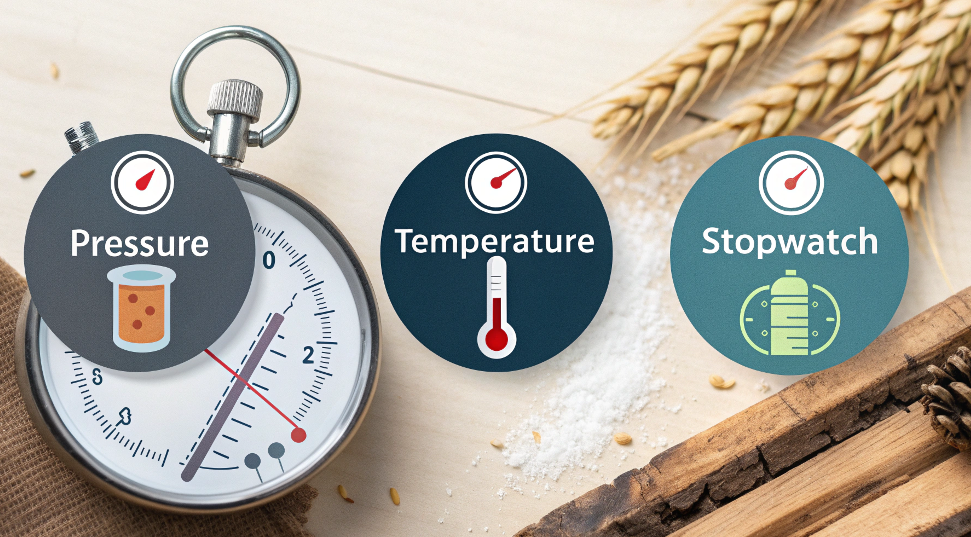
Dive Deeper: The "Time, Temp, and Pressure" Triangle
Getting a vibrant, permanent transfer is a science experiment where you must control the variables. If your results are faded, you need to become a detective and investigate the "Time, Temp, and Pressure" triangle. I learned this through trial and error—and a lot of wasted tumblers!
- Pressure: This is the most common culprit. The sublimation paper must be in tight, firm, and even contact with the entire surface of the tumbler. If the pressure is too low, there will be a microscopic air gap between the paper and the coating. The ink gas won't be able to travel across that gap effectively, resulting in a blurry or faded transfer. You need to feel signification resistance when closing your press.
- Temperature: Your heat press needs to be hot enough to trigger the chemical reaction that turns the solid ink into a gas (sublimation). If the temperature is too low, not all the ink will convert, leaving a weak, unsaturated image on the tumbler and a lot of ink still on the paper. Every blank supplier should provide a recommended temperature.
- Time: The tumbler needs to stay at that high temperature for a specific duration. This gives the ink gas enough time to transfer from the paper and fully saturate the polymer coating. If you pull it out too soon, the transfer will be incomplete and look faded.
For Emma, consistency is key for bulk orders. She would create a "recipe card" for each type of blank, documenting the exact settings that produce a perfect result.
| Issue | Symptom | How to Fix |
|---|---|---|
| Low Pressure | Blurry, ghosting, uneven patches | Tighten the press until it requires firm effort to close. |
| Low Temperature | Overall faded or brownish look | Verify press temp with a laser thermometer. Increase setting. |
| Not Enough Time | Washed-out, lack of vibrancy | Increase a few seconds at a time based on supplier advice. |
What are the downsides of sublimation?
You've heard all the great things about sublimation, but it sounds too good to be true. You need to know the limitations and trade-offs before you invest your time and money.
Ignoring the downsides can lead to costly mistakes. You might buy the wrong equipment or plan for projects that aren't even possible, setting your business back from the start.
The main downsides of sublimation are that it only works on polyester or poly-coated materials, and it requires a white or very light-colored surface. It also involves a higher initial equipment cost compared to some other methods like vinyl.
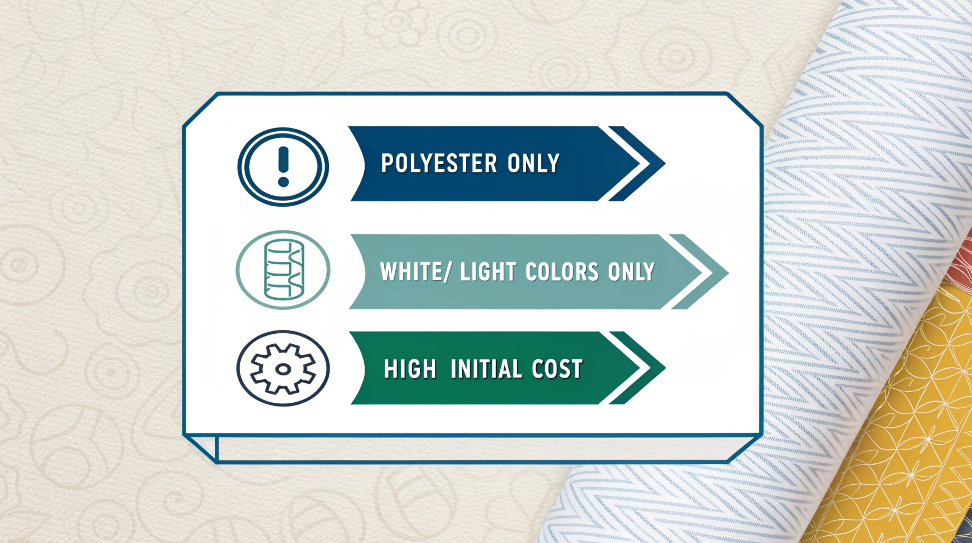
Dive Deeper: Working Within the Boundaries
Every production method has its rules, and sublimation is no exception. Understanding these limitations isn't about being negative; it's about being a smart business owner and a skilled creator. It helps you choose the right job for the right tool. For a professional like Emma, knowing these boundaries is essential for managing client projects and expectations.
- The Material Restriction (The Polyester Rule): This is the biggest one. Sublimation ink only bonds to polyester polymers. This means you can't print on 100% cotton shirts, untreated wood, or standard glass and ceramic mugs. You are limited to buying specific "sublimation blanks" that are either made of polyester or have been given a special polymer coating. This can sometimes limit your sourcing options compared to materials for other techniques.
- The Color Restriction (The No-White-Ink Rule): Sublimation printers do not use white ink. The inks are transparent, so the color of the blank acts as the "paper color." This means you cannot sublimate on black or dark-colored items because the design will not show up. For true, accurate colors, you must always start with a white surface. Printing a yellow design on a blue mug will result in a green-tinted design.
- The Equipment Investment: To start correctly, you need a dedicated sublimation printer (that has never had regular ink), special sublimation inks, sublimation paper, and a quality heat press. This initial investment is often higher than starting with a vinyl cutter, for example. Quality matters—a cheap press with uneven heat will only lead to faded, wasted products.
Conclusion
Sublimated designs are incredibly durable and can last for years, but this permanence depends entirely on using the correct materials and a precise process. When done right, your products will impress customers with their quality and longevity.

Hi there! I'm Lucy, the guardian angel of two good children. During the day, I am a professional in the heat transfer printing industry, from factory workshops to running my own business. Here I share what I have learned - let's grow together!