How to Sublimate on Stainless Steel Pet Bowls?

You see those beautiful, vibrant custom pet bowls online and know there's a huge market for them. But the idea of sublimating on metal seems complex and intimidating. You're afraid of wasting expensive blanks and achieving a faded, patchy result.
This hesitation is costing you access to one of the most passionate and profitable niches: pet parents. They are desperate for high-quality, personalized products for their furry family members. Let's break down this simple process so you can confidently add these best-sellers to your shop.
To sublimate on stainless steel pet bowls, you must use a bowl specifically prepared with a polyester-based polymer coating. You then print your design onto sublimation paper, wrap it tightly around the bowl, and use a convection oven or a specialized press to apply heat and pressure, infusing the design permanently.
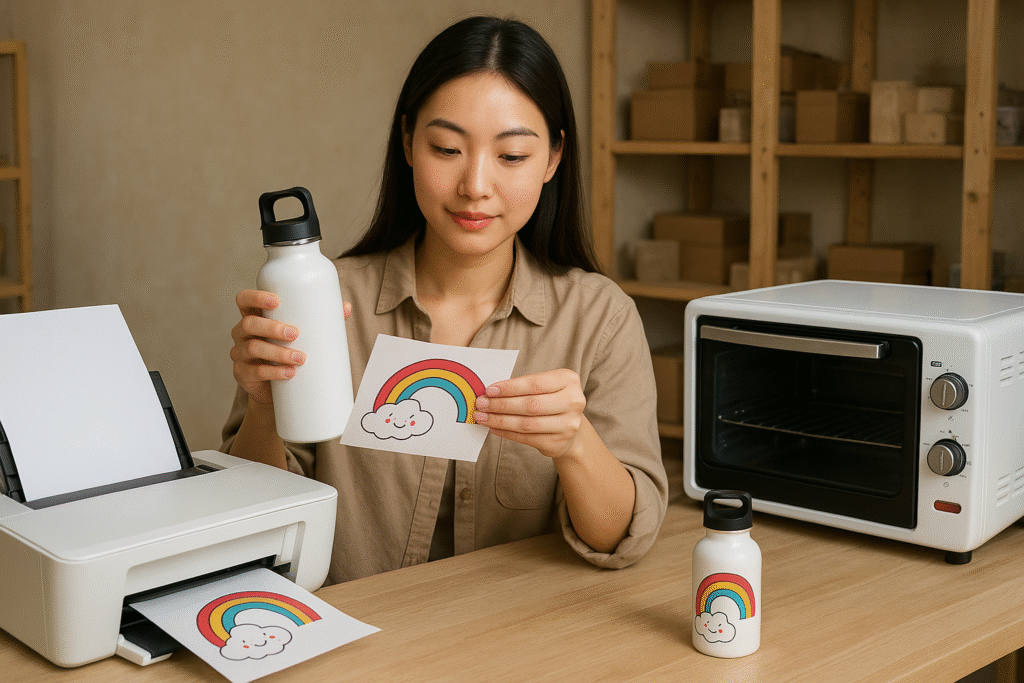
I remember the first time I tried to sublimate on metal. I had a client ask for a custom dog tag, and I confidently grabbed a blank metal tag from a craft store. I pressed it perfectly, and to my horror, the paper came off clean and the tag was completely blank. That's when I learned the most important lesson about sublimating on hard goods: it's all about the coating. That failure taught me that the material itself isn't the key; the special sublimation-ready surface is. Once I understood that, a whole new world of products opened up, from tumblers to these amazing pet bowls. Let's start with that fundamental rule so you don't repeat my mistake.
Can you sublimate onto stainless steel?
You have a regular stainless steel bowl and an idea for a great design. You're tempted to just send it through your press and hope for the best. This costly experiment is almost certain to fail, leaving you frustrated and confused.
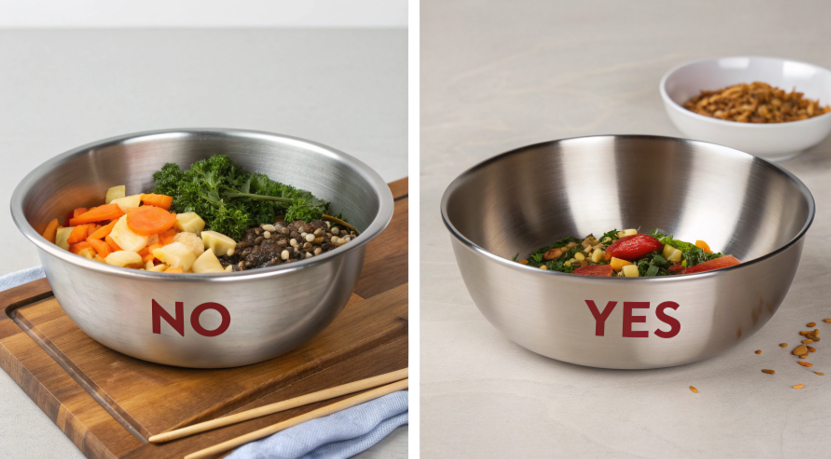
No, you cannot sublimate directly onto standard, uncoated stainless steel. Sublimation ink only bonds with polyester polymers. Therefore, you must use a stainless steel bowl that has been pre-coated with a special polymer layer designed for sublimation.
Dive Deeper: The Science of the Secret Coating
Think of the sublimation process as a chemical handshake. The sublimation ink (heated into a gas) needs a specific type of hand to shake – a polyester polymer. Regular stainless steel doesn't have this 'hand,' so the ink has nothing to bond with. This is the non-negotiable rule of sublimating on any hard surface.
When I was first sourcing products, I was obsessed with understanding this. I wanted to know my materials inside and out. The "secret" is a clear, heat-resistant polymer coating that manufacturers apply to the blank products. For a designer like Emma, knowing this is crucial. It means she can confidently tell a client "yes, we can do that," because she knows to source the correctly prepared blank.
- What is the coating? It's a special polyester-based liquid that is sprayed or applied to the stainless steel blank. It's then cured at a high temperature to create a hard, durable, and permanent surface that's ready to accept sublimation ink.
- How can you tell if a bowl is coated? You can't always see it, as the coating is often perfectly clear. The only way to know for sure is to buy your blanks from a reputable sublimation supplier who explicitly lists them as "sublimation-ready" or "for sublimation." Never assume a generic product will work.
- Why does this matter for quality? The quality of this coating is everything. A cheap, poorly applied coating will result in a blotchy transfer, poor color, and a design that might chip or peel over time. Investing in premium blanks from a good supplier is the first step to creating a premium final product. That's why I always test a sample from a new supplier before placing a large order.
How long does it take to sublimate stainless steel?
You're ready to press your first steel pet bowl, but the time and temperature settings are a mystery. Guessing can lead to scorched paper, faded designs, or even a damaged blank. You need a reliable starting point for perfect results every time.
Sublimating a stainless steel pet bowl in a convection oven typically takes about 6-8 minutes at 360-380°F (182-193°C). These settings can vary based on your specific oven, the size of the bowl, and the blank manufacturer's recommendations.
Dive Deeper: The Convection Oven Method Step-by-Step
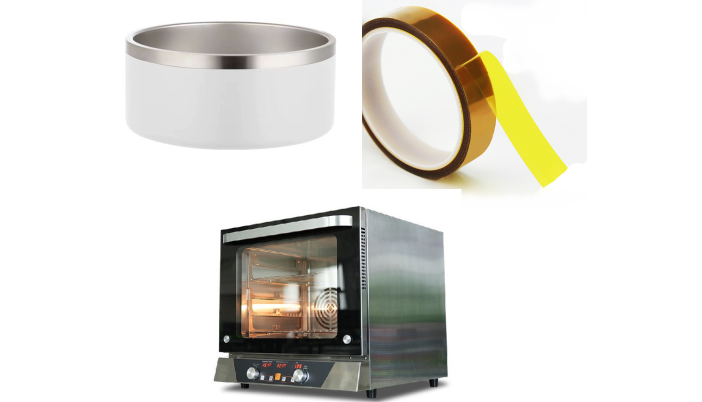
While some professionals use specialized presses, most people achieve stunning results on tapered items like pet bowls and tumblers using a simple convection oven. This method provides even, consistent heat around the entire surface. Getting the settings right was a process of trial and error for me, so let me give you the exact steps I follow for perfect bowls. This is a workflow that a meticulous designer like Emma can document and perfect for consistent quality.
My Step-by-Step Oven Process:
-
Preparation is Key:
- Print your design on high-quality sublimation paper. Remember to mirror the image!
- Trim the paper, leaving a small margin around your design.
- Wipe the coated surface of the bowl with a lint-free cloth to remove any dust.
-
Wrap it Tight:
- Position your transfer on the bowl, ensuring it's straight and centered.
- Use high-temperature resistant tape to secure the paper tightly. The paper must have firm, direct contact with every part of the coated surface. Any gaps will result in blurry or faded spots.
-
Add Pressure with Shrink Wrap:
- Place the taped bowl into a sublimation shrink wrap sleeve.
- Use a heat gun to shrink the sleeve until it's conforming tightly to the shape of the bowl and the paper. This shrink wrap acts as your "pressure," ensuring constant contact during the baking process.
-
Bake to Perfection:
- Preheat your dedicated convection oven to 375°F (190°C). Never use an oven you also cook food in.
- Place the bowl in the oven and set your timer for 7 minutes.
- Pro Tip: I rotate my items halfway through the baking time (at 3.5 minutes) to ensure absolutely even heating, just in case my oven has hot spots.
-
The Reveal:
- Wearing heat-resistant gloves, carefully remove the bowl from the oven. It will be extremely hot.
- Immediately remove the shrink wrap and the paper transfer. Waiting for it to cool can cause "ghosting" or blurry edges.
- Place the hot bowl on a heat-resistant surface to cool completely.
What is better for dog bowls, ceramic or stainless steel?
You want to offer the best product for your customers and their pets. You see both ceramic and stainless steel options and feel torn. Recommending the wrong one could lead to returns or even put a pet's safety at risk.
For overall durability and hygiene, stainless steel is generally better for dog bowls. It is unbreakable, non-porous, and easiest to sanitize. However, heavy ceramic bowls are an excellent choice for pets that tend to push their bowls around, offering superior stability.
Dive Deeper: A Head-to-Head Comparison for Your Business
This is one of the most common questions I get from my clients who are starting their own pet product lines. The truth is, there isn't one "best" answer for every pet. The best choice depends on the pet's size, habits, and the owner's priorities. By understanding the pros and cons, you can guide your customers to the perfect choice, positioning yourself as a knowledgeable expert. This is how I built trust and repeat business.
Here's the breakdown I give my clients:
| Feature | Stainless Steel | Ceramic |
|---|---|---|
| Winner For... | Durability & Health | Stability & Aesthetics |
| Health & Safety | Winner. The gold standard. It's non-porous, so it doesn't harbor bacteria. It also won't cause "chin acne" which can be an issue with other materials. | Good, with a catch. The glaze is non-porous and safe, but if it chips or cracks, that spot can harbor bacteria. A cracked ceramic bowl is no longer hygienic. |
| Durability | Winner. It's virtually indestructible. It won't shatter if dropped or crack if kicked by a large, excited dog. Perfect for active households. | Vulnerable. Can easily crack or shatter if dropped on a hard floor. Not ideal for clumsy owners or very rambunctious pets. |
| Ease of Cleaning | Winner. Simple to hand wash and completely dishwasher safe (both the bowl and the sublimated image). Withstands high-temp sanitation cycles. | Good. Also dishwasher safe. The only risk is a chip occurring during the washing cycle, which would compromise the bowl's hygiene. |
| Stability | Lighter. Can be pushed around by aggressive eaters. Often requires a non-slip mat or base to hold it in place. | Winner. Heavier weight keeps it firmly planted on the floor. Excellent for large dogs or messy eaters who tend to "chase" their bowl. |
| Your Best Customer | The health-conscious owner, multi-pet households, owners of large or destructive dogs, anyone looking for the longest-lasting product. | Owners of large dogs needing stability, customers focused on a classic "premium" feel, less-active pets. |
How to sanitize a stainless steel dog bowl?
You've created a beautiful, personalized stainless steel bowl. Now you need to provide after-care instructions. To maintain customer trust, you must give them accurate, safe, and effective advice on how to keep the product sanitary for their beloved pet.
To sanitize a stainless steel dog bowl, the easiest and most effective method is to wash it in a dishwasher on a high-temperature or sanitize setting. Alternatively, you can hand wash it with hot water and soap, and then soak it in a solution of vinegar and water.

Dive Deeper: Providing Value Through After-Care Education
Providing clear care instructions is a crucial part of selling a premium product. It shows you care about the customer and the longevity of their purchase. When I ship my pet bowls, I always include a small care card. This simple addition elevates the customer experience and prevents future problems. For a designer like Emma, she could even design this care card to match the branding of the bowl itself, creating a complete, professional package.
Here are the safe and effective sanitizing methods you should recommend to your customers:
Method 1: The Dishwasher (Easiest)
- This is the best option for daily cleaning.
- Instructions: "For daily cleaning and sanitizing, simply place your pet bowl in the dishwasher. Use the high-temperature wash or 'sani-rinse' cycle if available. Your sublimated design is 100% permanent and dishwasher safe."
- Why it Works: The combination of hot water (often 140°F or higher) and strong detergent effectively kills most common household bacteria.
Method 2: The Vinegar Soak (Deep Clean)
- This is great for a weekly deep clean or for removing hard water spots.
- Instructions: "First, wash the bowl with hot, soapy water to remove any food debris. Then, create a solution of one part white vinegar to one part hot water. Let the bowl soak for at least 10-15 minutes. Rinse thoroughly and dry."
- Why it Works: Vinegar is a natural disinfectant. The acetic acid it contains is effective at killing many types of bacteria and viruses. It's safe, non-toxic, and affordable.
What to Avoid:
- Harsh Abrasives: Tell customers to avoid using steel wool or highly abrasive scouring pads. While stainless steel is tough, these can eventually create fine scratches on the surface, which could potentially harbor bacteria.
- Bleach: While bleach is a powerful disinfectant, it can be harsh on stainless steel over time and must be rinsed extremely thoroughly to be pet-safe. The vinegar method is safer and nearly as effective for home use.
Conclusion
Sublimating on stainless steel pet bowls is a simple, profitable process once you understand the secret: always use a polymer-coated blank. Master the oven-baking method with the right time and temp, and you'll create durable, hygienic, and highly desirable products for a passionate market.

Hi there! I'm Lucy, the guardian angel of two good children. During the day, I am a professional in the heat transfer printing industry, from factory workshops to running my own business. Here I share what I have learned - let's grow together!