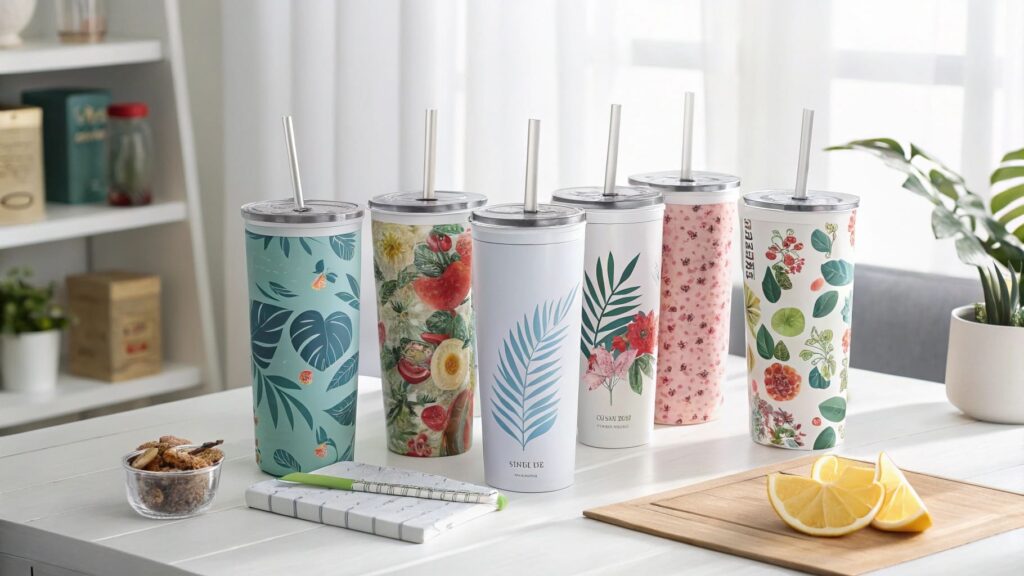
How to Sublimate on Stainless Steel Tumblers?
You have a great design and a new tumbler press. But getting a perfect, seamless print on a tumbler seems impossible. Your colors are off, and there are ugly white gaps.
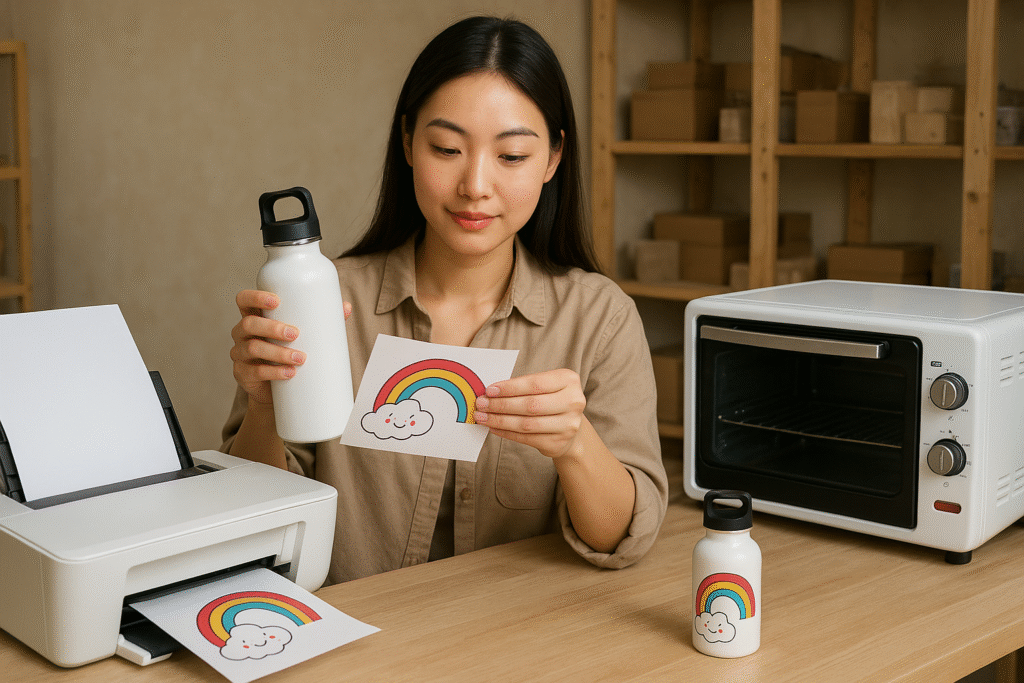
To sublimate a tumbler, you need to print a mirrored design on sublimation paper with sublimation ink. Then, wrap the design tightly around a sublimation-coated tumbler, and heat it in a tumbler press or convection oven until the ink infuses.
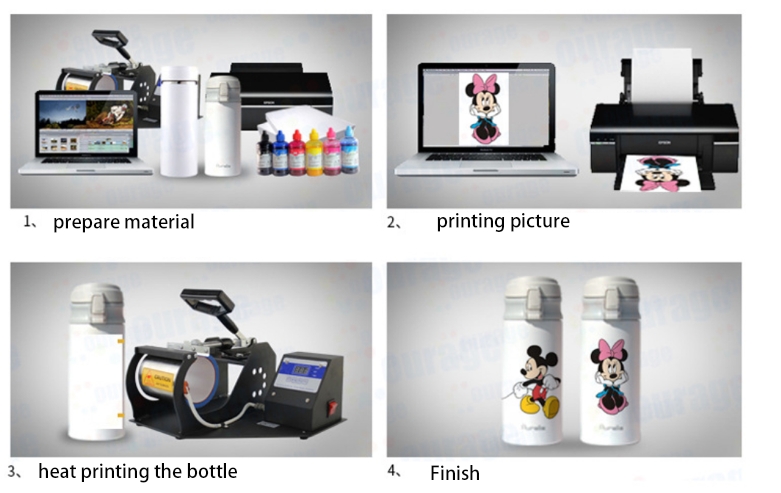
Helping clients master the tumbler has been a huge part of my journey. The first time someone creates a flawless, full-wrap tumbler, it's like magic. But I've also seen the frustration of wasted tumblers and paper. It's a process that demands precision. Every step, from taping the paper to getting the temperature right, matters. I want to walk you through the exact process my team and I have perfected over thousands of pressings, so you can skip the failures and get right to making beautiful, profitable products.
How long does it take to sublimate steel tumblers?
You're worried about getting the timing right. Too little time and the colors are weak. Too much time and your design looks burnt and brown. You need a reliable starting point.
Typically, it takes 60 seconds in a tumbler press at around 365°F (185°C). In a convection oven, it takes about 6 minutes at 375°F (190°C). However, you must always check your supplier's exact recommendations.
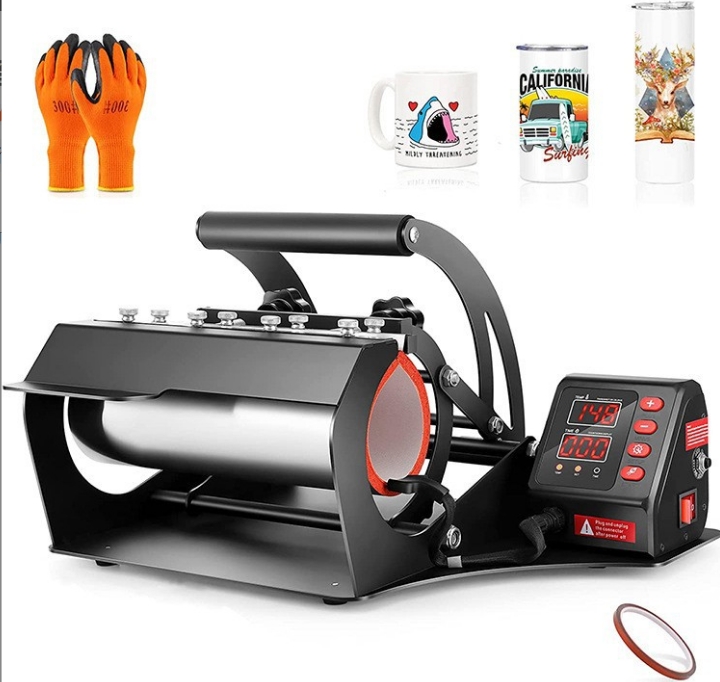
Finding the perfect time and temperature combination is crucial. My product specialist, Alex, calls this "dialing in your process." The numbers can vary based on many factors: the brand of your tumbler, the type of press or oven, and even the humidity in your room. That's why it is so important to test. We always advise clients to sacrifice one tumbler from a new batch to get the settings perfect. A tumbler press uses direct heat, making the process fast. An oven uses ambient air, which takes longer but can provide more even heat for full wraps. Once you find what works for your specific setup, write it down and stick to it for consistent results.
| Equipment | Temperature (Starting Point) | Time (Starting Point) | Key Considerations |
|---|---|---|---|
| Tumbler Heat Press | 365°F / 185°C | 60-70 seconds | Requires rotating the tumbler 180° for a second press to get a full wrap. Pressure must be firm. |
| Convection Oven | 375°F / 190°C | 5-7 minutes | Requires a shrink-wrap sleeve to provide pressure. Allows for multiple tumblers at once. |
Can I sublimate on a Yeti tumbler?
Yeti tumblers are a premium product people love. You want to offer them to your customers with custom designs. But you are not sure if their surface is compatible with sublimation.
No, you cannot sublimate on a standard Yeti tumbler. Their durable powder coating is not the correct polymer surface needed for sublimation ink to bond. The transfer will fail and may damage the Yeti's finish.
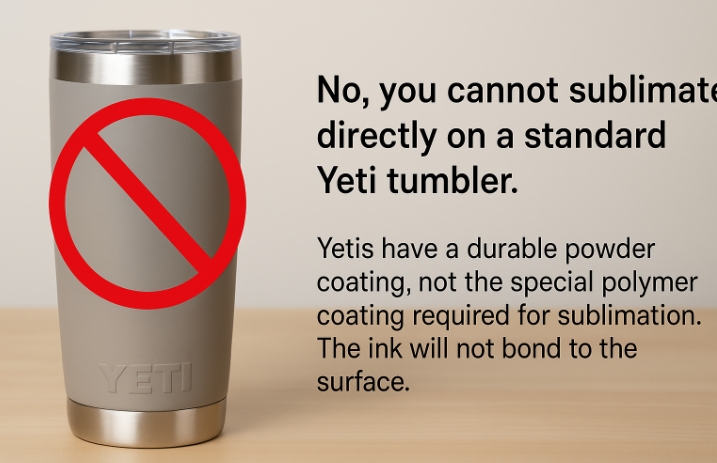
This is one of the most common questions I get from people starting out. The Yeti brand has an incredible reputation, so it's natural to want to work with their products. However, their tumblers are finished with a method called powder coating. This creates a very tough and textured surface. It is not the same as the special, smooth, and porous polymer coating required for sublimation. The sublimation ink gas needs a specific type of polyester molecule to bond with. The powder coating on a Yeti doesn't have them. If you try to press a sublimation transfer onto a Yeti, the ink will have nowhere to go. It will look splotchy, faint, and will likely wipe right off. To customize a Yeti tumbler, you must use other methods like adhesive vinyl decals or professional laser engraving. Save your sublimation for the specially prepared blanks.
How to put designs on stainless steel tumblers?
You want to customize a tumbler but maybe sublimation isn't right for you. You need to know all the options. You are looking for the best method for your specific project and skill level.
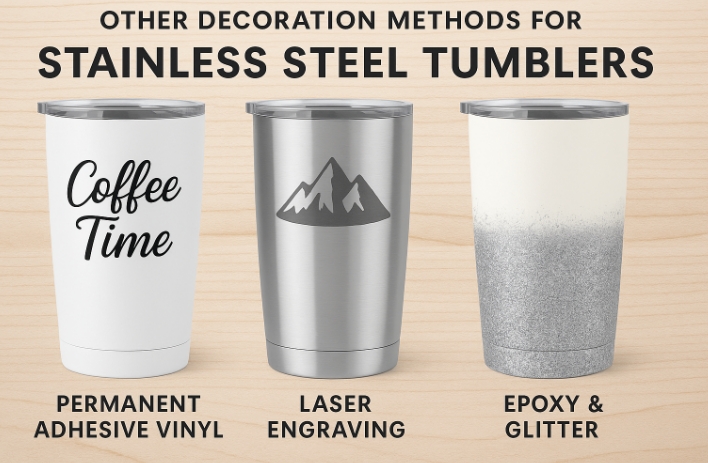
Besides sublimation, you can decorate stainless steel tumblers using permanent adhesive vinyl, laser engraving, or epoxy and glitter. Each method offers a different look, durability level, and requires different equipment.
Helping clients choose the right decoration method is a key part of my consulting. Sublimation is my passion, but it isn't the only way. For example, if you want to decorate a dark-colored or a non-coated tumbler like a Yeti, sublimation is not an option. Your choice depends on the look you want, the equipment you have, and the type of tumbler you're using. If you have a Cricut, adhesive vinyl is a great starting point for simple logos and text. If you want the most premium, permanent look, laser engraving is the industry standard. And for that sparkly, high-gloss finish, the epoxy method is very popular with crafters. Understanding the pros and cons of each will help you build a successful business.
| Method | Best For | Pros | Cons |
|---|---|---|---|
| Sublimation | Full-color photos on coated tumblers | Permanent, smooth, dishwasher-safe | Requires coated blanks, press, special ink |
| Adhesive Vinyl | Logos & text on any tumbler type | Low startup cost, works on any color | Can peel over time, not as durable |
| Laser Engraving | Premium logos on powder-coated tumblers | Extremely durable, high-end look | Expensive equipment, limited to one color |
| Epoxy/Glitter | Artistic, glittery, sealed designs | Highly customizable, unique textures | Messy, long curing time, requires safety gear |
Do you have to seal sublimation tumblers?
You've just pressed a beautiful tumbler. The image looks amazing. Now you're wondering if you need to add a clear coat or sealant to protect it from scratches and fading.
No, you do not need to seal a sublimation tumbler. The sublimation process permanently infuses the ink into the tumbler's special coating. The design is already scratch-resistant and protected, with no extra sealant needed.
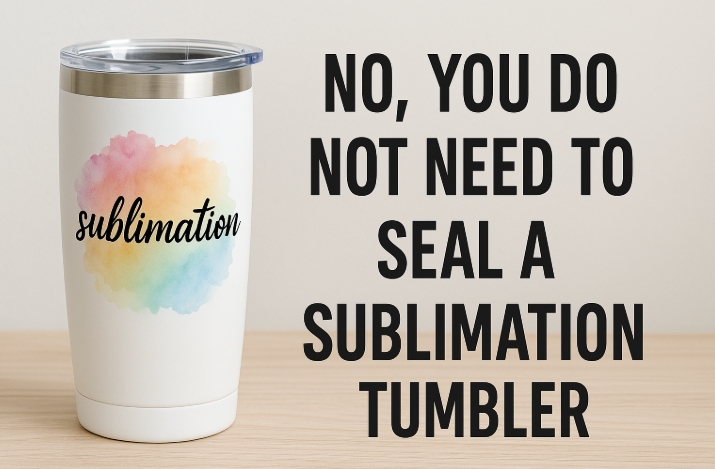
The permanence of sublimation is its greatest strength. When people come from crafting backgrounds where they use vinyl or waterslide decals, they are used to sealing everything with epoxy or a spray sealant. But sublimation is different. It's science, not a sticker. During the heating process, the solid ink becomes a gas and bonds with the polymer coating at a molecular level. The design doesn't sit on top of the surface; it becomes a part of the surface. This is why it feels completely smooth to the touch and why it won't peel, crack, or fade under normal use. Adding a sealant is unnecessary and can actually ruin the finish of the tumbler. It might react with the coating and become yellow or tacky. A properly sublimated tumbler is already finished and ready to use the moment it cools down, and most are even top-rack dishwasher safe.
Conclusion
Mastering tumbler sublimation involves a precise process: using a coated blank, taping your mirrored print tightly, and applying the correct heat and time. The result is a vibrant, permanent, sellable product.

Hi there! I'm Lucy, the guardian angel of two good children. During the day, I am a professional in the heat transfer printing industry, from factory workshops to running my own business. Here I share what I have learned - let's grow together!