What are the Best Sublimation Settings for Stainless Steel Tumblers?

Your expensive tumblers are coming out faded, blurry, or even scorched. Wasting time and money on failed prints is frustrating. You need a reliable process for professional-quality results every time.
The best settings for stainless steel tumblers are a starting point, not a universal rule. For a convection oven, begin with 185°C (365°F) for 6 minutes. For a tumbler press, start at 200°C (400°F) for 60 seconds.
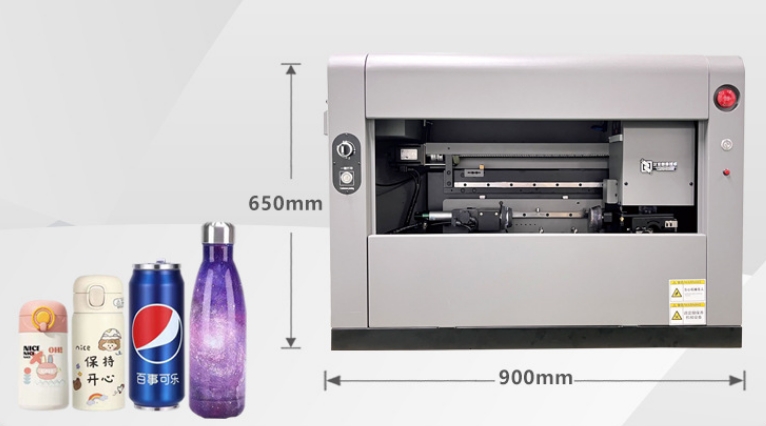
Stainless steel tumblers have become one of the most profitable items for my clients. They have a high perceived value and offer a great canvas for custom designs. When I first started, however, I found them more challenging than mugs. The metal pulls heat away differently, and getting a seamless, even print was tough. It took some trial and error, but I learned that success isn't about finding one magic number. It's about understanding how time, temperature, and pressure work together for your specific equipment. Let's break it down so you can avoid the mistakes I made.
Can you really sublimate on stainless steel?
You see raw stainless steel and wonder if you can print on it directly. Attempting to sublimate on an untreated tumbler is a costly mistake. You must know the secret ingredient first.
Yes, you can sublimate on stainless steel, but only if it has a special polymer sublimation coating. Raw, untreated stainless steel will not work because the sublimation ink has nothing to bond to.
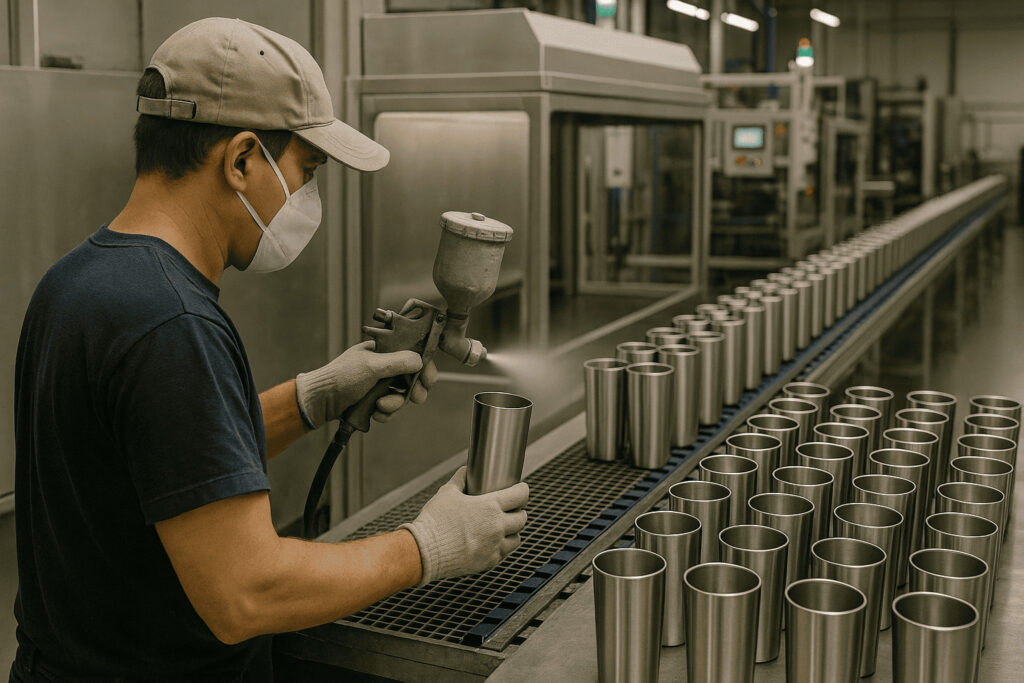
The process won't work on just any piece of metal you find. The science behind sublimation relies on polyester. When the solid ink is heated, it turns into a gas. This gas needs to infuse into polymer fibers or a polymer surface to become permanent. Raw stainless steel has no polymers. My product specialist, Alex, explains it clearly: "The coating is the bridge between the ink and the metal. Without it, the ink gas just floats away or sits on the surface like dust." I learned this when a client brought me a beautiful, expensive branded thermos, asking me to put a photo on it. I had to explain that its powder coat wasn't the right kind. To avoid this, you must always buy tumblers sold specifically as "sublimation blanks." They come from the factory with the correct, clear polymer layer applied, ready for printing.
| Tumbler Type | Sublimation Suitable? | Why it Works (or Doesn't) |
|---|---|---|
| Sublimation Blank | Yes | Has the required clear polymer coating. |
| Regular Stainless Steel | No | Lacks a polymer surface for ink to bond. |
| Powder-Coated (e.g., Yeti) | No | The factory coating is not a sublimation polymer. |
| Anodized Aluminum | No | The surface is sealed and not receptive to ink. |
What is the right temperature for sublimating on metal?
Your tumbler designs look brown and burnt, or they are faded and blotchy. Incorrect temperature is burning through your profits and wasting your blanks. Let's find your temperature sweet spot.
For stainless steel, the ideal sublimation temperature is usually between 185°C - 200°C (365°F - 400°F). The exact temperature depends heavily on whether you are using a convection oven or a dedicated tumbler press.
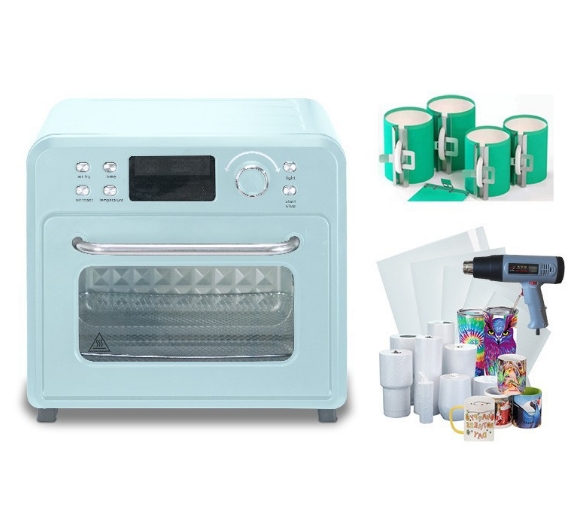
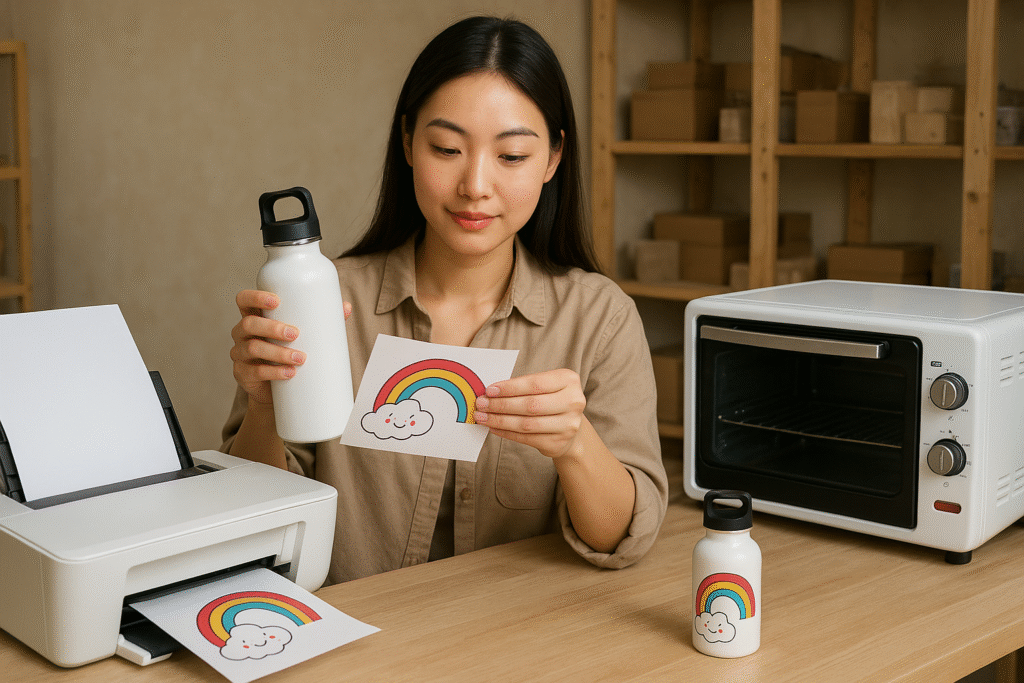
Temperature is the most critical variable. A few degrees can make the difference between a perfect print and a failed one. A convection oven and a tumbler press heat things very differently. An oven surrounds the tumbler with hot air, heating it slowly and evenly. This requires a lower temperature for a longer time. A tumbler press uses direct contact, transferring heat very quickly to one spot. This means a higher temperature for a much shorter time. Alex always emphasizes that metal is a heat sink—it pulls heat away from the paper quickly. That's why consistent heat is so important. I personally prefer using a convection oven for full-wrap tumbler designs. The even heat from the circulating air helps prevent the ugly seam lines or faded spots you can sometimes get with a press. Always preheat your oven or press properly before putting your tumbler in.
| Heating Method | Typical Temperature Range | Best For |
|---|---|---|
| Convection Oven | 185°C - 190°C (365°F - 375°F) | Full-wrap, seamless designs; multiple items at once. |
| Tumbler Press | 195°C - 200°C (385°F - 400°F) | Spot logos; faster production for single items. |
What is the best overall heat press setting for sublimation?
You've dialed in the temp and time, but your results are still inconsistent. Focusing on just two numbers is misleading. You need to master the complete "sublimation recipe" to succeed.
There is no single "best" setting, but a "best process." It requires balancing the three key variables: time, temperature, and pressure. For tumblers, pressure is applied differently in an oven versus a press.
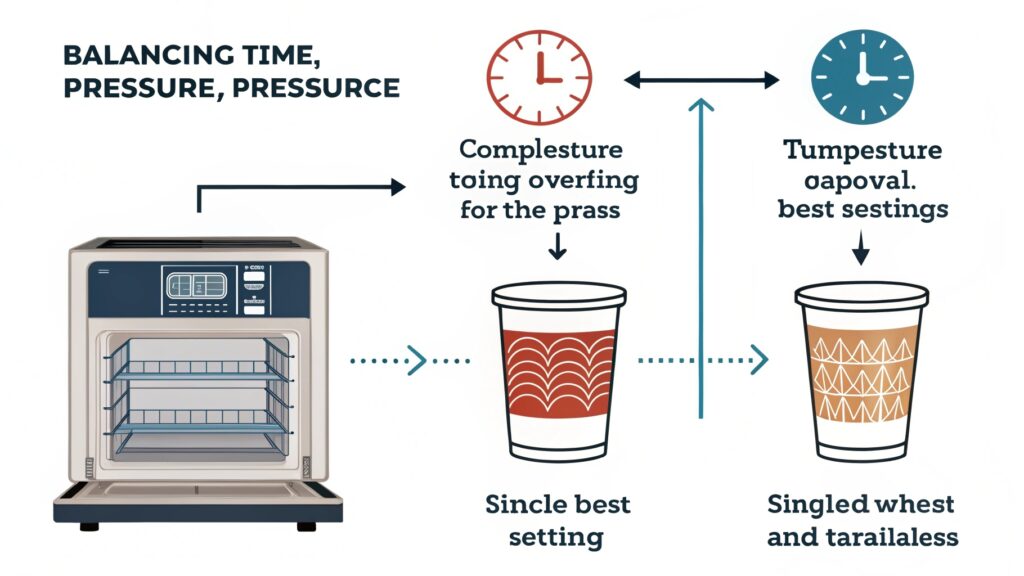
Many beginners just focus on time and temp, but they forget the third critical element: pressure. Pressure ensures the sublimation paper makes perfect, firm contact with the tumbler's surface. Without good pressure, the ink gas can escape, leaving you with blurry or faded spots. When you use a tumbler press, you control pressure with a manual adjustment knob. It should be firm, but not so tight that it could dent the tumbler wall. When you use a convection oven, your pressure comes from the shrink-wrap sleeve. You must use a heat gun to shrink the sleeve tightly around the entire tumbler. Any air pockets or loose areas are points where the pressure is too low, and the print will fail. The "best setting" is actually a "best practice": always use quality paper, secure it tightly with heat tape, and apply firm, even pressure for your chosen heating method.
| Problem | Likely Cause | Solution |
|---|---|---|
| Faded Top/Bottom | Uneven pressure/heat | In a press, center the tumbler. In an oven, ensure shrink wrap is tight everywhere. |
| Blurry Patches | Low pressure | Increase pressure on press; use heat gun to tighten shrink wrap more. |
| Paper Sticking | Too much pressure/heat | Reduce press pressure; slightly lower oven temp. |
How long should you sublimate a stainless steel tumbler?
You're unsure if you're baking too long or not long enough. Wasting a 6-minute oven cycle on a bad result is very inefficient. Solution = Understand the time-temperature relationship.
In a convection oven, a 20oz stainless steel tumbler typically takes 6 minutes. In a tumbler press, the time is much shorter, around 60-90 seconds, usually requiring 180-degree.
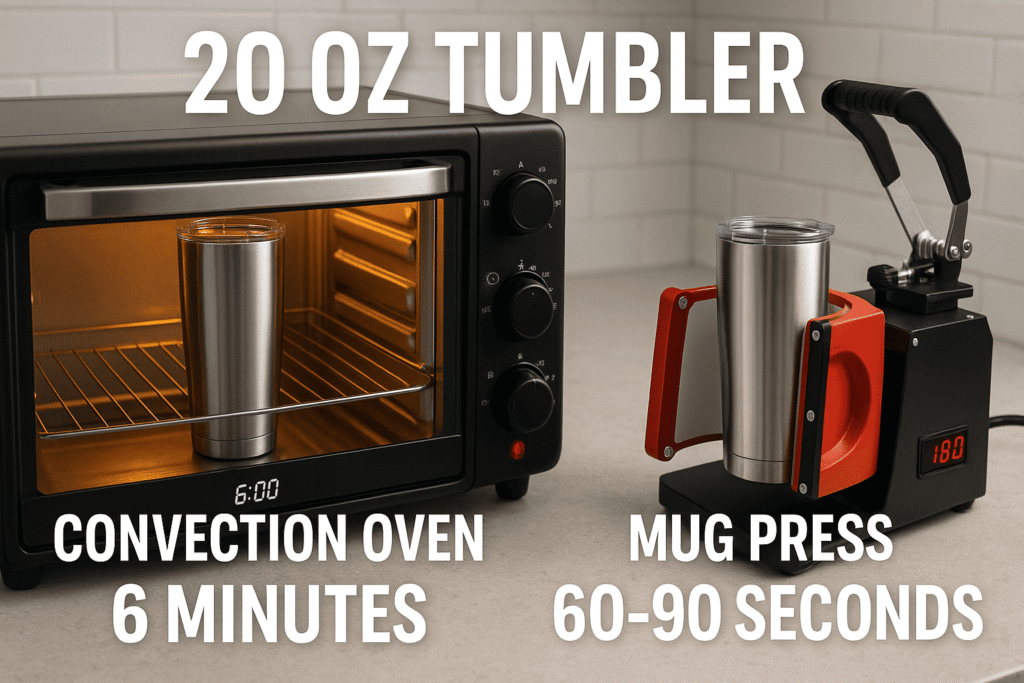
Time is directly related to your heating method and temperature. The goal is to give the ink enough time to turn to gas and fully transfer, but not so long that the colors start to burn and look brown. With an oven, the 6-minute timeframe allows the slow, circulating air to heat the entire mass of the metal tumbler evenly. I once tried to pull an oven batch at 4 minutes to save time, and every single tumbler was faded. You can't rush it. With a press, the heat is direct and intense, so the transfer happens very quickly. Because the press only heats part of the tumbler at once, you need to press it, rotate it 180 degrees, and press it again to cover the whole surface. I always recommend using a separate, reliable timer. The built-in timers on some machines can be inaccurate. Always start your timer after the tumbler is inside and the oven door or press is fully closed.
Conclusion
Success with stainless steel tumblers requires coated blanks. Find your perfect settings by testing time, temperature, and pressure for your specific equipment. This ensures consistent, professional results every time.

Hi there! I'm Lucy, the guardian angel of two good children. During the day, I am a professional in the heat transfer printing industry, from factory workshops to running my own business. Here I share what I have learned - let's grow together!