What Is Meant by Sublimation Printing?

You hear "sublimation printing" mentioned for custom gifts and apparel. But what is it really? You're confused by the technical talk and just want a simple explanation that makes sense.
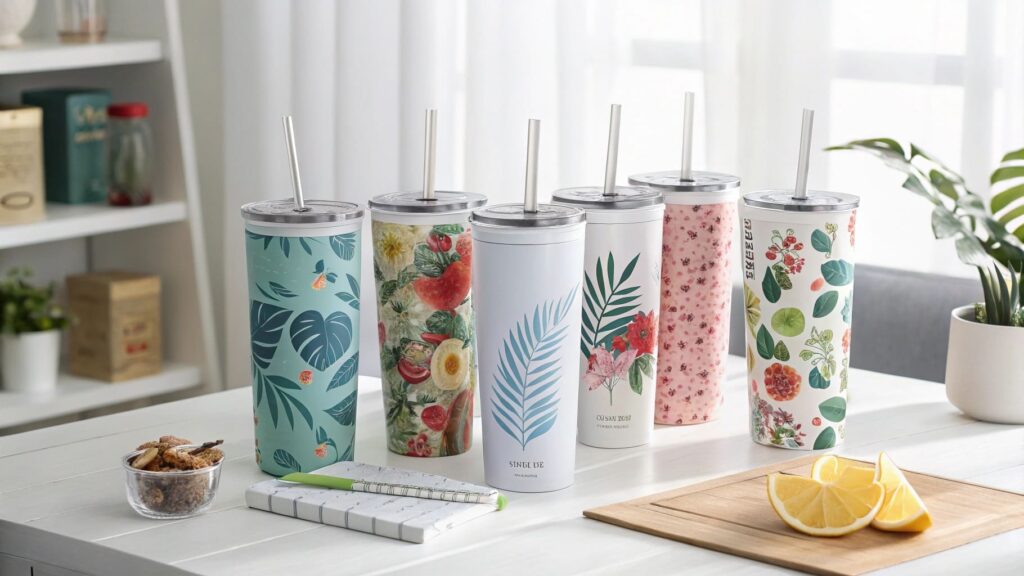
Sublimation printing is a process that uses special ink that turns from a solid into a gas under heat. This gas permanently infuses into polyester or polymer-coated materials, creating a vibrant, zero-feel design that will never crack or peel.

When I was first learning about this industry, the term "sublimation" sounded so scientific and intimidating. It took me a little while to truly grasp the magic behind it. But once I did, it completely changed how I saw product creation. It’s the key to making items that look truly professional and high-end. This process was a game-changer for my business, and it's actually quite straightforward once you understand the key steps. Let's break down what makes this method so unique and powerful for creating amazing custom products.
What does sublimation printing look like?
You see a sublimation print, and it looks like magic. The image is perfectly inside the material with no texture at all. You wonder how this flawless, professional look is actually achieved.
A finished sublimation print looks like it was part of the original manufacturing process. The colors are incredibly bright and the edges are sharp. There is zero texture or raised feel; the design is perfectly smooth to the touch.
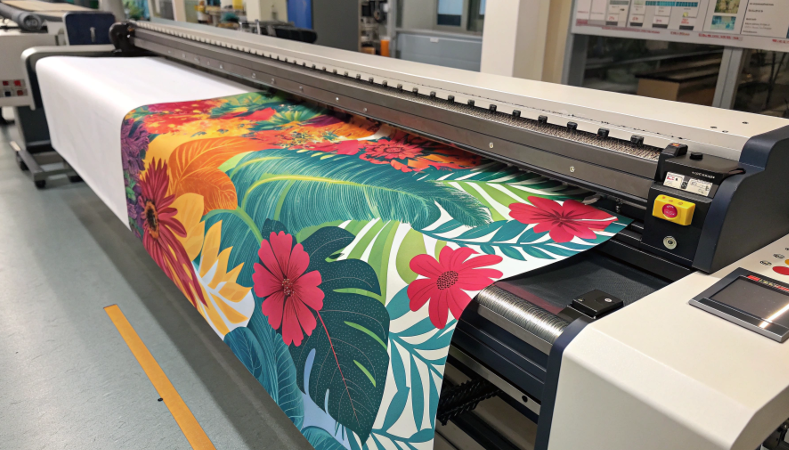
My product specialist, Alex, loves to use the analogy of a tattoo versus a temporary sticker. A sticker sits on top of your skin, and you can feel its edges. A tattoo, however, is in your skin. Sublimation is the tattoo for your product. This happens because the ink isn't just laid on the surface; it's chemically infused into it. This gives it some very distinct visual qualities that customers immediately recognize as high quality. The look is so different from other methods. For example, the colors are not just bright, they are photographic. Sublimation can reproduce millions of colors, making it perfect for detailed photos and complex gradients that other methods struggle with. The design also has zero "hand," which is the industry term for the feel of a print. It is completely smooth. This makes it ideal for apparel because the decorated area remains just as breathable as the rest of the shirt.
| Print Method | Visual Look | Feel (Hand) | How It Works |
|---|---|---|---|
| Sublimation | Vibrant, Photographic | Zero feel, perfectly smooth | Ink becomes a gas and infuses into fibers |
| Screen Printing | Bold, Opaque Colors | A slight, thin texture | Ink is pushed through a stencil onto the surface |
| HTV (Vinyl) | Opaque, Plastic-like | A noticeable plastic layer on top | A sheet of vinyl is cut and heat-applied to the surface |
Is a Cricut a sublimation printer?
You're exploring custom apparel and see Cricut machines everywhere. You hear "Cricut" and "sublimation" used together and easily assume the machine does both, which is causing understandable confusion.
No, a Cricut is a digital cutting machine, not a printer of any kind. It cannot perform sublimation printing on its own. It is a tool that can be used with sublimation, but it is not the printer.
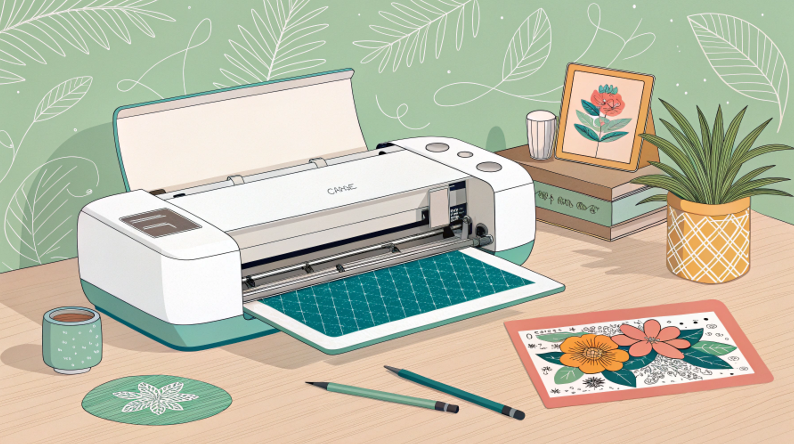
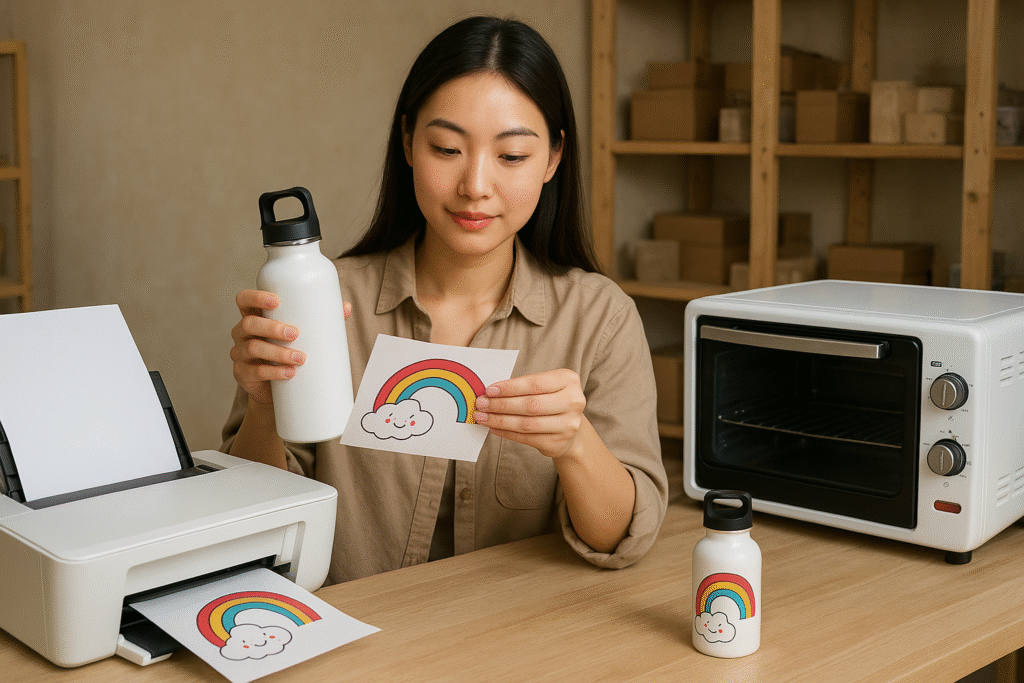
This is one of the biggest points of confusion I see when helping new business owners set up their workspace. It's so important to understand the different jobs these tools do. A Cricut's primary job is to cut materials like vinyl and paper with amazing precision. It uses a small blade, not ink. To do sublimation, you need a dedicated sublimation printer (like a Sawgrass model) or an inkjet printer that you convert for sublimation use only (many people use Epson EcoTank models for this).
The confusion often comes from Cricut's own product line called "Infusible Ink." Cricut's Infusible Ink sheets are basically pre-printed sheets of solid-color sublimation paper. Your Cricut machine can cut shapes and letters from these sheets, which you can then press onto a polyester blank. This is sublimation. However, the Cricut itself is just cutting the sheet. It cannot print a custom, full-color photograph or a unique logo you designed. For that, you absolutely need a separate sublimation printer. A Cricut is a fantastic partner tool in a sublimation business, but it is not the core machine.
What is the difference between sublimation printing and regular printing?
You tried using your home office printer to print a design for a mug. You even used the right sublimation paper, but when you pressed it, the result was a blurry, faded mess.
Regular printing uses liquid ink that dries on top of paper. Sublimation printing uses a specialized solid dye that turns into a gas when heated. These inks are fundamentally different and are not interchangeable.
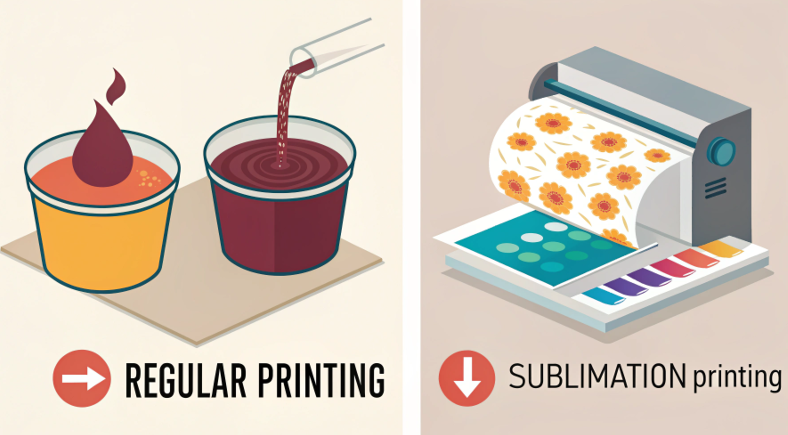
The difference is all about the ink's purpose. Alex, my technical specialist, explains it as "painting a wall versus dyeing a shirt." One process adds a layer on top, while the other changes the color from within. Your regular office printer uses standard liquid inks designed to make sharp dots on office paper. They are not designed to react to heat in any way. If you try to press them, they will just smudge or burn.
Sublimation ink is a completely different chemical compound. The dye is special. When you print it onto sublimation paper, it sits on the surface as a solid. The colors will even look dull and incorrect on the paper. The magic happens under the heat press. At around 400°F (200°C), two things happen at once: the solid dye bypasses the liquid state and turns directly into a gas (that's the "sublimation" part), and the pores of the polyester material open up. The pressure from the press forces the gas into these open pores. As it cools, the pores close, trapping the now-solid ink inside forever. This is why you must have a completely separate, dedicated printer for sublimation. You can never put sublimation ink in a regular office printer or mix the two ink types.
What are the disadvantages of sublimation printing?
Sublimation looks like the perfect decoration method. But you know there must be some limitations, and you want to understand them before you invest your hard-earned money into a full setup.
The primary disadvantages of sublimation are its strict material and color requirements. It only works on polyester-based materials and can only be used on white or very light-colored surfaces, not on dark or black items.
Every production method has trade-offs, and being a smart business owner means knowing them inside and out. I always walk my clients through these limitations before they buy any equipment. First is the material rule: it has to be polyester. This means you can't just grab a cool cotton shirt or a standard ceramic mug from a department store and expect it to work. You must buy special "sublimation blanks" that have the correct polymer coating. Second is the color rule. Because sublimation ink is transparent, it cannot show up on a dark background. Think of it like a watercolor paint. You can't paint yellow onto black paper and expect it to be visible. This means your product line is limited to white and very light pastel-colored items. There is no white sublimation ink. Any white in your design is simply the white of the blank showing through. Understanding these two rules will save you a world of frustration and wasted money.
| Aspect | Advantage | Disadvantage |
|---|---|---|
| Material | Creates a permanent, no-feel design. | Only works on polyester or poly-coated items. |
| Color | Produces millions of vibrant colors. | Does not work on dark or black surfaces. |
| Durability | Design will not crack, peel, or fade. | Can be sensitive to direct, prolonged UV sunlight. |
| Feel | The decorated area remains soft and breathable. | Requires specific blanks which can be costly. |
Conclusion
Sublimation printing is a powerful process that fuses ink directly into a material. By understanding its science and its limitations, you can create stunning, professional-quality products that customers truly value.

Hi there! I'm Lucy, the guardian angel of two good children. During the day, I am a professional in the heat transfer printing industry, from factory workshops to running my own business. Here I share what I have learned - let's grow together!