What is Sublimation Printing on Fabric?
You want your custom apparel to pop with color and last forever. But your designs crack, peel, or fade after just a few washes. You need a printing method that delivers professional, permanent results.
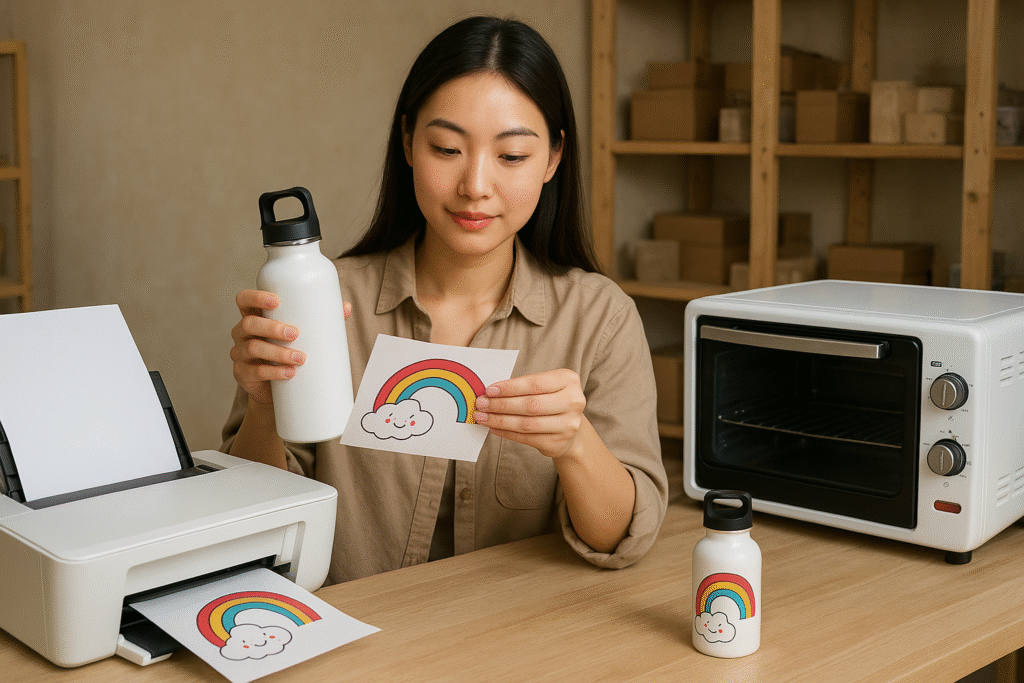
Sublimation is a printing process where heat turns special ink into a gas that bonds directly with polyester fabric fibers. This creates a permanent, full-color design that is smooth to the touch and will never crack, peel, or fade, making it ideal for durable apparel.
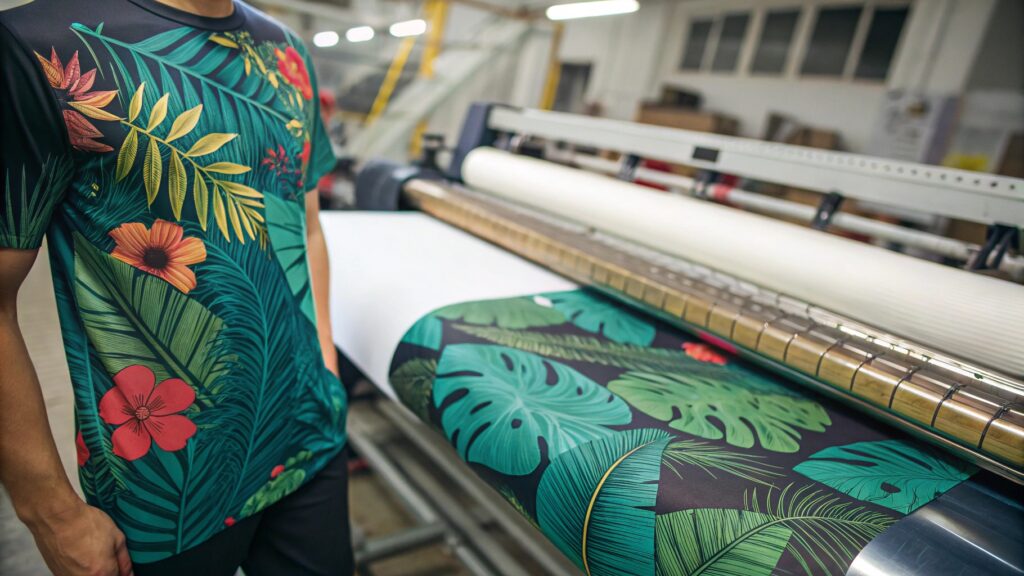
When I first started working in a sublimation factory, I was amazed. I watched plain white fabric go into a huge heat press and come out with brilliant, photographic images. It felt like magic. The design wasn't sitting on top like a sticker; it was part of the fabric. This process is why the sublimation industry is so powerful, and understanding it is the first step to creating products you can be proud of. Let's break down what this incredible technology really means for your fabric projects.
What Does Sublimation Printing Mean for Fabric?
You hear technical terms like "gas" and "polymers." This can sound confusing when all you want to do is make a great t-shirt. It's simpler than you think; the ink becomes one with the fabric.
It means the ink isn't a layer on top of the fabric—it becomes a permanent part of the material itself. The heat-activated gas dyes the polyester fibers from the inside out, resulting in a design that is completely breathable and cannot be felt by hand.

Let's dive deeper into how this works. The magic is in the science. Sublimation works because of a specific pairing: special dye-sub ink and polyester fibers. When you apply heat of around 200°C (400°F), two things happen at once. First, the solid ink on the transfer paper turns directly into a gas, skipping the liquid stage. Second, the heat causes the pores of the polyester fibers in the fabric to open up. The ink gas flows into these open pores. When you remove the heat, the pores close, trapping the ink inside the fibers permanently.
This is why sublimation is the gold standard for sportswear. My friend Alex, a product and printing specialist, always emphasizes this point. Athletes need jerseys that are breathable and don't have a plastic-feeling print sticking to their skin. Since sublimation dyes the fabric itself, it doesn’t add any weight or change the fabric's performance feel.
| Step | Action | Result |
|---|---|---|
| 1. Design & Print | Print your design onto sublimation paper using sublimation ink. | A reversed image is ready on the transfer sheet. |
| 2. Prepare | Place the printed paper onto your polyester fabric. | The design is aligned for transfer. |
| 3. Heat Press | Apply heat (around 200°C / 400°F) and pressure. | Ink turns to gas, and polyester fibers open. |
| 4. Infuse | The ink gas enters the fabric fibers and becomes solid again. | The design is now permanently part of the fabric. |
Is Sublimation Printing the Same as Heat Transfer?
All these methods seem to use a heat press, so it's easy to get them mixed up. This confusion can lead you to buy the wrong materials. Sublimation is a special type of heat transfer.
No, they are different processes. Sublimation uses heat to infuse ink into the fabric. Most other heat transfers, like Heat Transfer Vinyl (HTV), use heat as an adhesive to stick a separate layer of material onto the fabric.
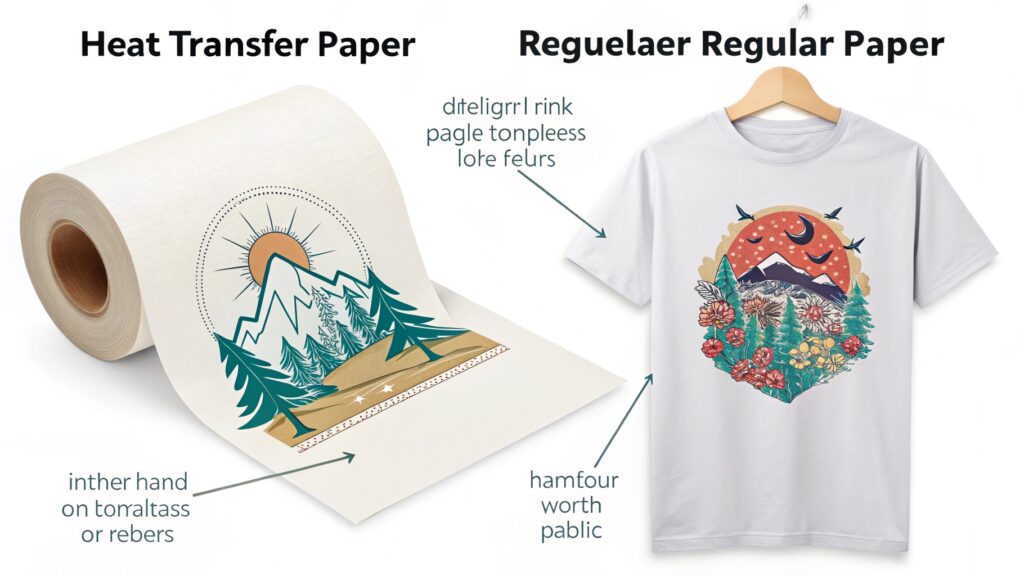
Think of it like this: sublimation is like getting a tattoo, while other heat transfers are like putting on a temporary sticker. One is permanent and part of the skin, while the other is a layer on the surface that can eventually peel off. When I talk with clients, this is the first distinction I make. Both methods have their place. Alex works with both technologies daily. He uses sublimation for full-color, breathable sportswear and HTV for bold logos on cotton t-shirts or team jerseys that just need a name and number.
The choice depends entirely on your project's needs—the fabric you're using, the complexity of your design, and the durability you require. Sublimation offers the highest level of durability and a completely seamless feel, but it's limited to polyester. HTV is more versatile in terms of fabric choices but adds a tangible layer to the shirt.
| Feature | Sublimation Printing | Heat Transfer Vinyl (HTV) |
|---|---|---|
| Process | Ink becomes a gas and dyes the fibers. | A layer of vinyl is glued to the surface. |
| Feel on Fabric | Zero texture, completely smooth. | A slightly raised, plastic-like layer. |
| Fabric Type | Light-colored, high-polyester content. | Works on cotton, polyester, blends, any color. |
| Durability | Permanent. Will not crack, peel, or fade. | Good. Can crack or peel after many washes. |
| Best For | Photographic images, complex patterns. | Simple text, logos, layered solid colors. |
How is Sublimation Different from Your Normal Printer?
You have an inkjet printer at home and wonder if you can just start printing shirts. Using the wrong equipment will only lead to frustration and wasted supplies. Sublimation requires a dedicated setup with special components.
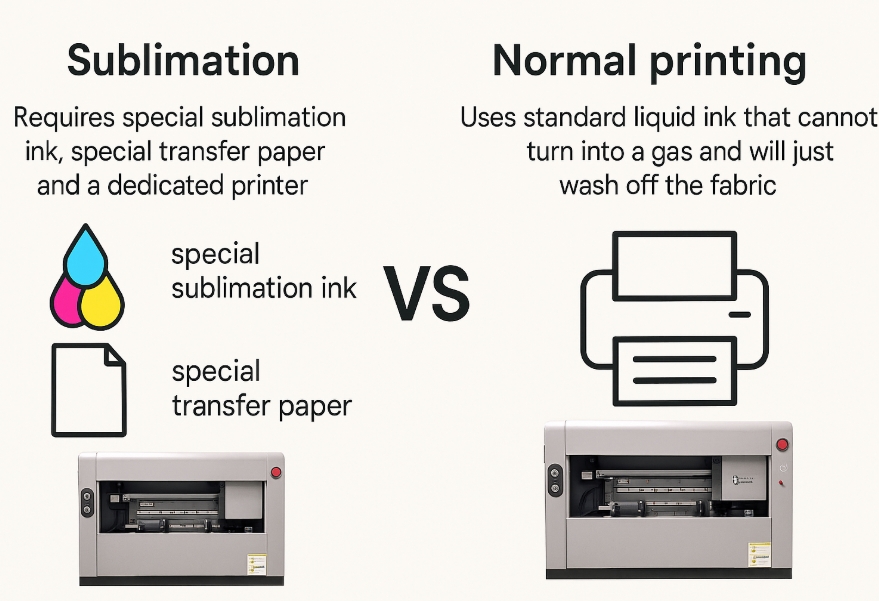
Sublimation is completely different from normal printing. It requires special sublimation ink, special transfer paper, and a dedicated printer. A normal printer uses standard liquid ink that cannot turn into a gas and will just wash off the fabric.
To succeed in sublimation, you need the right tools. You cannot use the printer you use for documents. The reason is the ink. Once you put standard inkjet ink in a printer, you can't switch it to sublimation ink, and vice-versa. You must dedicate a new (or thoroughly cleaned) inkjet printer, like a popular Epson EcoTank model, just for sublimation.
The three key differences are:
- Ink: Sublimation ink is a special dye designed to turn from a solid to a gas when heated. Standard printer ink is a liquid pigment that would just create a messy stain on fabric.
- Paper: Sublimation paper has a special coating that holds the ink but is designed to release nearly all of it as gas when heated. Using regular paper would trap most of the ink, resulting in a faded, blotchy transfer.
- Heat: You need a heat press that can provide consistent, high temperatures (usually 180-200°C or 360-400°F) and even pressure. A home iron is not hot enough or consistent enough for a proper transfer.
My expert, Alex, spends a lot of his time managing these variables. He uses professional RIP software and ICC color profiles to make sure the color he sees on his screen is the exact color that prints on the final shirt, which is critical for corporate clients with specific brand colors.
What are the Disadvantages of Sublimation?
Sublimation seems like the perfect solution for creating beautiful apparel. But before you invest your time and money, you need to know its limitations. Understanding these will help you avoid costly mistakes.
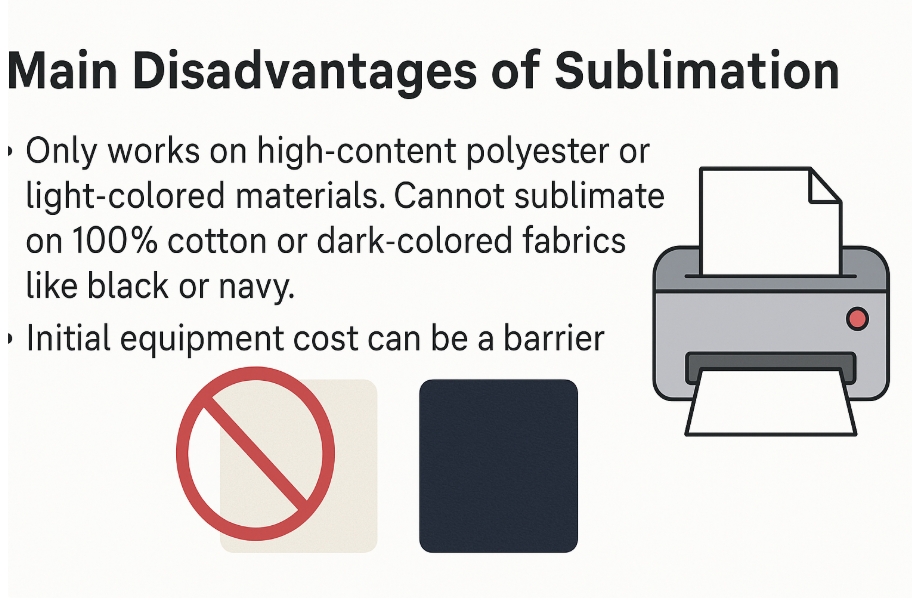
The main disadvantages of sublimation are that it only works on high-content polyester fabrics and light-colored materials. You cannot sublimate on 100% cotton or dark-colored fabrics like black or navy. The initial equipment cost can also be a barrier.
I am passionate about sublimation, but I am always honest with my clients about what it can't do. Pushing the technology beyond its limits leads to disappointment. The two biggest rules are about fabric and color.
First, the fabric must be predominantly polyester. The chemical process of sublimation only works with polymer fibers. On 100% polyester, the image is vibrant. On a 50/50 poly-cotton blend, the ink will only bond to the polyester, giving it a faded, vintage look, which can be a cool style. On 100% cotton, the ink has nothing to bond with and will mostly wash out.
Second, the fabric must be light-colored. Sublimation ink is transparent; it adds color to the fibers. It cannot cover a darker color. You can't print a yellow design on a blue shirt and expect it to show up as yellow. This is also why there is no white sublimation ink; any white in your design must come from the white color of the fabric itself. So, you are limited to white or very light pastel fabrics.
| Disadvantage | Why It Happens | Solution or Consideration |
|---|---|---|
| Polyester Only | The sublimation chemical process only bonds with polymer fibers. | Use 100% polyester for vibrant prints or blends for a vintage look. |
| Light Colors Only | The ink is translucent and dyes the fabric, it cannot cover dark colors. | Stick to white, light gray, or pastel-colored fabrics. |
| No White Ink | The process relies on the fabric's color for white areas. | Your design must incorporate the white of the blank item. |
| Initial Cost | Requires a dedicated printer, special ink, paper, and a heat press. | Start with an entry-level bundle to manage a smaller investment. |
Conclusion
Sublimation creates incredibly vibrant, permanent designs on polyester fabrics. While it requires specific materials and only works on light colors, its unmatched durability and professional feel make it a top choice.

Hi there! I'm Lucy, the guardian angel of two good children. During the day, I am a professional in the heat transfer printing industry, from factory workshops to running my own business. Here I share what I have learned - let's grow together!