What Is the Difference Between Sublimation Printing and Normal Printing?
You want to print a design, but the terms are confusing. Normal printing puts ink on a surface, but you hear sublimation is different. You need to understand which method is right for your project.
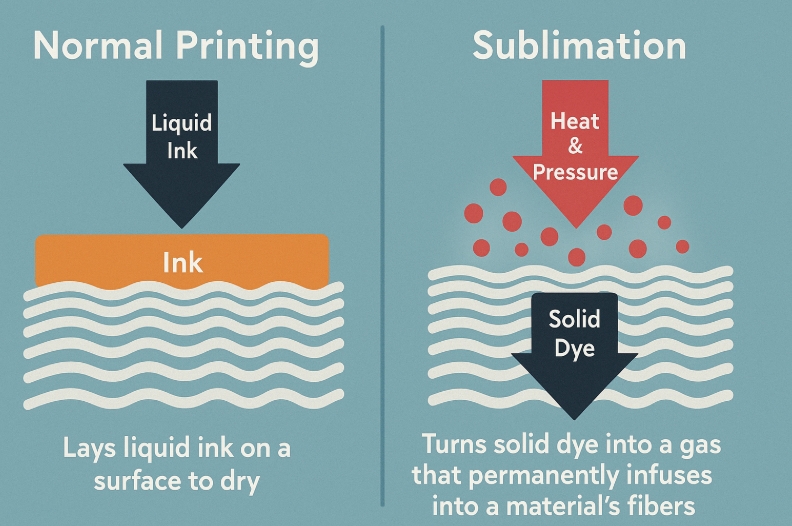
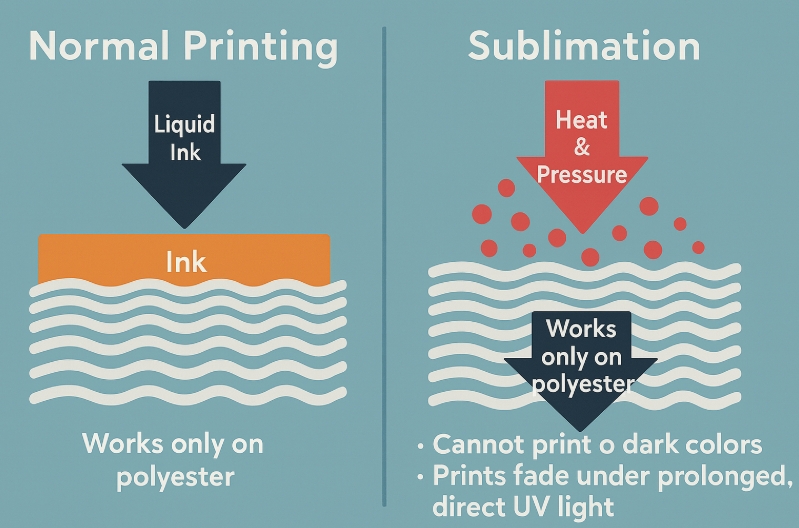
The main difference is chemistry. Normal printing lays liquid ink on a surface to dry. Sublimation uses heat and pressure to turn solid dye into a gas that permanently infuses into a material's fibers, becoming part of it.
When I first walked onto the factory floor, this difference was right in front of my eyes. On one side of the building, machines were printing catalogs, with ink jets spraying ink onto paper. On the other side, giant heat presses were transforming plain white fabric into vibrant, permanent art. It wasn't just ink on top; it was a total change. Understanding this fundamental difference is the first step to choosing the right tool for the job.
What are the disadvantages of sublimation printing?
Sublimation looks amazing, but you suspect there are catches. You don't want to invest hundreds of dollars into equipment only to find it won't work for your main product idea.
Sublimation's main disadvantages are that it only works on polyester materials or polymer-coated hard goods, it cannot print on dark colors, and the prints can fade under prolonged, direct UV light.
These aren't just small issues; they are hard rules of the process. I've seen many new business owners get frustrated by them. But knowing them upfront saves you time and money.
- The Polyester Rule: Sublimation dye only bonds with polymers. This means it needs 100% polyester fabric for full vibrancy. On a 50/50 blend, you get a 50% faded, vintage look because the dye washes out of the cotton fibers. Normal printing, in contrast, can be adapted for almost any surface.
- The Light Color Rule: Sublimation printers do not use white ink. The dye is translucent, so the color of the fabric shows through. This is why you must print on white or very light-colored items. Printing a yellow design on a blue shirt will result in a green image.
- UV Sensitivity: While the print is 100% wash-proof, standard sublimation dyes are not made for constant sunlight. A sublimated t-shirt or indoor mug will last forever. But an outdoor flag or sign will start to fade after a few months of direct sun exposure.
| Feature | Sublimation Printing | Normal Printing (e.g., Inkjet on paper) |
|---|---|---|
| Material | Polyester or polymer-coated only. | Works on almost anything; paper, cotton, etc. |
| Color | Cannot print white; only works on light items. | Prints all colors, including white, on any color background. |
| Durability | Permanent, wash-proof, but can fade in UV light. | Varies greatly; not wash-proof on textiles without special paper. |
Can you use a normal printer for sublimation?
You have a perfectly good inkjet printer at home. To save money, you wonder if you can just fill it with sublimation ink and start printing. It seems like an easy shortcut.
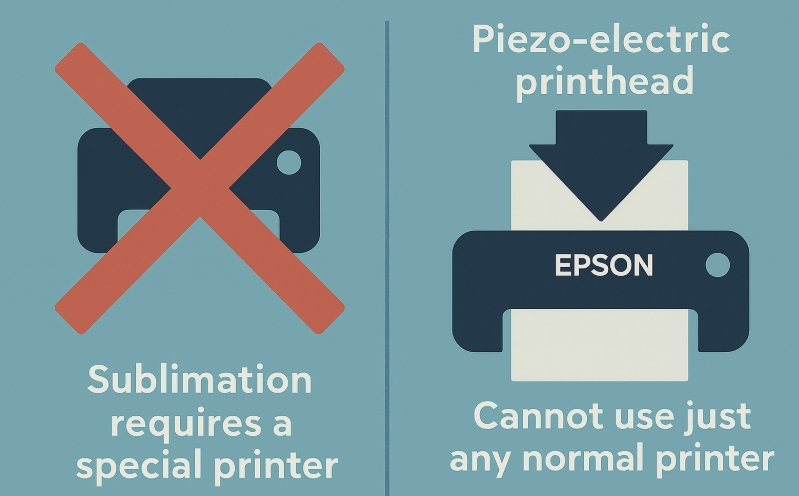
No, you cannot use just any normal printer. Sublimation requires a printer with a Piezo-electric printhead, like those in most Epson models. Using sublimation ink in a standard thermal printer (like HP or Canon) will instantly destroy it.
This is one of the most critical technical points I stress to my clients. Alex, my product expert, explains it perfectly: it's all about how the ink gets onto the paper. There are two main technologies.
- Thermal Printheads: Used by brands like HP and Canon for document printing. They use a tiny resistor to boil the ink, creating a vapor bubble that pushes a droplet out. This extreme heat would activate the sublimation dye inside the printhead, turning it into a solid plastic and clogging it permanently. You cannot use these printers.
- Piezo Printheads: Used by brands like Epson and Ricoh. They use a vibrating crystal that flexes when an electric current is applied. This flexion acts like a tiny pump, pushing the ink out without heat. Because there is no heat, it is perfectly safe for sublimation inks.
This is why many people starting out buy an affordable Epson EcoTank printer and dedicate it solely to sublimation. You can't switch back and forth between regular ink and sublimation ink, so the printer must be 100% committed to one process.
Is sublimation printing better?
You see the incredible, permanent results of sublimation. It makes you wonder if it is simply a "better" technology than any other kind of printing. You need to know when it truly is the superior choice.
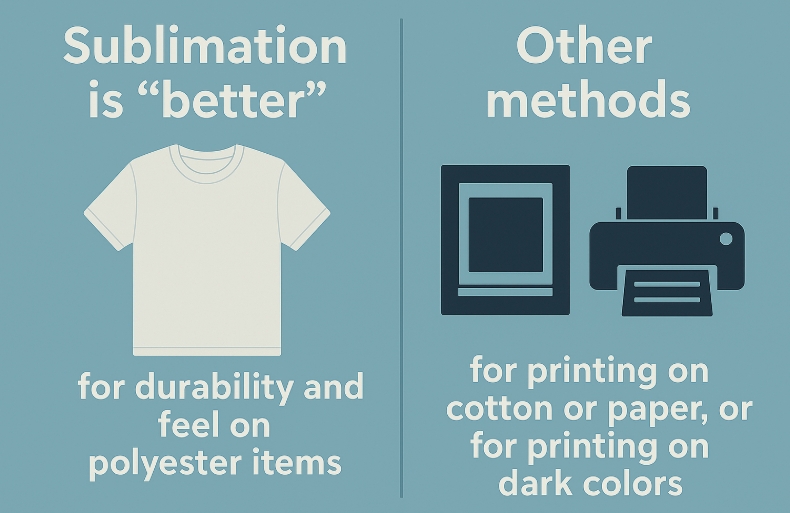
Sublimation is "better" for durability and feel on polyester items. For printing on cotton or paper, or for printing on dark colors, other methods like screen printing or standard inkjet printing are much better and more suitable.
There is no single "best" printing method. The question is always, "best for what?" I've helped clients launch successful businesses using both sublimation and more traditional methods. It all depends on the product.
- For Durability and Feel: On polyester sportswear, sublimation is absolutely better. The print is permanent and has zero feel. Normal iron-on transfers would create a thick, non-breathable patch that would eventually crack and peel.
- For Color Vibrancy: On things like photo mugs or mousepads, sublimation is better. It produces brilliant, photographic quality that normal printing cannot match on these types of hard surfaces.
- For Material Choice: Normal printing is better. You can screen print on a cotton shirt, an inkjet can print on paper, and an offset press can print on cardboard. Sublimation is extremely limited in its material compatibility.
- For Overall Versatility: Normal printing wins. You can't print your business documents or a school report with a sublimation printer. They are specialized tools for making specific products.
Think of it like tools in a toolbox. A hammer is better than a screwdriver for driving a nail, but that doesn't make it a "better" tool overall.
Which is better, sublimation or screen printing?
You want to start a custom apparel business. The two biggest names you hear are sublimation and screen printing. You need to decide which method to invest your time and money into.
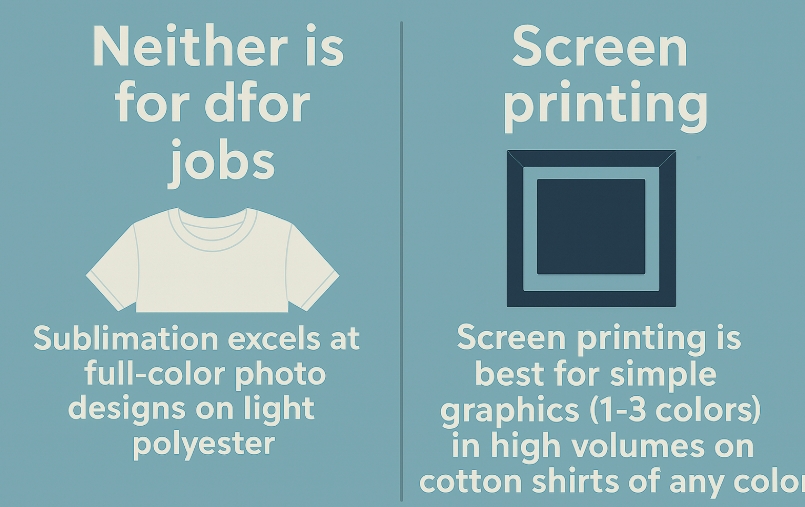
Neither is better; they are for different jobs. Sublimation excels at full-color photo designs on light polyester. Screen printing is best for simple graphics (1-3 colors) in high volumes on cotton shirts of any color.
This is the classic debate, and I've seen people build huge businesses on both. You choose based on the style of product you want to create. Let's break it down point by point.
- Color & Detail: Sublimation is the champion for unlimited colors and photographs. You can print a million colors in a single pass. For screen printing, each color requires a separate screen and a separate pass, making full-color images incredibly complex and expensive.
- Fabric & Color: This is the clearest difference. Sublimation is for light-colored polyester. Screen printing is the king of cotton and works beautifully on any color fabric, including black, because you can print a white base layer.
- Cost-Effectiveness: For a single shirt with a photo on it, sublimation is far cheaper. But if you need to print 500 shirts with a one-color logo, screen printing is dramatically more cost-effective per piece because the setup cost is spread across the large volume.
- Feel: Sublimation has a zero-hand feel, which is perfect for athletic wear. Screen printing ink creates a tangible layer on the shirt. While modern inks can be very soft, you can still feel the design.
| Factor | Sublimation | Screen Printing |
|---|---|---|
| Best For | Full-color photos, small batches | Simple graphics, large volumes |
| Fabric | 100% Polyester (light colors) | Cotton, Blends (any color) |
| Colors | Unlimited | Expensive for many colors |
| Feel | Zero, perfectly soft | Tangible layer of ink |
Conclusion
The difference between sublimation and normal printing is chemistry. Sublimation infuses dye into polyester, while normal printing coats a surface. Choosing correctly depends entirely on your project's material and goals.

Hi there! I'm Lucy, the guardian angel of two good children. During the day, I am a professional in the heat transfer printing industry, from factory workshops to running my own business. Here I share what I have learned - let's grow together!