What is the Psychology Behind Why Personalized Gifts Sell?

You're a talented designer, creating beautiful products every day. But you feel like there's a missing piece to the puzzle. You see customers choose personalized options again and again, but you don't fully understand the deep emotional reason that drives that decision.
This gap in understanding means you're designing with only your eyes and skills, not with empathy for the buyer's heart. You're creating an object, but you're missing the opportunity to craft a powerful emotional experience, which is where the real value and profit lie.
Personalized gifts sell because they tap into a fundamental human need: the desire to feel seen, unique, and special. They transform a simple object into a powerful symbol of connection, making the recipient feel truly valued by the giver, which creates an unforgettable emotional impact.

I'll never forget a customer who ordered a mug with a simple, hand-drawn picture from their five-year-old daughter on one side and a photo of them together on the other. A week later, he emailed me. He said he takes it to work every day, and whenever he feels stressed, he just looks at it. He told me, "It's more than a mug, it's my little boost of happiness." That was my lightbulb moment. I wasn't just selling ceramic and ink; I was selling feelings. I was selling connection, love, and happiness in a physical form.
What is the psychology behind personalization?
You see that adding a name to a product instantly makes it more desirable. But you don't know the actual psychological trigger you're pulling, which feels like you're just guessing at what works.
Without understanding this "why," your designs may only scratch the surface of personalization. You're not fully harnessing the powerful mental triggers that make a customer feel an undeniable connection to a product, leaving sales and impact on the table.
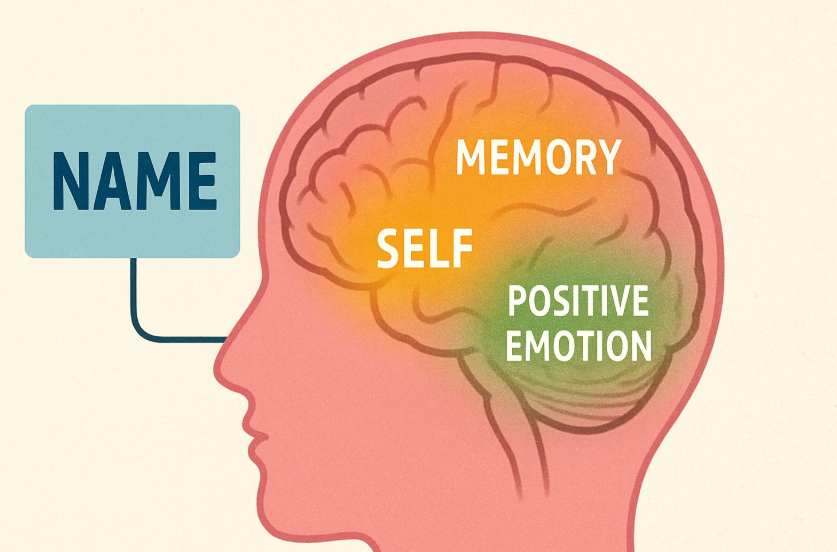
The psychology of personalization is rooted in the "self-reference effect." Our brains are hardwired to pay more attention to and form stronger memories of things related to ourselves. Personalization makes a person feel seen, valued, and unique, creating a powerful positive emotional link to the item.
Dive Deeper: The Science of "This is For Me"
When I create designs, I'm not just thinking about what looks good. I'm thinking about what will make someone's brain light up. For a designer like Emma, understanding these principles is like gaining a superpower. It allows you to design products that aren't just beautiful, but psychologically irresistible. Two key principles are always at play.
-
The Self-Reference Effect: Our Brain's Favorite Subject is "Me"
Think about when you're in a loud, crowded room. You can tune out all the noise, but the moment someone says your name, your attention snaps right to it. That's the self-reference effect in action. Our brains are beautifully narcissistic. Information related to ourselves is processed more deeply and remembered more clearly. When a customer sees their name, their photo, or an inside joke on a mug you designed, their brain says, "Hey, that's about me! Pay attention!" This creates an instant, subconscious bond with the product. -
The IKEA Effect: The Value of Effort
Have you ever noticed that the wobbly bookcase you built yourself holds a special place in your heart? That's the "IKEA Effect." We place a higher value on things we had a hand in creating. When a customer goes through the process of choosing a design, uploading a photo, and adding a name, they are investing their own effort. This act of co-creation makes the gift feel more valuable to them, the giver. They feel a sense of pride and ownership over the final product before it's even been made.
| Psychological Principle | How it Applies to Your Gifts | Design Tip for Emma |
|---|---|---|
| Self-Reference Effect | The recipient feels uniquely seen and valued. | Create designs that make the name or photo the hero, not just an add-on. |
| IKEA Effect | The giver feels more invested and proud of the gift. | Offer clear, fun customization options (fonts, colors) to enhance their feeling of creation. |
Why give personalized gifts?
Generic gifts from a big-box store are faster and often cheaper. So why would a customer go through the extra steps and often pay more to personalize something as simple as a mug?
If you assume the only reason is to be "a little nicer," you miss the entire point. You fail to see that a personalized gift is a powerful tool for relationship building, which is a much stronger motivation than just being nice.
People give personalized gifts to send a clear, powerful message: "I invested extra thought, time, and effort specifically for you." This gesture goes beyond the object itself, demonstrating a deeper level of care and strengthening the social and emotional bond between the giver and the recipient.

Dive Deeper: It’s Not the Gift, It’s the Message
I once had a large family order mugs for a reunion. Each mug had an old, black-and-white family photo on it. Later, the customer told me the mugs became the centerpiece of the whole event. People were pointing, laughing, and telling stories sparked by the photos. The mugs weren't just gifts; they were conversation starters and tangible pieces of their shared history. Emma's work can be the catalyst for these exact moments. She isn't just designing a mug; she's designing a tool for connection.
-
Personalization as a Signal of Effort
In our fast-paced world, time and attention are our most valuable currencies. Taking a few minutes to choose a design, find the perfect photo, and type a name is a conscious investment of that currency. It silently communicates, "I didn't just grab the first thing I saw. I stopped and thought about what would make you happy." This signal of effort is perceived by the recipient as a signal of care. The extra five minutes of effort can be more valuable than an extra fifty dollars spent on a generic luxury item. -
Strengthening Social Bonds and Creating Memories
Gift-giving is a fundamental social ritual used to reinforce relationships. A generic gift fulfills the basic social contract, but a personalized gift elevates it. It creates a new, shared memory tied directly to the object. That tumbler isn't just a tumbler anymore; it's "the tumbler my sister gave me with that hilarious photo from our beach trip." It becomes an artifact of the relationship, a physical touchstone that reminds the recipient of their connection to the giver every time they use it.
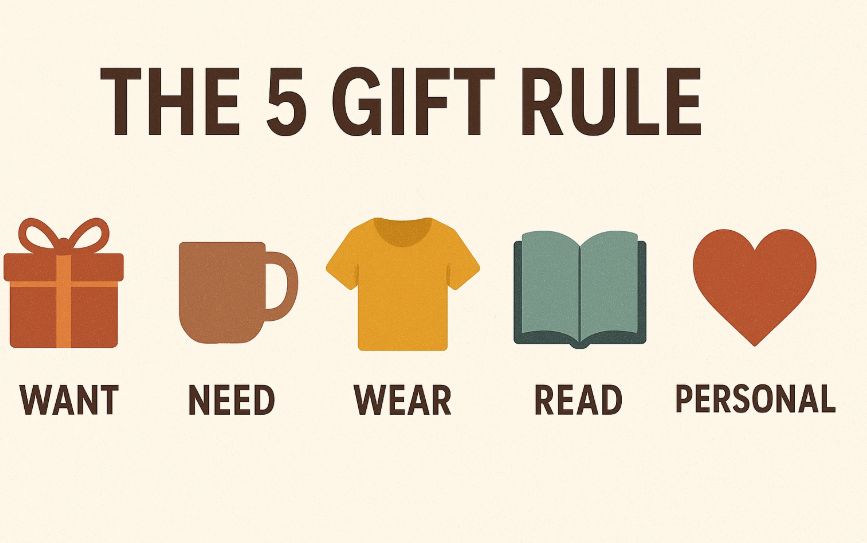
What is the 5 gift rule for adults?
You know your customers are often overwhelmed by gift-giving occasions. They struggle with what to buy, which can lead them to a last-minute, low-effort choice like a gift card.
If you don't offer a simple solution to their problem, they may never even land on your products. They get stuck in "analysis paralysis" and miss the opportunity to give a meaningful, personal gift that you could have provided.
The 5-gift rule is a popular guideline to simplify gift-giving by focusing on five meaningful categories. For adults, it's often adapted as: something they want, something they need, something to wear, something to read, and one special, personal item.
Dive Deeper: How Your Products Solve the Gifting Puzzle
This rule is a lifesaver for overwhelmed shoppers, and it's a golden opportunity for our business. It gives customers a simple checklist to follow. As a designer like Emma, you can market your products to fit perfectly into these categories. I often pitch my products to marketing teams by explaining how they fulfill these specific gifting needs.
Here’s how you can position your sublimation products to fit perfectly within this popular framework:
-
Something They Want: This is about desire, not function. A tumbler doesn't just hold water; it's a style accessory.
- Emma's Opportunity: Design a series of tumblers based on popular aesthetics like "Coastal Grandma," "Dark Academia," or "Minimalist." The customer is buying an identity, a look they want.
-
Something They Need: This category is about utility and daily use. Everybody needs something to drink their morning coffee or tea from.
- Emma's Opportunity: This is the home of the classic 15oz ceramic mug. market it as the "Perfect Daily Driver," a high-quality, durable mug they will need and use every single day.
-
Something to Wear: An obvious fit for sublimation apparel.
- Emma's Opportunity: Design custom t-shirts or sweatshirts that go beyond just a photo. Think of shirts with clever sayings, inside jokes, or artistic designs that people would be proud to wear.
-
Something Special & Personal: This is our home run. This category was practically invented for the world of personalized products. It's the "heart" of the gift list.
- Emma's Opportunity: This is where the photo mugs, the tumblers with kids' drawings, and the mugs with heartfelt messages shine. You are selling the "special" item that will have the most emotional impact. This is the gift that will make them cry happy tears.
Is gift-giving a trauma response?
You may hear online discussions linking excessive gift-giving to trauma. This can be confusing and make you question the very nature of your business, which is centered around creating gifts.
Worrying that you're tapping into a negative psychological trait can feel unsettling. It's important to understand the nuance here so you can confidently continue creating meaningful products for healthy, positive expressions of love and appreciation.
While "love bombing" or excessive over-gifting can sometimes be linked to insecure attachment styles or trauma, healthy gift-giving is a fundamental and positive part of human social connection. Your work facilitates the latter: creating thoughtful, appropriate gifts that strengthen healthy relationships.
Dive Deeper: Creating for Connection, Not Compensation
This is a topic I take very seriously, as our business is built on positive emotions. It's crucial for us, and for designers like Emma, to understand the difference between healthy connection and unhealthy compensation. We are in the business of fostering the former.
-
Unhealthy Gifting (Compensation):
This is what the term "trauma response" often refers to. It's when someone gives gifts not out of pure affection, but out of a need to "earn" love, apologize for behavior, or create a feeling of obligation in the recipient. The giving is driven by anxiety and a fear of rejection. It's often excessive, inappropriate for the level of the relationship, and feels transactional. The focus is on the giver's own needs and anxieties, not on the recipient's happiness. -
Healthy Gifting (Connection):
This is what your business is all about. Healthy gifting is an expression of genuine care, appreciation, and love. It's done freely, without expecting anything in return other than the joy of the recipient. A single, thoughtful personalized mug that shows you listened to someone's interests is a perfect example of healthy gifting. It’s not about the quantity or cost; it’s about the thought and the message of "I see you, I know you, and I appreciate you."
Your role as a designer is to be a facilitator of this healthy connection. You provide the tools for people to express their love and appreciation in a tangible, meaningful, and appropriate way. You are not enabling a trauma response; you are empowering people to build stronger, healthier relationships, one thoughtful gift at a time.
Conclusion
Understanding the psychology of why people buy personalized gifts is your secret weapon. It transforms you from a simple designer into a creator of meaningful connections, turning your products into cherished treasures.

Hi there! I'm Lucy, the guardian angel of two good children. During the day, I am a professional in the heat transfer printing industry, from factory workshops to running my own business. Here I share what I have learned - let's grow together!