What Materials Are Actually Suitable for Sublimation on Cups?
You're ready to start making custom cups, but every material seems different. You're confused about which ceramics, metals, or glasses will work, risking wasting money on the wrong inventory.
This confusion stops you from confidently buying supplies and starting your business. You worry about creating low-quality products that fade or peel, damaging your reputation before it even begins.
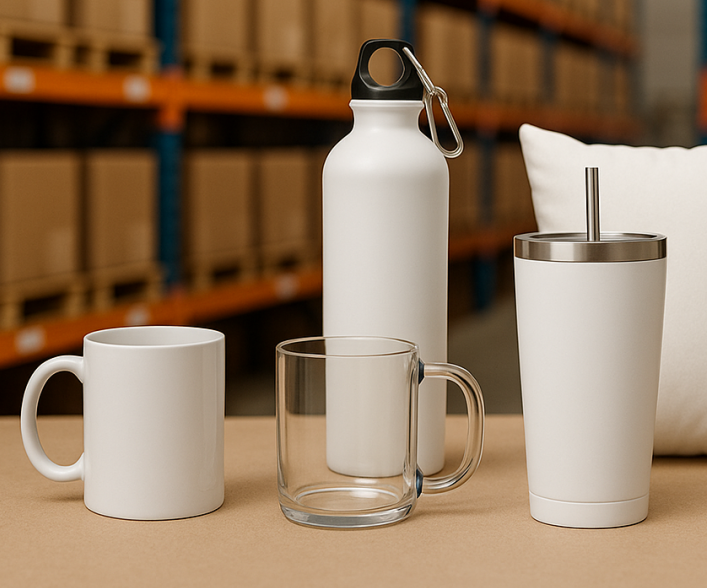
For sublimation, cups must have a special polymer coating. This includes certain ceramics, stainless steel, glass, and enamel mugs specifically sold as "sublimation blanks." Ordinary, uncoated cups from a regular store will not work at all.
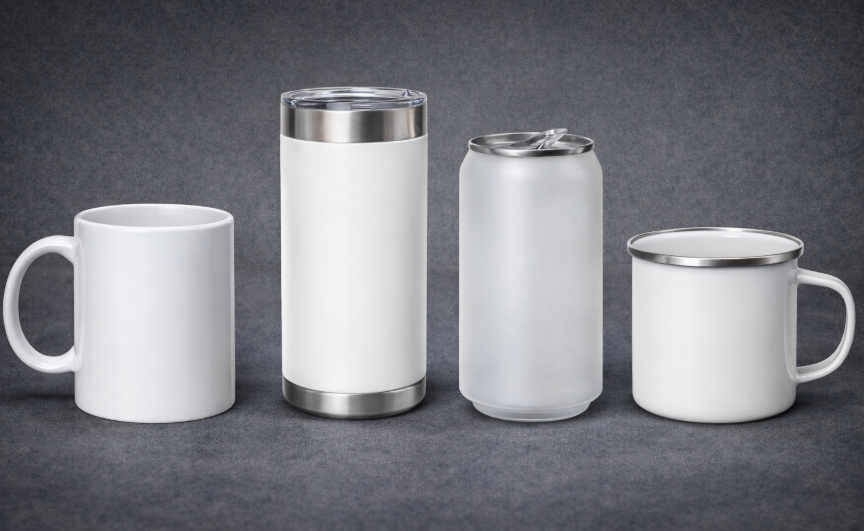
When I first expanded from textiles to drinkware, I made a classic mistake. I saw some beautiful ceramic mugs at a local home goods store and thought, "These are perfect!" I bought a case, took them back to my workshop, pressed my best design onto one, and... nothing. The paper came off with the design still on it, leaving just a faint, blurry mess on the mug. That expensive mistake taught me the most important lesson about hard goods: it's not about the material itself, but about the special coating on the material. Let's dive into what you really need so you don't repeat my error.
What do I need for sublimation on cups?
You want to sublimate cups, but you feel overwhelmed by the list of supplies. You're worried about buying the wrong equipment or missing a crucial item to get started.
This uncertainty can lead to expensive purchasing mistakes or analysis paralysis. You end up buying nothing and your business idea never gets off the ground, which is incredibly frustrating.
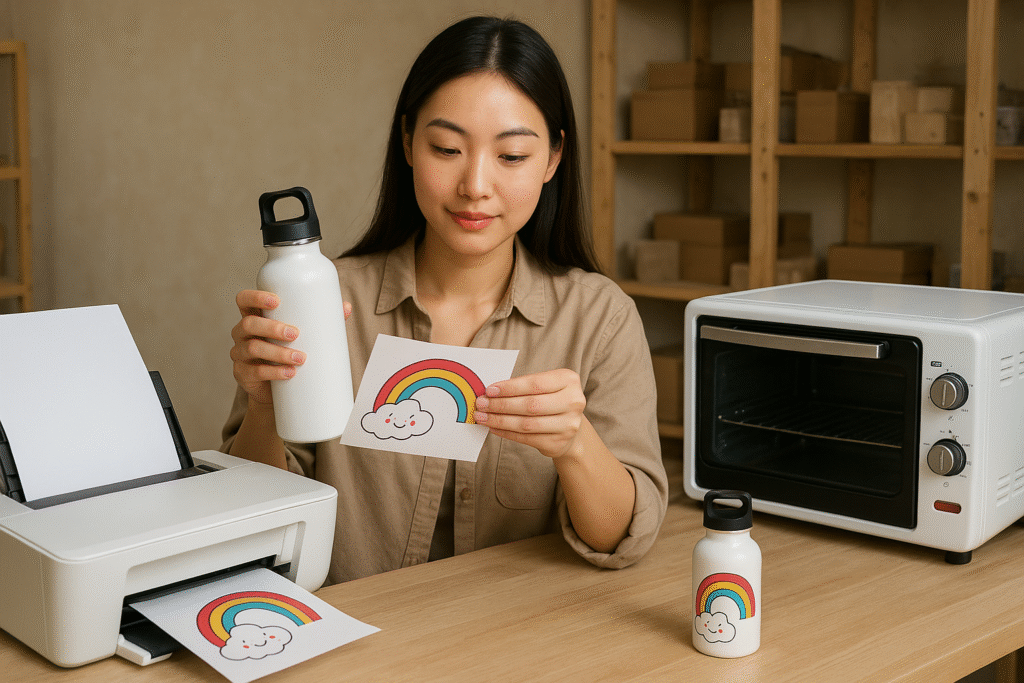
For sublimation on cups, you need four essential items: sublimation-ready cups (with a polymer coating), a sublimation printer with sublimation ink, sublimation paper, and a mug or tumbler heat press.
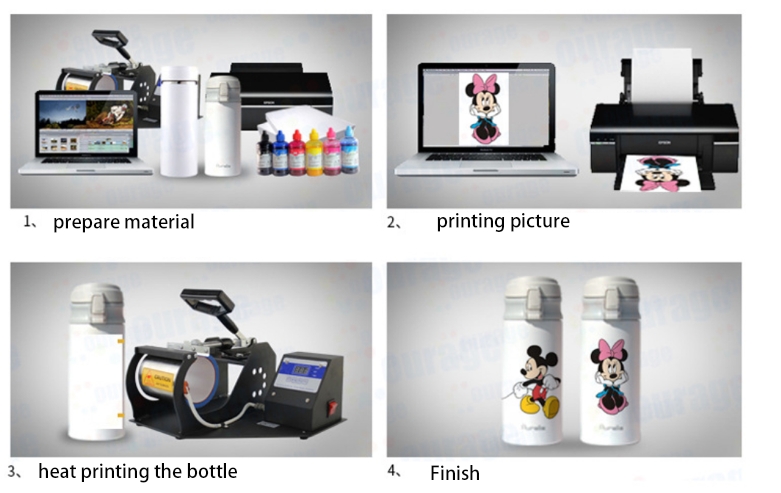
Dive Deeper: The Four Pillars of Your Production System
Getting set up for cup sublimation is about building a reliable system. Each part is equally important, and if one part is wrong, the entire process fails. Think of it as a recipe where you cannot substitute ingredients. For a detail-oriented designer like Emma, having the right tools is the first step to guaranteeing a high-quality final product. Let's break down each of the four essential components.
1. The Sublimation Blanks
This is your "canvas." As I learned the hard way, you cannot use any cup. You must purchase cups, mugs, or tumblers specifically sold as "sublimation blanks." These items have been industrially treated with a specialized polymer coating that is invisible to the eye but absolutely critical for the process. Without this coating, the ink has nothing to bond with.
2. The Printing Setup
This is your design delivery system.
- Sublimation Printer: This is typically a dedicated inkjet printer (Epson models are popular) that has never had regular ink in it.
- Sublimation Ink: This is a special dye that turns into a gas when heated. It is not the same as standard printer ink.
3. The Transfer Medium
- Sublimation Paper: This paper is designed to hold the ink and then release it completely as a gas when heated. Regular copy paper will not work effectively.
4. The Heat and Pressure Machine
- Mug/Tumbler Press: This machine is engineered to wrap around your cup and apply consistent, high heat and firm pressure, which is necessary to trigger the chemical reaction of sublimation.
Can I sublimate on Dollar Tree mugs?
You see inexpensive mugs at stores like Dollar Tree and think it could be a great way to lower your costs. You're wondering if these cheap mugs are a hidden gem for your business.
Trying to use these mugs could be a huge waste of time, ink, and paper. If they don't work, you'll be left with a pile of failed products and a lot of frustration.
No, you cannot sublimate on Dollar Tree mugs or any other standard mugs from a regular retail store. They lack the essential polymer coating required for the sublimation ink to permanently bond to the surface.
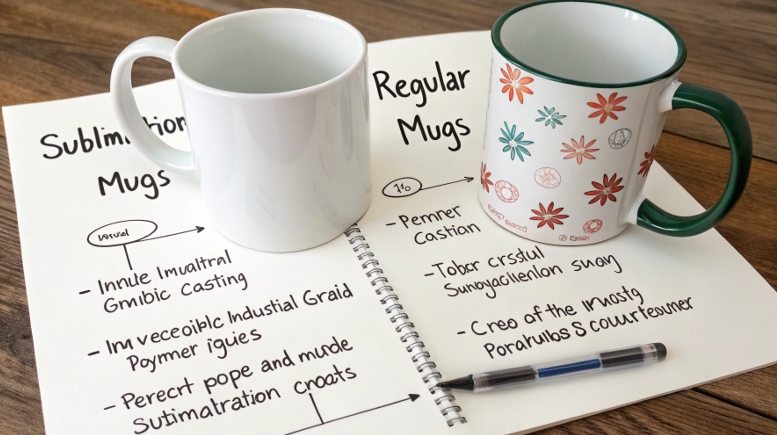
Dive Deeper: Why the Coating is Everything
This is probably the most common question I get from beginners, and it goes right back to the core science of sublimation. It’s easy to look at two white ceramic mugs side-by-side and assume they are the same. But to the sublimation ink, they are completely different worlds. Let’s explore why the coating is the non-negotiable secret ingredient.
The Science of Bonding
Sublimation ink is essentially a dye designed to bond with a specific type of plastic: polyester. At high temperatures (around 380-400°F), two things happen simultaneously:
- The solid ink on the paper turns directly into a gas.
- The pores of the polymer coating on the mug open up.
The gas from the ink then flows into these open pores. As the mug cools, the pores close, permanently trapping the ink inside the coating.
What Happens with an Uncoated Mug?
A standard ceramic mug from a store like Dollar Tree has a simple glaze on it, not a polymer coating. When you apply heat and pressure, the ink will still turn into a gas. However, there are no special pores for the gas to enter. The ink has nowhere to go. It might stain the surface slightly, resulting in a faded, blurry, and completely impermanent image that you could likely wash right off. It will never be vibrant, sharp, or permanent. As a product creator, using the wrong blank is a guaranteed way to produce a failed product that can't be sold.
| Feature | Sublimation Mug | Dollar Tree Mug |
|---|---|---|
| Surface | Specialized polymer coating | Standard ceramic glaze |
| Heat Reaction | Pores open to accept ink | Glaze remains sealed |
| Ink Bond | Permanent, infused into surface | Impermanent, sits on top |
| Final Result | Vibrant, sharp, dishwasher-safe | Faded, blurry, washes off |
What materials can you not sublimate on?
You understand what works, but to avoid costly mistakes, you need to know what definitely doesn't work. You're trying to create a 'do not buy' list for your sublimation business.
Without a clear understanding of the limitations, you risk wasting money on attractive but unusable materials. This is a common and expensive trap for new business owners trying to innovate.
You cannot sublimate on any natural materials like cotton, wood, or stone in their untreated state. You also cannot print on dark-colored or black surfaces, or on any item that does not have a polyester-based coating.
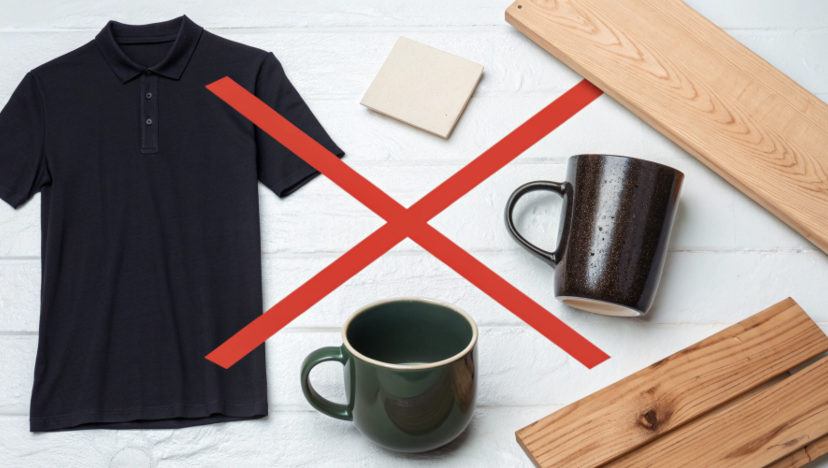
Dive Deeper: The Fundamental Rules of Sublimation Chemistry
Understanding what doesn't work is just as important as knowing what does. This knowledge helps you avoid wasting materials and manage customer expectations, which is a critical skill for a professional like Emma. The limitations are not arbitrary; they are based on the fundamental chemistry of the process.
The Polyester Rule
As we've discussed, sublimation ink is designed to bond with polyester. This is why you cannot sublimate on 100% natural fibers.
- Cotton: The most common mistake. Sublimation on cotton results in a dull image that washes out almost completely.
- Wood/Stone: In their natural state, these materials have no polymers for the ink to bond with. You can buy specially coated wood or stone blanks, but you cannot use raw materials.
The Light-Color Rule
Sublimation ink is transparent. It adds color, but it doesn't have any white or opaque properties like paint.
- Imagine a watercolor: You can't paint yellow onto black paper and have it show up. The same is true here. Printing on a black mug will result in an invisible design.
- Color mixing: If you print on a light blue cup, the blue of the cup will mix with the colors of your design. A yellow design element will appear greenish. For true color accuracy, you must start with a white surface.
The Heat Resistance Rule
The sublimation process requires temperatures of around 400°F (200°C). Any material that cannot withstand this temperature without melting, deforming, or releasing toxic fumes is unsuitable. This is why you must use blanks specifically manufactured for this purpose.
Can I sublimate on 50% cotton and 50% polyester?
You've heard that sublimation only works on polyester but see "poly-blend" fabrics everywhere. You're wondering if you can use these common blends to expand your apparel offerings.
Testing on the wrong fabrics will lead to faded, unsellable shirts and wasted money. You need a clear rule for how much polyester is "enough" for a quality product.
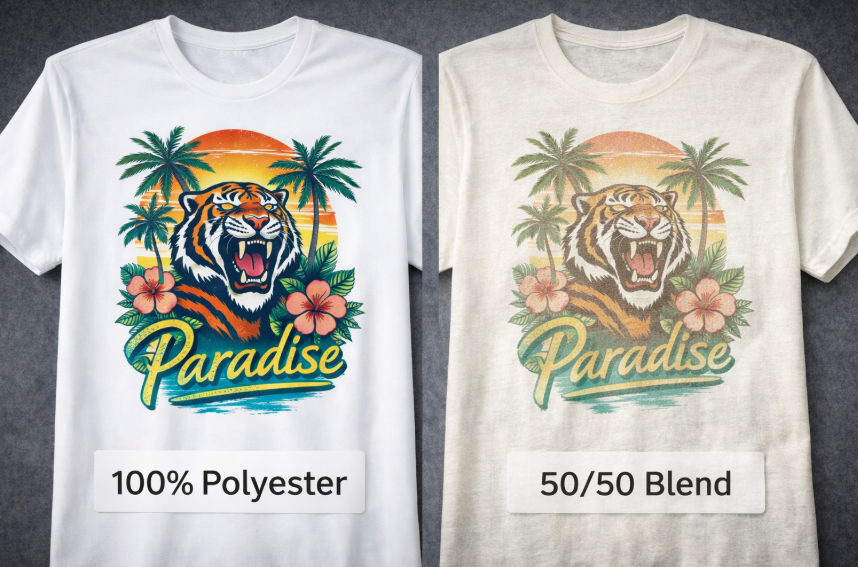
You can sublimate on a 50/50 blend, but only 50% of your ink will bond to the fabric. This results in a faded, "vintage" or "retro" look. For vibrant, full-color results, 100% polyester is required.
Dive Deeper: Why Polyester Percentage is the Key to Vibrancy
While this guide focuses on cups, the question of fabric blends is one of the best ways to understand the core principle of sublimation. It perfectly illustrates how the polymer content directly controls the quality of your final product, a concept that applies equally to the coating on a mug.
A Battle for the Fibers
When you press a design onto a 50/50 cotton/polyester blend shirt, the sublimation ink turns to gas as usual. This gas looks for polyester fibers to bond with. It will successfully and permanently bond with the 50% of the fibers that are polyester. The other 50% of the fibers are cotton. The ink completely ignores these cotton fibers because there is no chemical attraction.
- Initial look: Right out of the press, the design might look okay. The ink is temporarily "stuck" in the cotton fibers.
- The first wash: The moment the shirt is washed, all the ink that was sitting loosely in the cotton fibers washes away.
The result is that you are left with a design that is only present on half of the fabric's threads. This creates a faded, worn-in look. This isn't necessarily a "bad" result—some customers love the vintage aesthetic—but you must understand that it's an effect. You cannot achieve a sharp, vibrant, photo-quality image on a 50/50 blend. The vibrancy of your product is directly proportional to the polyester count. This is why for hard goods like cups, the coating must be 100% effective to get a professional result.
| Polyester % | Resulting Look | Best Use Case |
|---|---|---|
| 100% | Bright, vibrant, sharp | Photo-quality images, corporate logos |
| 65% | Mostly vibrant, slightly soft | Good color, softer feel than 100% poly |
| 50% | Faded, retro, vintage | Fashionable, worn-in designs |
Conclusion
Success in sublimation starts with the right materials. Always use cups and blanks with a polymer coating. This ensures your final products are vibrant, permanent, safe, and professional enough to build your business on.

Hi there! I'm Lucy, the guardian angel of two good children. During the day, I am a professional in the heat transfer printing industry, from factory workshops to running my own business. Here I share what I have learned - let's grow together!