What Is Sublimation Drinkware? A Complete Beginner’s Guide

You see stunning, custom-designed tumblers and mugs everywhere and hear the word "sublimation." You're ready to create your own, but you’re afraid of buying the wrong things.
This confusion can be costly and frustrating. You risk wasting money on supplies that don’t work together, only to end up with faded, peeling designs that look unprofessional.
Sublimation drinkware refers to items like mugs, tumblers, and bottles that have a special polymer coating. This coating allows them to absorb ink permanently when heated, creating vibrant, full-color, and durable designs.

When I first started in this industry, the biggest lesson I learned was that not all drinkware is created equal. I saw the potential for amazing custom products, but I quickly realized that the magic is in the surface. True sublimation drinkware has a special coating that turns a simple cup into a canvas for permanent art. Understanding this is the foundation for everything. It’s the secret that allowed me to build my business and help countless clients create products they love. This guide will walk you through exactly what you need to know.
What is sublimation drinkware?
You hear about "sublimation drinkware" and it sounds technical and complicated. The term itself might make you feel like you need a chemistry degree to understand it.
Feeling intimidated by the jargon can stop you from exploring this amazing customization method. You might stick to less durable options like vinyl because they seem simpler.
Sublimation drinkware is any mug, tumbler, or bottle with a special polymer coating. When heated, this coating absorbs special ink directly, making the design a permanent part of the item.

Dive Deeper: More Than Just a Print on a Cup
The first time I peeled the paper off a freshly pressed mug in the factory, I was hooked. The design wasn’t sitting on top; it was in the mug. It was smooth, glossy, and permanent. For a designer like Emma, knowing this process is what separates good design from a great product. The term "sublimation" just describes a solid turning directly into a gas. In printing, we heat solid ink on paper until it becomes a gas. This gas then permanently bonds with the special coating on the drinkware. It’s not a sticker or a layer of paint. The design becomes part of the surface itself. This is why it’s so durable.
Let’s compare it to a more common method, like applying a vinyl decal:
| Feature | Vinyl Decal on a Mug | Sublimation on a Mug |
|---|---|---|
| Feel | You can feel the edges of the sticker. | Completely smooth to the touch. |
| Durability | Can peel, crack, or lift over time. | Permanent. Will not peel, crack, or fade. |
| Look | Opaque design sits on top of the surface. | Colors are infused into the surface for a seamless look. |
| Dishwasher Safe | Usually hand-wash only is recommended. | Most are top-rack dishwasher safe. |
This process gives you a professional, high-quality finish that can’t be matched by simple surface decorations. It opens the door to creating products that last.
What all do I need to start sublimation tumblers?
You’re inspired and ready to make your own custom tumblers. But when you start looking, the list of necessary supplies feels long, confusing, and potentially very expensive.
The fear of buying the wrong equipment or missing a crucial item can cause "analysis paralysis." You end up not starting at all because you don't know where to begin.
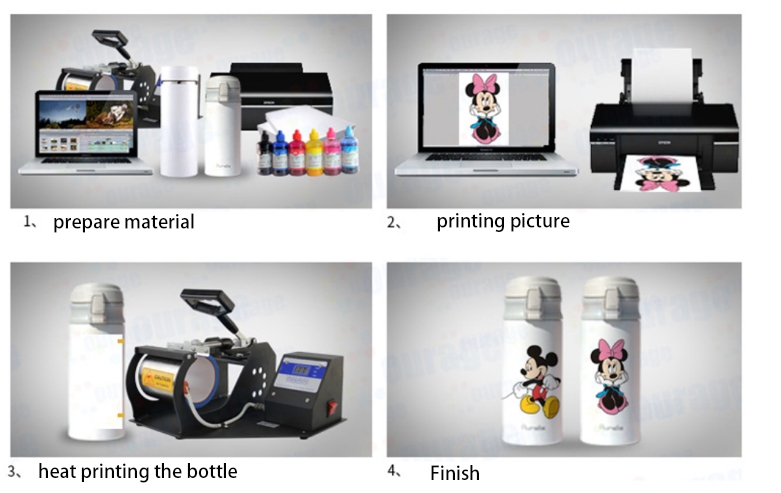
To start sublimating tumblers, you need five essential things: a sublimation printer with sublimation ink, sublimation paper, sublimation-coated tumblers, a heat press, and heat-resistant tape.
Dive Deeper: Your Sublimation Starter Shopping List
When I decided to launch my own line of tumblers, getting the right setup was my first big hurdle. I spent weeks researching to make sure my investment would pay off. Here is the straightforward list of what you absolutely need to get started:
- A Sublimation Printer: You can't use a standard office printer. You need a dedicated inkjet printer for this. Many people, including myself, start by converting an Epson EcoTank printer because they are affordable and easy to fill with sublimation ink. You cannot switch back and forth between regular ink and sublimation ink, so this printer must be used only for sublimation.
- Sublimation Ink and Paper: These work as a team. The ink is formulated to turn to gas at high heat, and the paper is designed to release that gas efficiently. You cannot use regular ink or standard copy paper.
- Sublimation Tumbler Blanks: This is critical. You must buy tumblers that are sold specifically as "sublimation blanks." They have the necessary polymer coating that regular stainless steel tumblers from a retail store do not.
- A Heat Press: You need a machine that can provide consistent, high heat and pressure. For tumblers, you have two main options:
- Tumbler/Mug Press: A cylindrical machine that wraps around the tumbler. It's easy to use and great for consistent results.
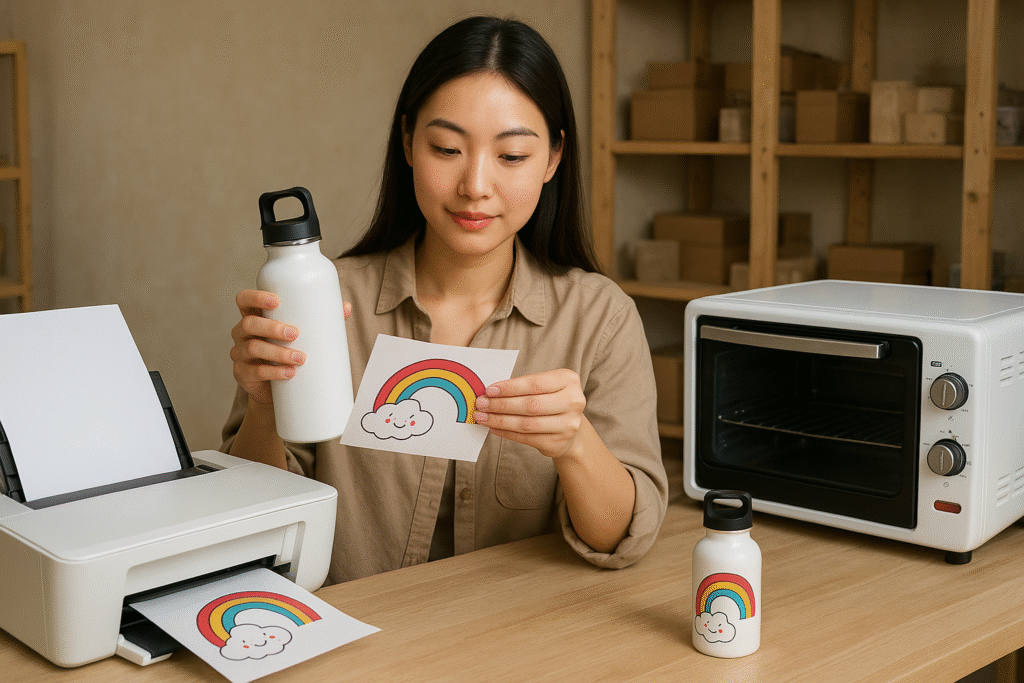
- Convection Oven: A small oven can also be used, especially for full-wrap designs. You will need shrink-wrap sleeves to provide the necessary pressure. Important: This oven cannot be used for food again.
- Heat-Resistant Tape: This special tape holds your design securely in place and withstands the high temperatures of the press without melting.
Can I sublimate mugs from Dollar Tree?
You see plain white mugs at the Dollar Tree and think you've found a goldmine. For just a dollar, you could practice and produce mugs for a huge profit margin.
This is a tempting shortcut, but it's a trap. Trying to sublimate on these mugs will lead to nothing but wasted time, ink, and a pile of useless, faded mugs.
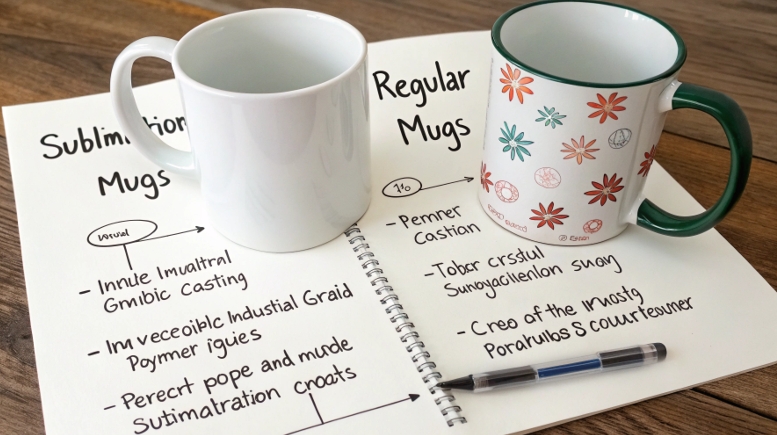
No, you absolutely cannot sublimate mugs from Dollar Tree. They are standard ceramic mugs and do not have the special polymer coating that is required for the sublimation process.
Dive Deeper: Why a Bargain Isn't Always a Good Deal
I have to admit, I made this mistake when I was starting out. I saw cheap mugs and thought, "How different can they be?" I wasted an entire afternoon and a lot of expensive ink and paper to learn a valuable lesson: the coating is everything. I want to save you from making the same mistake.
The science is very clear. Sublimation ink is engineered to bond with polyester. A proper sublimation mug has a transparent layer of polyester baked onto its surface. A regular ceramic mug from a place like Dollar Tree has a simple glaze made from minerals. There is no polyester for the ink to grab onto.
Here’s exactly what will happen if you try to press a design onto a regular mug:
- The Press: You will apply your design and heat it up. The ink on the paper will turn to gas as it should.
- The "Transfer": Since there is no polymer coating, the ink gas has nowhere to go. It will just float around and very lightly stain the surface of the mug's glaze.
- The Reveal: You will peel off the paper and see a faint, blurry, discolored ghost of your design. It will look like a total failure.
- The Wash Test: The tiny bit of ink that stained the surface will wash away completely with soap and water, or even just rub off with your finger.
The slightly higher cost of a true sublimation blank is not for the mug itself, but for the technology of the coating that makes the beautiful, permanent print possible.
What are the downsides of sublimation?
You've seen the incredible, permanent results of sublimation, and it seems like the perfect printing method. But you're smart enough to know there's always a catch.
Jumping into a new craft without understanding its limitations is a recipe for frustration. You need to know the challenges before you invest your hard-earned money and time.
The three main downsides of sublimation are the high initial investment for equipment, the absolute requirement for special polymer-coated items, and the fact that it only works on white or light-colored surfaces.
Dive Deeper: Knowing the Limits Helps You Master the Craft
I love sublimation, but I am always realistic with newcomers about its challenges. Knowing the rules of the game is how you win. For a detail-oriented professional like Emma, these limitations are just design parameters to work within.
Let's break them down honestly:
- Initial Startup Cost: This is often the biggest barrier. You can't just use your home printer. You have to buy a dedicated sublimation printer, special inks, paper, and a heat press. This initial bundle can cost several hundred dollars, which is more than getting started with a craft like vinyl cutting. It's an investment, but one that pays off in the quality of the final product.
- The "Blanks" Restriction: You can't sublimate on just anything you find. Your canvas is limited to items specifically manufactured for sublimation—100% white polyester fabric or hard goods with a poly-coating. This can feel restrictive at first, but it also guarantees that when you use the right materials, your project will be successful. I see it as a built-in quality control measure.
- The Light Color Rule: Sublimation ink is transparent, like watercolor paint. This has two major implications. First, there is no white ink. Any white area in your design will simply be the white of the mug or tumbler. Second, you cannot print on dark-colored items. If you print a yellow design on a blue mug, the result will be green. For true, vibrant colors, your starting surface must be white.
These aren't reasons to avoid sublimation, but they are crucial facts to know before you start.
Conclusion
Sublimation drinkware offers unparalleled durability and customization. By understanding the need for the right blanks, ink, and equipment, you can unlock a world of professional-quality creative possibilities.

Hi there! I'm Lucy, the guardian angel of two good children. During the day, I am a professional in the heat transfer printing industry, from factory workshops to running my own business. Here I share what I have learned - let's grow together!